On January 17, 1912, a surgeon named Alexis Carrel cut a tiny slice of heart muscle from a chicken embryo, put it in a glass dish at the Rockefeller Institute in New York, and started feeding it. Carrel won the Nobel Prize in medicine that same year, so when he reported that the cells in his dish were still alive and multiplying two months later, people listened.
The cells kept going. His lab kept that culture alive year after year, and for many years they threw a birthday party every January 17 and invited the New York papers (I’m actually not making that up).
Carrel concluded that a healthy cell, fed and cared for the right way, could live and divide forever, and for the next five decades most scientists stated this as a fact, because it sounded true based on the evidence. The culture even outlived him, and his lab didn’t throw out the last of it until 1946, 34 years after it started.
Now let me tell you what was really going on in that dish.
#### Cancer is what growth looks like when it escapes its limits
For almost 50 years, if you were a scientist and the cells in your dish died, everybody assumed you’d messed something up. You’d used the wrong food, or you’d let something contaminate the sample. In other words, it was your fault, not the cells.
Then a researcher in Philadelphia named Leonard Hayflick noticed that the normal human cells he was growing would divide for a while and then quit for good, and he decided to find out whether it was really his fault.
In 1961, he and a colleague named Paul Moorhead put cells that had already divided many times in the same dish with cells that had only divided a few times, and the older cells stopped first. If something in the lab had been killing them, they would have all died together.
What Hayflick found is that normal human cells growing in a lab divide somewhere between 40 and 60 times, and then they stop dividing for good. Scientists now call that the Hayflick limit.
The only cells he found that kept dividing with no end were cancer cells. (Pay attention to that, because I’m coming back to it.)
So what happened in Carrel’s dish? Nobody knows for certain, but the most common explanation is that the food he fed it was made from chicken embryos, and it kept carrying fresh chicken cells into the dish every time. If that’s right, the cells Carrel started with in 1912 never made it to 1946.
#### The slogan makes two claims, and both are false
I’m telling you all of this because it goes straight at a phrase you’ve heard your whole life: “You’re either growing or you’re dying.”
Ray Kroc, the man who built McDonald’s, usually gets the credit for the business version of it. He said, “As long as you’re green, you’re growing. As soon as you’re ripe, you start to rot.” The oldest version I could find goes back to 1864, when a famous English churchman named John Henry Newman wrote “Growth the only evidence of life,” but he was talking about your soul, not your business.
Today, cities use it to justify the next subdivision or apartment complex, and business owners use it to set next year’s sales goal. Small-town city councils, big-city mayors, ambitious entrepreneurs, and CEOs of Fortune 500 companies all sound pretty pious when they say it, because they really believe that if they don’t grow, they’re going to die.
To be fair, a lot of people who say it mean “keep learning,” and I agree with that version completely. The version I’m going after is the one that means “keep getting bigger.”
If you look at that slogan closely, it’s actually making two claims. The first claim is that if you stop growing, you’re going to die. The second claim is that if you’re growing, you must be healthy.
Both of those claims are false, and I’m going to show you why, one at a time, starting with your own body.
#### Your body gets rid of billions of its own cells every day, on purpose
Let’s take the first claim, that if you stop growing, you die.
You stopped getting taller somewhere around age 20, and your body kept right on living. All along, its main job has been keeping everything in balance.
Biologists call that balance homeostasis. Big word, but it is important that you know it, because small-town city councils and ambitious entrepreneurs don’t even know that word.
And keeping that balance takes a lot of dying. One common estimate says an adult loses somewhere between 50 and 70 billion cells every day to a process called apoptosis, which is cells shutting themselves down on purpose. It’s how your fingers got separated before you were born (the cells in the webbing between them died off), and it’s how your body clears out damaged cells today.
So your body quit growing years ago, it gets rid of billions of its own cells every single day, and that’s how it stays healthy. Nobody looks at a 45-year-old and says he’s dying because he hasn’t grown an inch in 25 years. The first claim is wrong.
#### In your own body, nonstop growth is a warning sign
Now the second claim, that if you’re growing, you must be healthy.
Remember what Hayflick found? Normal cells stop dividing, and the cells that kept dividing with no end were cancer cells. When your body’s system for getting rid of damaged cells breaks down, the damaged cells that should have died can keep multiplying, and that’s one of the ways cancer gets started.
The writer Edward Abbey put it this way back in 1969: “Growth for the sake of growth is the ideology of the cancer cell.”
So in your own body, the cells that keep growing no matter what are the dangerous ones. The second claim is wrong, too.
That’s the biology. Now I want to show you what happens when a town or a business believes this slogan, because that’s where it does the real damage, and you’ll see both of those claims show up again.
#### Venice kept adding tourists and lost more than two-thirds of its people
Let’s start with towns, and the second claim, that growing means you’re healthy. One of the clearest examples I’ve found is Venice, Italy. (Admittedly, I’ve never been there, but the facts are facts.)
In 1951, almost 175,000 people lived in the historic center of Venice. In August 2022, it had only 49,997, the first time since the Middle Ages it had dropped below 50,000. Over those same years, the tourists kept coming in bigger numbers, and the money came with them.
So was Venice growing or dying? It was doing both at the same time. The tourism business grew, rents climbed, apartments turned into vacation rentals, and the people who actually lived there moved to the mainland.
Tourism isn’t the only reason they left, since housing is cheaper on the mainland and daily life is easier there. But in 2009, when an activists’ count showed the population had dropped below 60,000, a group of residents held a funeral for their own city. They put a hot-pink coffin on a gondola, floated it down the Grand Canal, and blamed the rents and the crowds.
#### White House had one red light when I graduated in 1993
I didn’t have to go to Italy to see this, though. When I graduated from high school in White House, Tennessee, in 1993, we had about 4,000 people and one red light.
The 2020 census counted 12,982 people here, and the latest estimate is 17,872, which is more than four times the town I grew up in. In 1993, the stretch of Highway 76 between I-65 and town carried about 9,000 cars a day, and by 2023 it was carrying almost 22,000.
I live half a block off of that road, and I can testify to the amount of traffic and the noise that it carries. And in August 2025, the city closed Union Road where it meets 76, because that intersection had the highest crash rate in town.
White House grew, and nobody who sits in that traffic would tell you that made it healthier.
#### A town should be allowed to decide it’s big enough
Now let me take the first claim, that if a town stops growing, it’s going to die.
I know this will make some people mad, starting with anybody who makes a living building or selling houses. I think a town should be allowed to decide it’s big enough, put up a sign at the city limits that says “We’re closed. We’re good,” and spend the next 50 years taking care of what it has.
That’s my opinion, and plenty of reasonable people disagree with me. But a town that stops growing isn’t automatically dying, any more than you started dying when you quit getting taller at 20.
And if you’re thinking about smart growth or managed growth, both of those take it for granted that the growth is coming and the only question is how to handle it. I’m asking a different question: whether getting bigger should be the goal at all.
I do need to be fair here, because the best argument against me is about housing. Most of the research on growth limits finds that when a town restricts new building while people still want to move there, home prices go up.
But growth hasn’t kept White House affordable, either. While we kept adding people, developments, and restaurants, the median home value in our ZIP code went from about $169,000 in 2011 to $305,900 in 2023. That’s an 81% jump, or about 34% after inflation.
So I’ll admit a closed town may cost more to live in. But a town where houses are worth more isn’t a dying town, and I think a town has the right to decide that the traffic and the wrecks cost more than higher home prices do, and to make that call on purpose.
#### Krispy Kreme grew until the donuts were cold
Businesses believe this slogan just as much as towns do, and I’m going to tell you about one of my favorite companies before I tell you about mine.
I love Krispy Kreme. When I was a kid, my grandparents lived in East Nashville, and my grandfather used to take me to the big Krispy Kreme on Gallatin Road on the weekends to get the hot, fresh donuts when the “Hot Now” sign was on.
Years later, I took my own son to the one in Hendersonville for breakfast once a week. I don’t remember anything in my entire life tasting as good as those hot, fresh donuts.
So it saddens me to report the following. The company went public in 2000 at $21 a share, and the stock shot past $100 that same year before splitting twice.
Then it went everywhere. Krispy Kreme put its donuts in grocery stores and gas stations until about half its sales came from places that weren’t Krispy Kreme stores, and the average store’s weekly sales fell even while the company kept opening new ones.
The allure of the Krispy Kreme donut was lining up for a hot, fresh one when that “Hot Now” sign was on. In the name of growth, the company decided to put cold donuts in boxes on gas station shelves.
By 2005, the stock had dropped 82% from its 2003 high, and franchisees started going bankrupt. There was an accounting investigation in the middle of it, too, which didn’t help.
So much for “you’re either growing or you’re dying.” Krispy Kreme was growing right up until the point it almost died. Thankfully, it didn’t, and I’m happy to see it’s still alive and kicking, even if it’s only a shadow of its former self.
#### We made the Inc. 5000 twice, and then we lost money
I believed this slogan as much as anybody.
My own company made the Inc. 5000 list of the fastest-growing private companies in America two years in a row. The next year, we lost money, and our growth never got back to where it had been.
I found out later that this kind of drop is common enough to have a name. Stanford researchers who studied the Inc. 500 found that many companies’ growth drops off sharply right after the year they make the list, and they call it the gravity effect.
Through that experience I learned my business was too dependent on me for anybody to buy it. I’d spent years building something bigger, wanting growth at any cost, and what I’d really built was a bigger golden cage, a business that looked like success from the outside and operated like a prison from the inside.
#### Why a $3 million company can pay you more than an $8 million one
So what about the first claim, that a business that stops growing is going to die? One of my mentors told me back then that he’d rather own a smaller company that keeps a big slice of every dollar than a bigger company that keeps a thin one.
We were a service business. When we went from $3 million to $5 million, the amount of service we had to deliver more than doubled, because we had to serve that many more people to get there.
So let’s put round numbers on it. Say you own a service company doing $3 million a year with about 22 employees, and the company keeps 20% of it as profit, which is $600,000 a year.
Now you grow it to $5 million. To get there you need more crews, and somebody has to run those crews, so you hire an operations manager, a couple of field supervisors, a recruiter, and more office help. You need more trucks, more insurance, and a bigger shop, and your new people don’t have the experience your old ones do, so you pay for more overtime and more callbacks.
When it all shakes out, the company is keeping 12%, which is $600,000. You added $2 million in sales and about 16 people, and the company is making the same money it made before.
Push it to $8 million with about 60 people, which means adding a controller, a marketing person, salespeople, and maybe a second location. Say the company keeps 7%, which is still better than the 5.45% average net margin for publicly traded business and consumer services companies, and that’s $560,000. You have almost three times the people and more than two and a half times the sales, and the company is making less than it did at $3 million.
Those are example numbers, not my company’s. But that’s what my mentor was getting at.
The $3 million company that stopped growing isn’t dying. It’s keeping more profit than the $8 million one, and past a certain size, growth mostly feeds your ego, and you pay for it with your time.
#### Your business is supposed to pay for your life
Which brings up the real question: what is your business for in the first place? I wrote a credo for the members of The Exiter Club™, and this is the sixth tenet of it:
“We understand and acknowledge that business ownership is not the goal; rather it provides financial resources to support our families and personal lives outside the business and will remember to keep this perspective at all times.”
That’s a big part of why I wrote Exit Without Exiting. You didn’t start your business to have a better job; you started it to have a better life.
So if getting bigger isn’t the goal, what do you do instead? You prune.
#### Jesus said the branches that produce are the ones that get cut
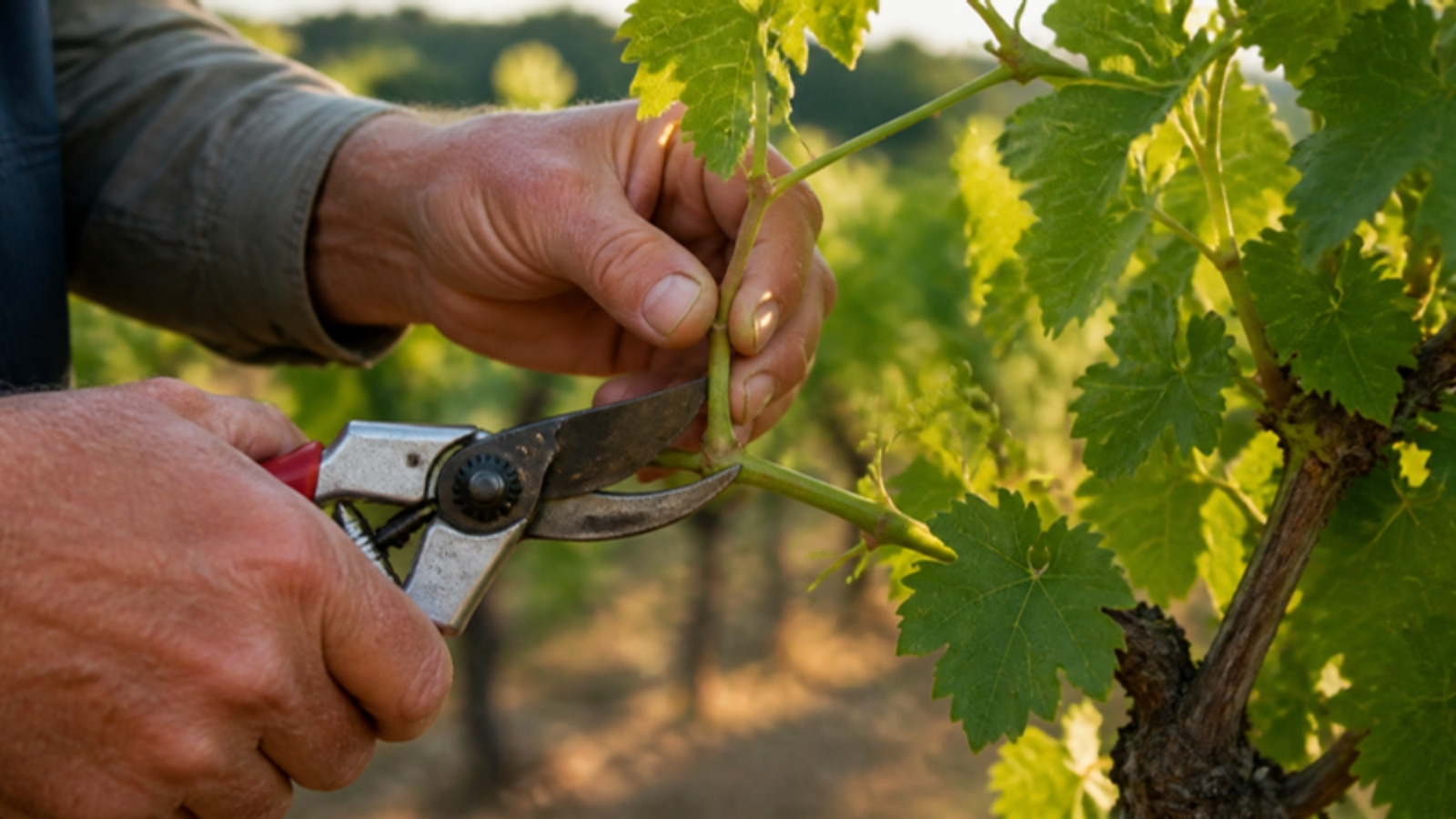
Jesus talked about pruning in John 15, where he describes his Father as a vinedresser, and in verse 2 he says, “Every branch in me that does not bear fruit he takes away, and every branch that does bear fruit he prunes, that it may bear more fruit.”
Notice which branches get pruned. The vinedresser prunes the ones that are already producing, because a vine left alone keeps putting out new shoots and the quality of the grapes drops. A good vinedresser keeps the vine at a size where it stays healthy, and he decides which new growth stays and which gets cut, so the vine keeps bearing fruit year after year.
That’s how you stay healthy after you stop growing. In a business, pruning might mean letting go of the customer who costs more than he pays, the service line that eats your margin, or the expansion that would take more of your life than it gives back.
So the next time somebody tells you that you’re either growing or you’re dying, you can tell him that’s simply not true. Your body grew to its adult size and has spent every year since staying healthy at that size, by getting rid of what it doesn’t need. Figure out the size where your business (or your town) gives you the life you want, and then put up the sign: “We’re full.”
Before You Go
Get What’s Real? free every Wednesday. One lie dismantled, one truth delivered, with the research behind it. Subscribe at therealjasonduncan.com/articles.
Prefer to listen? Every article becomes a Wednesday episode of The Real Jason Duncan Podcast, and every Monday I interview an entrepreneur who lived one of these lies. Find it at therealjasonduncanpodcast.com.
– The Real Jason Duncan
– The Real Jason Duncan