Why Different Politics Doesn't Mean Different Values
Video coming soon
Prefer audio only?
About this Episode
In Episode 373 of The Real Jason Duncan Podcast, for years, Jerome Moore believed that people who thought differently than him politically held fundamentally different values. Then he spent years sitting across from hundreds of people, one slice of deep dish pizza at a time, and found out that wasn't true.
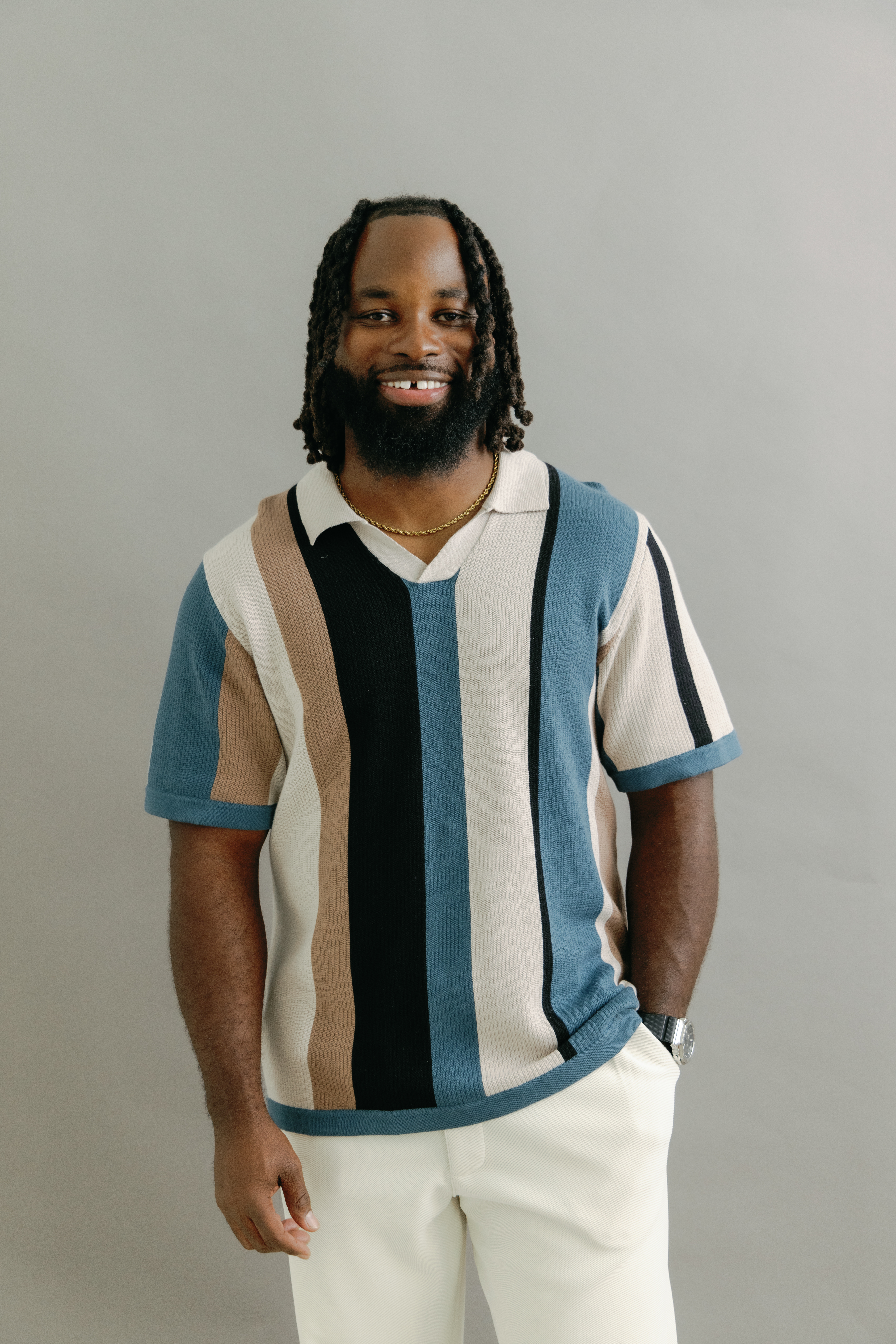
Jerome Moore is an Emmy-nominated TV producer and host, born and raised in Nashville, Tennessee. He hosts A Slice of Community on Nashville PBS, created the award-winning Deep Dish Conversations podcast, and recently premiered his first independent documentary about the first Iranian-American in space. He is a former Peace Corps volunteer, TEDx speaker, author, and one of the most thoughtful voices on community and social change in Nashville. Tonight, he joins Jason live in front of a studio audience at the Standard Club in Nashville for a conversation most people aren't willing to have.
The lie Jerome believed, and that most of us believe, is that people on the other side of the political aisle hold fundamentally different values. It's a belief quietly installed by social conditioning, algorithms, and the bubble most of us never think to question. And it's costing us something far more expensive than an election.
In this episode, Jason and Jerome cover:
Why going into a conversation already knowing what the other side believes makes a real conversation impossible
How growing up in a diversely segregated city like Nashville installs beliefs you never consciously chose
The college professor who tried to teach Jerome to assimilate – and why he pushed back at 18 years old
What Jerome discovered talking to white Americans in China about racism – and why it completely blindsided him
Why both liberals and conservatives are wrong about each other in the exact same way
The difference between racism, bigotry, prejudice, and implicit bias – and why they're not the same thing
Why Jerome calls Nashville a blue dot full of red dots – and what that actually means for how people think
What social media is really costing the country – and who's actually profiting from the division
Why Jerome doesn't identify as Democrat or Republican – and how breaking issues down one by one changes everything
What tangible community change looks like when you stop waiting for policy and start showing up
Why finding five minutes of community joy every day might be the most countercultural thing you can do right now
What Jerome now knows that he wishes the world knew
We're much more alike than we are different. This episode is proof.
📺 Watch on YouTube → https://www.youtube.com/@therealjasonduncan
🎧 Subscribe wherever you listen to podcasts so you never miss a Monday conversation or a Wednesday What's Real drop.
📬 Get What's Real in Your Inbox Every Wednesday, Jason publishes What's Real: a newsletter that exposes the lies most people believe and reveals the truths they were never taught. Subscribe and get it delivered before the audio episode drops every week. 👉 Subscribe here: https://www.therealjasonduncan.com/articles
👤 Who Is Jerome Moore? Jerome Moore is an Emmy-nominated TV producer, host, and community builder based in Nashville, Tennessee. He hosts A Slice of Community on Nashville PBS, created the award-winning Deep Dish Conversations podcast, and recently premiered his first independent documentary. A former Peace Corps volunteer in Paraguay, TEDx speaker, and author, Jerome has spent years sitting across from people in divided communities – one slice of pizza at a time – helping them find what they have in common. His Deep Dish Conversations community project brings pizza parties and meaningful conversation into youth groups, organizations, and schools across Nashville.
🌐 Website: JeromeLMoore.com 📱 Social Media: Search Jerome Moore on all platforms
🎙️ Want to be a guest on the show? Apply at → https://www.therealjasonduncan.com/guest
❤️ Love the show? Leave a 5-star review on Apple Podcasts or Spotify – it takes 30 seconds and helps more entrepreneurs find the truth they've been missing. Send this episode to someone who needs to sit across the table from someone they disagree with.
About the Guest
Jerome Moore
Guest
Jerome Moore is an Emmy-nominated TV host and producer, author of Deep Dish Conversations:Voices of Social Change in Nashville, storyteller, TEDx speaker, and explorer of communities dedicated to discovering solutions and social change. He is the creator of the award-winning podcast Deep Dish Conversations, host of A Slice of the Community on Nashville PBS, and co-host of The Nashville Scene Podcast. His latest Nashville PBS series, The Good in Us, earned him his first Emmy nomination for hosting and producing. A former Peace Corps volunteer, Jerome’s global experiences inspired Explore Social Change, a platform that uses exploration and media to uplift community-driven impact and strengthen communities worldwide. In September 2025, he premiered his first independent documentary, a powerful chronicle of Dr. Eiman Jahangir, the first Iranian-American man to travel to space. He was named a Nashville Gamechanger by the Community Foundation of Middle Tennessee and a 2025 “40 Under 40” honoree by the National Peace Corps Association for his leadership and impact.
Never miss an episode.
Subscribe to The Real Jason Duncan Podcast on your favorite platform.
The conversation already judgmental of what they believe a liberal or conservative is thinking that they are all created equally.
All right.
And how can you have a healthy conversation with that mindset?
All right.
So for years, this guy sitting to my left believed that people
who thought differently than him from a political perspective, held fundamentally different values than he did.
And then after years of having one slice of pizza with all these pizza, all these people one at a time, he discovered, well, that's not necessarily true.
And that's what we're going to be talking about on the show tonight.
We are here at the Standard Club in front of a live studio audience.
So for those of you that watch the show on a regular basis, you know we're in a different location.
We're sitting in leather chairs in a cigar smoke-filled room here at the Standard Club in Nashville for the Leadership Society, which I have the honor of leading as the president of Leadership Society for the last few years.
And this year we're doing something new.
We're doing these podcasts in front of an audience.
And then when the podcast closes down,
When the cameras stop rolling, we're going to start asking questions.
We're going to get deep into it.
So if you are interested in that, you want to know how to be a part of the standard of the leadership society, you can just DM me and we'll talk about it.
But this is the Real Jason Duncan Podcast.
I am your host, Jason Duncan.
And this show is built upon the premise of one thing, and that is there's a lie that a lot of people believe for a long period of time.
And then at some point in their life, the lie flipped.
and they realize, that's not true anymore.
And so that's what the show is about.
We're going to talk about what that means and how to how they discovered it.
And tonight's guest is no different.
That's what we're going to talk about.
So tonight's guest built a career around sitting across from people in divided communities.
trying to get them to understand what it meant to be divided, what it meant to be the same, what it meant to understand one another.
And he did it over deep dish pizza a lot of times, which we'll talk about in just a minute.
And for years, he came to understand that what he thought was true about people's values really wasn't true.
And tonight, I'm going to investigate that with him.
We're going to have an honest and transparent conversation about the differences
that he thought he saw in people and that actually weren't there.
And frankly, that I see in people that probably aren't there too.
We're going to have an honest conversation tonight.
So let me introduce Jerome Moore.
He's an Emmy-nominated TV producer and host.
He is born and raised right here in Nashville, Tennessee.
He is, he hosts a slice of community on Nashville PBS.
He's got a studio there, kind of a residence where he does his shows there for TV and his podcasting.
He created an award-winning podcast called Deep Dish Conversations, where he has a deep dish slice of pizza talking about community issues, racism, political issues, et cetera.
And they get to the bottom of some of those things.
And sometimes they don't, but they have a good piece of pizza while they're doing it.
He also just premiered his first independent documentary about the first Iranian-American in space.
So you can go check that out.
He's a former Peace Corps volunteer.
He's A TEDx speaker, and he's an author.
And really, this guy's one of the most thoughtful voices on community and social change in the city of Nashville.
So help me welcome Jerome Moore to the show.
Glad you're here, man.
Jason, I'm glad to be here.
I'm excited.
Yeah, well, this is gonna be, we're gonna have a good time.
It's good to be on the other side of this, you know what I'm saying?
You do all the work and I just.
Yeah, you saw all the work we were doing before.
You got here before I did.
So let's do this.
You've spent years sitting across from communities that most people would think, hey, man, they're too divided to reach.
Let's just leave these people alone.
And who are these people and what are they actually like?
Yeah, these people look like me.
They look like you.
They look different from us.
They come from diverse backgrounds.
They come from different class groups, wealthy, poverty, in between middle class, right?
And so they are who make up humanity, right?
They are who make up our society.
And depending on where you are in your journey of growing, they may be the people you may call out instead of calling in, right?
And so I think when I go into what is the lie that I thought I believed, right, and no longer believe, a lot of it, I think, came from personally calling people out because maybe they did something different or they wasn't doing what I was doing.
So maybe I felt they wasn't doing enough or wasn't doing it right.
And then I got to a point, matured through a lot of these conversations, through exploring community, through curiosity,
say, hey, it's a better method for all of us to call people in, especially if we don't understand them, instead of calling them out and have a conversation and get a better understanding of how did they get to the perspective that they have and how did I get to the perspective of mine and what can we possibly learn?
Doesn't mean we got to be BFFs after the conversation, right?
But, you know, if I'm an active listener, if I'm being curious and not judgmental in my listening,
possibly we can get somewhere and I can find out something new.
And I still may not agree, but maybe I just have a different perspective based on learning more about the individual.
Yeah, I think what you said there about we don't have to be BFFs when it's over.
I think a lot of people have the misconception that if I sit down and have a conversation with somebody I disagree with and find out that there's not that much disagreement, I got to be friends with this person.
Well, that's not true.
You just now have a better perspective, right?
Yeah, and you know, that's political, right?
Because
we can live in a space or just in a society in general where let's say we meet and we initially align politically on the same thing, right?
Because that's just our introductory to one another.
And the moment that maybe you feel like you have a disagreement or realize you have a disagreement on something politically to me, then all of a sudden, like now we're frenemies.
I can't no longer be in agreement or you just all of a sudden a person I can't hang out with just because
because there's one thing on a political agenda that we disagree on.
And I think we find out a lot in our society today.
And it's, it's just kind of like you can't expect everybody to believe everything that you believe.
And if they don't, you just don't throw them away.
You just don't throw a friendship away.
You just don't throw whatever bond that may be there.
They're still that same person.
They just on this one particular issue.
It's just, it's just different.
And that's okay.
Yeah.
Well, so when we talked
Getting prepared for the show, the question I ask every guest when they come on, is there something that you used to believe that you don't believe anymore?
And what we kind of talked about was that this idea that people who have different political views than you did, you believed that they had fundamentally different values than you.
And as you grew, you learned, okay, that's not necessarily true.
And for you, that was what I call a golden cage.
We're in this cage, it's nice, we like it, it's comfortable, but it traps us from having, in your case, maybe a more
friendly relationship with other people.
So where did that belief first show up in your life?
Why did that even happen?
I think, like, I'm blessed to say, I think I got real conscious around politics and just figuring out what's going on around about 15, 16 years old.
A lot of that is used to my father.
He was a really conscious thinker.
They always, you know, encouraged me to just be
explore thoughts and not just botch yourself in on one way of thinking.
So, I did the opposite.
I was like, once I got on something, I was like, hey, this is what I believed.
Everybody should be on this, right?
And then I got older and I started being able to explore different communities, especially by living abroad, doing things like Peace Corps and stuff right there, right?
Where'd you go when you were in Peace Corps?
I was in Paraguay, right below Brazil and South America next to Argentina, like a hidden gem.
And so if you don't, like people should go to Paraguay.
Bilingual country, they speak Guarnese, sounds like, you know, NSP Spanish as well.
So, yeah, that's just a little something, you know, people don't people don't know about Paraguay Guarnese, the second other official language.
They're only spoken there.
So once you leave there, there's really no use for it.
But yeah, so I think for me,
being able to travel and explore and get outside my own bubble, right?
Born and raised in Nashville, but Nashville is a very, I would say, diversely segregated place.
And so that means you can be in your bubble of comfortability where most of the people look like you, probably presumptually think like you, know, have the same ideas as you.
And so that's a real easy conditioning that you have to unlearn if you step outside that bubble, because that's just not reality.
And so when I was able to step outside that bubble, I was able to start being able to think for myself.
more as well.
And I was able to kind of unlearn and debunk my own truth that I thought I believed and realized like, oh, no, like there are other people who don't believe what I believe fundamentally politically, but that doesn't mean we still don't hold some of the same values.
Again, that doesn't mean everything's going to lie, but that doesn't mean at the same time, they are a complete different person that won't agree with anything that I may agree with fundamentally when it comes to mores and values of life.
So I understand what you're saying.
Like you get out of the bubble, you start saying things aren't exactly the way I thought they were.
Right.
But is there, can you think back to where that belief that people who thought differently had different values, where that was ingrained in you?
I think it's just, to be honest with you, I think like growing up in that bubble, especially in Nashville where being a black person,
we are my, we are my minority demographic here.
And I think we're just like this social conditioning, just like, hey, like, you're black in Nashville, you're in North Nashville, you're in this bubble.
This is how we think, this is what we believe, this is how things should go, right?
And that's easily,
easily done, I think, especially in the South, right?
In a city like Nashville that has that racial civil rights tension already, right, historically.
And so when you grow up in that historicalness and you grow up in that mindset, I think like for me, like it was just, it's ingrained, like unintentionally, right?
Because you, that's, you just living in every day.
Because, you know, you don't really know.
You just understand where you are and you getting conditioned by the people that's around your immediate family, immediate community, directly, indirectly.
right?
And you don't know this as you're going through it.
You learn these things as you get older and be able to, actually recognize and define and call things out as you learn them and as you want to learn them.
But yeah, I think, most definitely like social conditioning for sure.
Yeah, so family, church, school.
All of that.
Because that's the bubble and everybody
is thinking the same way.
Everybody is having the same experience, right?
In a sense, right?
And you even learn that, especially black, white, wherever you are, like every white person, every black person in America doesn't have the same white or black experience, right?
We're not monoliths, right?
But that can be easily conditioned, right?
Especially for myself, like, hey, I can believe that every black person, because of how I grew up in conditioning, does this sport or doesn't do that sport, eat this food, or maybe doesn't eat that food.
That's not what black people eat.
That's not what white people eat, right?
All of those things are mixed in, I think, just due to social conditioning in the diversely, diversely segregated, you know, kind of city that you may grow up in or just bubble that you may grow up in.
But all of that, I think, is just conditioning as a young kid and that you really have no control of because you're a kid.
Do you, can you think, I know you said that.
15, 16, you started thinking differently about things, which is pretty young for somebody to come to that awareness.
But can you remember maybe prior to that, when that belief that you held was running the show behind the scenes?
Where do you think it made you interact with a certain way?
I just think probably all of my allanescent actions, right?
Like I was just doing
where I believe that as a black young man in America that I was meant to supposed to be doing, right?
Like, I'm not skateboarding.
Black people don't do that, right?
I don't see anybody doing it.
I don't, I'm not playing tennis.
Like, it sounds really elementary and really just dumb right now, right?
It sounds like idiotic, right?
But like, these are real transparent thoughts and beliefs
that I had at a young age because that's what everybody else was doing around me I didn't see it anywhere else and that's what other people were saying too and so I can't pinpoint what at what age those things were happening because I think it was just socially ingrained but I but I knew like when I woke up
when I was like, let me start thinking a little differently.
Let me figure out like kind of what else is out there and really explore, right?
And even with doing that, I was still just still limited due to my access to resources, access to proximity to other people thinking differently, right?
Even if I want to explore and get in contact with somebody that had some other type of experience, living experience, I didn't have access to that person, right?
And so that's still prolonged in a way,
restricted my perspective on what I can have, because if everybody else around me is thinking the same way, well, what can I get something different at, right?
Was there, do you remember a moment when you kind of, you said, you used the term woke up, like when you said, oh, do you remember what preps, predicated that or made that happen?
I think, I do have a moment that I like that happened a little later, right?
So,
I went to MTSU, shout out to Blue Raiders, Blue Raider Nation, right?
And I was a freshman and I was a rebel, at this time, right?
Cause I'm, I didn't woke up.
I feel like, hey, like I didn't figure something out, right?
And I had a professor.
She wasn't even my professor.
It was part of some extracurricular activity program.
And we was talking about, what you should be doing, how you should be talking or looking in order to gain opportunities, right, in life, right?
And for some reason, I didn't know what it was at the time, but it was assimilation, right?
That she was trying to teach us how to assimilate in order to be able to climb the ladder, right?
And for some reason, that...
my consciousness, my belief, what I wanted to do, my rebel inside me just wasn't like, it wasn't feeling that.
I was like, hold on, why do I have to, why do I have to like talk a certain way, look a certain way, do a certain thing, assimilate essentially to something that I'm not in order to get opportunities?
And so we got into like a back and forth heated argument, a full 10 year PhD, I'm A freshman, went behind the ears, what am I doing, Jason?
Why am I going back and forth with this person?
But I stood on that, right?
And again, even at the moment, I didn't really know what it was, but I knew like some is not right about what she's telling me and how she's telling me and what she's telling me I have to do.
And what she was doing is she was projecting her own lived experience and what she believed that she had to do, right, in order to get into the position she was in onto me and others.
And I was the only one at the combating that, right?
But I didn't, but at that moment, that's a vivid moment that I always reflect and tell other young people, like, hey, like, there's gonna be people that's probably gonna try to get you to change your beliefs or, you know, sway you to do something or be something that you're not.
You don't have to do that, but you have a road that you can choose to pick, right?
You can pick the elevator and maybe assimilating and doing these things might elevate you possibly to a position that you want, maybe.
It's not guaranteed, or you can take the stairs like I did.
can get it and be yourself and continue to explore.
And then, you'll have strong calves when you get to the top.
You'll be in shape, you'll be conditioned, right?
But at least you'll know who you are as well, right?
And you can change that, you know, if you get on an elevator, you can always get off.
You know, and so I think at that moment, at 18 years old, that really -- that's when it was like a real-life scenario where I had taken everything that I think I was curious about and really, like, true beliefs and values that I grew around and interacted with somebody, and I really, like, combated that.
Like, no, I'm not -- I'm not falling for that.
I'm not going for that.
I think I can do that and I can move and operate in my own way that's different than yours.
And I'm not going to accept that projection.
Looking back, how old are you now?
35.
All right, so nearly double your life ago.
Yeah.
You know, so you look back at that, do you now think that she had, there was, was there any semblance of truth in what she was saying?
Or are you still maintaining like, nah, this is not right.
I think there's some, I think there is some truths to that around,
assimilating and code switching and, maybe dressing a particular way in certain settings to give off a perception or whatnot.
I think it was, but the issue that I had was like, that's not the only way, right?
That shouldn't have been, that shouldn't have been the only speech, right?
That should have been like pros and cons, break it down, right?
You can do this, and again, nothing is guaranteed, right?
You can, wear the suit, you can wear the loafers, you can dress to impress, but that doesn't mean that you'll, you'll get ahead or you'll be more, you know, qualified.
or get looked at brother to somebody that comes in a sweatsuit, right?
so it just depends.
But I think some of it was true, but the problem was the projection.
I was like, and at that time at 18, I was definitely like, no, I'm just, I'm stuck in, I'm stuck in my ways and I'm standing 10 toes down on, I believe that what you're seeing is completely just inaccurate and not completely true.
for what you're supposed to be articulating this moment as a professor.
And I think it should have been an end both.
You can do this, but you can also do this.
way may be more barriers for you.
Who knows?
But
this way is something that I personally found that worked for me, right?
And so.
Now, I'm going to assume that what we're talking about now is more race related than it is political related, because I'm assuming this is a black professor talking to black teenagers about how to assimilate into what she would consider white culture.
I would say it's still political at the same time, though.
Those are still political decisions to hide maybe your identity, right?
You know, and so or to assimilate or whatever it may be.
I think race and politics kind of intersect
some of those ways, just depending in the setting.
I think that's probably true because you could look at somebody who has different political beliefs and think, oh, they have different values than me.
In the same way, you could look at somebody who's a different color, different race, say, well, they're fundamentally different than I am.
When in fact, that's a lie.
That's not true.
We're much more alike than we are different.
And I think we can embrace the differences to the degree that they're necessary.
I mean, that's fine, right?
You can just assume, you know, I could, I could, I could be, I can be naive and assume just because you're white and I'm black that we have different political views because, you know, historically America has treated us differently, right?
But that might not be true, you know, and vice versa, right?
I can be two black men or two white men across from each other and they have same or vastly different political views, right?
But I think that's the, for me,
When I'm having these conversations and sitting across guests or people that I'm talking to are really exploring, right?
That's why I'm being curious.
I'm never being judgmental.
I'm never assuming, right?
But I'm not afraid to dive deep into the questions and just figure it out, right?
And you want to hear something crazy?
Yeah.
This blew my mind.
I never thought about this until I had this question.
I was in China, right?
Enjoyed all my American privilege in China, right?
And there was other white Americans living in China.
And I decided like, hey, let's have a conversation and talk about like what it's like being a black American, a white American in China, right?
And what blew my mind, right?
Because race came up, of course, right?
It blew my mind that white Americans is like, hey, dealing with racism in America is exhausting for me too.
I said, what?
I was like, just the burden of maybe even people just thinking or just carrying this weight of being a white person and just how our country's ingrained in racism and being white and my role and not my role, whatever, it's just good to not have to think about that, like in China.
And I felt the exact same way as a black person.
But I would have never thought that racism weighed on a white person in America.
I would, I would, that just didn't cross my mind.
Like, you're affected by that?
Like that, that's on your mind.
And now that you're not in that country, you, are we having that same kind of, yeah, like that's, we don't have to kind of think about it in that way.
That blew my mind.
But that was a, that's a, like a real life situation again, that if I didn't ask that question and to have those conversations, I would have just assumed that like, yeah, like,
as a white person, why are you worried?
Like, that's not something that's on your mental right in America, right?
But that's just, again, like, me being able to explore, me recognizing like a flaw, right?
A value flaw, a political flaw that I had in correcting that and now understanding like, yeah, I know that, hey, racism too can affect other people or affects all people in America, maybe just on different levels, but everybody's affected by it.
So if we look at this and kind of segue back into the political
part of this.
Nashville, if we look at Nashville, Nashville is a blue city in a red state.
And you are very involved in community action here, social change.
You talk about it on your show openly.
I've listened to a couple of episodes and I've heard you interview white guests and black guests.
And the theme is kind of all the same.
So it doesn't matter.
But when you have these conversations in a city like this,
What are you finding out on the other side?
Are there a lot of people who had that same lie?
Are they thinking, no, man, I know you got out of that lie, but I still believe it.
Yeah, no, I think, and that's the beauty, you do a good job too, of just being very intentional about
having guests that have a diversity of thought, right?
And that was my biggest thing.
Like, I don't want to talk to people that share the same values or thoughts as me.
I want people who have different thoughts and have different perspectives on how to get to solutions, maybe in a different way, right?
And so what I come to find out, like, even though Nashville is a blue dot in a red state, is that there's a lot of red little dots
in Nashville, right?
And what does that mean, right, to be a red dot or a blue dot, right?
Does that mean that you're all the way on the left or all the way on the right?
Like, well, who are people that's in the middle, right?
Purple.
Right, It's like, what dot is that?
And I think, and I think many of us are in the middle, right?
It's like, me personally, right?
Like, I probably have more conservative views than liberal views, but people will probably, based on just what I do, probably
perceive me as more liberal than conservative, right?
It's just naturally.
But it's like, you see that I'm talking, we really break down agendas.
I'll probably lean more conservative than liberal, just depending on the topic of the agenda, right?
So being able to do that and being able to have those conversations really gave me an insight that a lot of people just are not openly talking about it, right?
Or really being transparent enough and like, okay, how do they really feel about issues?
Because when you have this umbrella blue dot in a red state, maybe you're afraid.
Maybe you're playing a political game and watching your own political status by not saying or speaking or saying things how you might really feel.
But when you come on deep this conversation, we get deep and we unpack it, right?
Like you do, and really try to get, I guess, and try to have a conversation, be as transparent as possible, but also create a brave space.
Right?
and I say brave other than safe, because I think when you talk about politics, it ain't about being safe.
Like nothing, safe.
You got to be brave to really, to really talk about your stance on things.
But also know that like, I'm not judging you.
It's okay.
I understand that it's not meant for us to agree on everything.
And your lived experience is going to tailor what you believe differently than my lived experience.
And we're still,
living.
We still go on this journey.
So I might feel one thing this year that I might feel differently about next year.
I don't know what it feels like to be a multi-millionaire billionaire.
I assume they're going to probably look at things like taxes a lot differently than I do.
That's just common sense, right?
So I try to be in that space and be open-minded and also understand like our lived experiences and where we are in life are going to dictate a lot of things of how we feel, especially if they benefit us in different ways as well.
So that's just the truth.
You were skirting around it a little bit there, and I appreciate you opening the door for me to ask the question, but do you consider yourself a Democrat or do you have to?
I consider myself black.
I mean, like, because it's just, I just don't, I don't, yeah, I don't, think I really align, I guess independent, right?
I think, I guess I'll just be an independent.
Yeah.
But yeah, I don't think I align myself with Democrat.
or conservatives, but I will say, if we're talking about socially, I'm probably more Democrat, if we're talking about economics, if we're talking about like systems,
Right?
I'm probably more conservative, right?
And then on certain things, it just depends on how the agenda is being pushed or the policy is being created.
Yeah, but I like, I just don't, like, I don't box myself in.
One, because I know like anything can change.
And then I just don't, I just like, don't identify me as that, right?
This asks me about a specific agenda and I can give you my take on it and what I believe.
And I don't think even that should categorize you as a Democrat or Republican.
This is just how I feel about the issue, right?
And I think if we break it down by issues, like we'll probably find that more people who may believe they're liberal or conservative or vice versa, but like we just put everything in a big
crockpot and say, if you one of the two of these, you just all of these, right?
And I just don't think that's a reality of things.
Well, I'm glad to hear you say that.
I think a lot of people resist labeling for good reason.
I've resisted it for a long time politically.
If I had to be labeled like you were talking about, I think that I'm
I'm probably more libertarian than anything else, which would be more independent than it would be Republican or Democrat.
But I have to tell you this, and I think some people in this room would probably agree with me and people listening, is that social media right now is creating the bubble that we're all living in.
It's feeding us things that are not true.
The same situation that you watch on TikTok or YouTube shorts,
that I watch, that he watches, it's going to have a completely different spin on the exact same story.
And I have to admit that my views of Democrats, my views of liberals specifically, is not very generous.
Yeah.
Why?
Because of what I am being fed in social media.
So when I see, yeah, when I see somebody being interviewed on the street who's praising the murderer of a guy who was the CEO of a healthcare company, I can't get behind that.
Right.
Like, I don't know the situation.
I don't know what happened, but I
Can't get behind that, to me, and they position themselves.
as a Democrat or a liberal, it's like, okay, I got nothing to do with you.
And then that's just one example, but it can go on and on and on.
So I, but I know that fundamentally, that that's not the representation of that entire party.
That is not a representation of every liberal.
I mean, here in this club, at the Standard Club, it's much more conservative than is liberal.
But there are liberals who are here.
There are some Democrats that are here.
But
And I can sit across and have a cigar and a glass of whiskey with them and no problem.
But if the people that show up for my Instagram feed, like I have nothing to do with you, man.
And I know that's not fair, but that's what we're dealing with.
How would you deal with it in your position?
Well, the internet is just not a real place.
It's just, the internet is just not a, like, it's as real as you want it to be, right?
Like you don't have to comment, you don't have to read the comments.
You know, it's like, and that's what it's kind of,
kind of funny to me about people that get angry about comments or perspectives on the internet.
It's like, you can just like, not read it.
Not read, block them.
Like there's so many ways you can just like, make them not exist, right?
And for me, it's like, again, like understanding like the internet is the internet.
And if we was in person like this, you'll probably have a different tone.
You'll probably have a different whole, you know, attitude towards me.
If we was in person to person, having a discussion about something that you're angry about, and a lot of that is like, we, we've gotten to this, I think society was like, you just have to pick a side.
You have to agree with me.
If you don't agree with me, you're just completely wrong.
And as if like we all just experienced life in the same way, right?
And that's just not the case.
And that's why I think things like this, getting people together to have different and similar views and just have a cigar, have a drink, like that's important, right?
That community of communication is important.
And me, I care about solutions.
Like if like you're not talking about solutions or solution based,
about the issues, like I don't really, we can harp on all the problems all day, right?
We see that on our feed.
I rather talk to people who come in there with solutions or think about solutions.
Even if I don't think those solutions are the solutions, that's a healthier conversation for me.
You're right.
Even if you have an issue that I don't agree, if you have an agenda that you want to push that I don't agree with, I'm like, well, what are some other solutions?
What are some other alternatives to that?
Like, let's talk about that because we stand on a positive track, right?
But if it's like, no, I'm against you, I think you're wrong, again, calling you out instead of calling you in, like you go nowhere with that.
And I think that's the space that the internet allows people to be in.
It allows people to just, you're not problem solving in the comments.
right?
You're just going back and forth and into whoever gets tired or whatever happens or whoever could be able to get back to that general schedule programming of life.
You're not proud of programming in general comments.
And so it's like, it's there and you can use it at your own will for your own benefit to get perspective.
But it's like, you know, if you're only looking and seeing one thing, of course, you know, your perspective will be skewed a little bit, right?
But you have to recognize that and call that out.
And if you stay anywhere too long, if you're not, again, intentionally exploring, intentionally, you know, trying to, again, I don't care what you look like, I care about diversity of thought.
Like, how are you thinking differently?
What are you thinking?
That's the people I want to be around, right?
And so I can challenge myself in my own perspective and make it less restrictive, but also learn something, right?
And then take that and be a better person.
So you're having real life conversations with people just like this, over pizza, and you've talked to a lot of liberals, you've talked to a lot of conservatives, and you're riding somewhere in the middle of that by your own self-admission.
So I would be interested to hear what you think now after having all those dozens and maybe hundreds of conversations, like what do you think that liberals
generally get wrong about conservatives?
And I'm going to ask you the other side of that question too, so we're going to go both sides.
I think, this, I think my response, and it works for either or, right?
I think a lot of them go into the conversation already judgmental of what they believe a liberal or conservative is, thinking that they are all created equally, right?
And how can you have a healthy conversation with that mindset?
And so, from both perspectives, I would just say, Hey, again,
Forget the titles.
Let's go with the issues of maybe what conservatives may be pushing at the time, or liberals may be pushing at the time, and talk about that, right, from both sides.
And I think if people can get down to that instead of...
this is this grandiose of like, hey, you're a liberal or hey, you're a conservative.
Like, that's a lot.
Like, I think scale it down.
Let's look at it from a micro level and say, what are some issues that maybe conservatives are pushing that you're on real, a liberal's pushing that you're on real, and figure out, okay, what are other alternative solutions that you believe that will accomplish something that will help society?
If people can get into that,
I think that takes out all the argumentation, all the unnecessary banter that, there's just fluff anyway.
You just want to argue.
But if you really want to get down to the meat and really understand somebody and get down to the solutions, break it down from a micro scale, take out the labels.
Unless you want, if you want to carry the label, if you're proud about that label, great.
But let's talk about the issues underneath those umbrellas and have a conversation about that.
How do you feel about vouchers?
How do you feel about
gay marriage?
How do you feel about public and charter schools?
How do you feel about, housing and transit?
Whatever, whatever those issues are, break it down on those levels.
And again, that don't mean you agree, but you might find yourself balanced out, you know, with the same individual that you didn't label, you know, differently than you.
So what does that mean?
If you're a liberal and they're conservative and y'all balance out the score of four, four, you know what I'm saying?
Out of eight issues,
that you agree on, disagree on four, and agree on four, are you really as maybe conservative or liberal as you thought?
Or do you really have more in common as you thought?
Are you caught up in that algorithm and just, is this war?
So regardless if I agree with you or not, I have to be against you, right?
Is that, is that, is that what we're doing?
So, you know.
Yeah, I think what you've said is really smart, is that
both liberals and conservatives are wrong about the other side in that they assume that they are different on every single thought pattern and every value.
No, there's no, there's no way in, there's no way in, again, if I'm a liberal and a conservative of a middle class and I'm a liberal and conservative of a upper class economically,
liberals in upper class and liberals in middle class gonna look at things differently.
I might, if I'm a middle class liberal, and I might look at the upper class liberal as conservative.
And so it's like, it just, it just, it's a case by case.
And there might be very strong conservative values.
Historically, same thing with liberal values historically, but we all individuals, and I just think that we're probably all 50-50
And then there's going to be some things that we really feel strongly about that may be considered very conservative or very liberal.
But those are a few issues, probably.
What do you wish that would happen around these ideas of liberal versus conservative?
What do you wish would happen that would fix this?
I just wish that like we took away the titles and I wish that people, if it was a way that people can just vote on individual issues of policy,
in a more consistent, once a policy goes through and say, hey, we're going to, regardless of what you identify, we're going to vote and see who agrees with this policy based on like local policies or even federal policies.
If we did that, I bet we will see a different skew on things, right?
And don't even put on who proposed the bill, whether it's a Republican or a Democrat, who, it doesn't matter.
Because I think we're at the point now, because of the labeling,
And because of identity politics and all those things, that people are probably just automatically disagreeing with one side or another depending on what they identify with, without seeing that this might actually help your community.
It might come from a Democrat as a conservative, this might, a Republican, this might help your community.
That don't mean you vote against something that will help your community just based because they have a, they represent a different color than you and vice versa.
And so I think that's what we're getting at and we need to get away from that.
What do you think is a bigger problem?
The liberal versus conservative problems that we're talking about or the race, the black and white issue?
Which one do you think is a bigger problem?
Oh, that's a good question, man.
I didn't put that on the sheet.
Yeah, which one is a bigger?
I think which one is a bigger problem?
Which one is bigger?
I feel like.
I'd probably say probably, I think racism is probably, I had to say racism is probably a bigger problem because I think that feeds into the political system that we have.
It has systematically integrated into it.
And so I would say probably racism is a bigger problem because it affects each individual on some type of personal level and interaction.
And it's like,
the foundation of this country with slavery, and it's just in the soil, right?
And I don't think we ever, I don't think we ever cure it, right?
I just think it's incurable.
I just think we're just so misogenated in it.
And we, you know, we just, it's part of our history, right?
But I think like we can be intentional about just being just good *** human beings, right?
Let's be good and respectful and we don't have to agree.
But as long as we can respect and treat each other right, like, you know, that's the cure, right?
That's the cure and just have decency and again, like liking, not liking somebody or liking somebody solely based on, you know, their skin color.
kind of, it's kind of, it's kind of juvenile, right?
It's like, I don't like you.
Like, I care about who you are as a soul and who you are as a person, as a man, as a woman.
Like, that's what I care about because I know black people can be anti-black, right?
You know, when we talk about being anti-black, that might be easy to point at a non-black person, but I know firsthand black people can be anti-black.
So what do you mean by that?
What does that mean?
Meaning that we talk about racism, we talk about
when it first comes to mind, I think many people just think that is solely dedicated in this country to black Americans, right?
Racism.
And with that, there's an assumption that only white people or non-black people can be racist or anti-black towards black people, right?
And I'm a person that's saying, no.
Like, black people can be bigoted,
it can be anti-black to other black people as well, just as much, if not more, if they wanted to, as a non-black person or as a white American, right?
And so that might be something, that might be an unpopular opinion, but it's like, no, like...
anybody can be bigoted and prejudiced to another person, right?
Anybody's capable of that, right?
You can be anti-black and I can recognize that.
I will give you another one.
I am a person, I believe growing up in that social conditioning, that was probably anti-black towards black people, right?
Meaning that if I seen another black person that maybe looked like me, look like they came from the same environment as me, I probably got a more defensive mode and ready to figure out what is this
situation going to lead to, right?
Like, why am I looking at a pretty much a mirror myself and thinking that way?
That is very anti-black of me, right?
But that's something I had to recognize, had to grow out of, and realize it's an issue, it's a problem.
And it's an implicit bias I have against myself, right?
It's crazy, right?
But again, being able to recognize that, be transparent and calling it out, calling it out, understanding it's an issue internally and correcting it and fixing it.
within that sphere of racism, anti-blackness, or whatever, however you want to coin it.
We used a lot of words I want to pull out there.
You said anti-black, which I asked you to clarify.
Then we talked about racism.
Yeah.
And we used the word bigot.
And there was a, you used one more word.
Implicit bias.
Yeah, no, there was a, it started with a P.
Prejudice.
Prejudice.
So prejudice, prejudice, bigot, racist, and anti-black.
A lot of.
Are those similar?
Are those the same or are they different?
I'll tell you because I think they're different.
I think they operate differently for sure.
Yeah.
But it's like if like, but I think some of them can be simultaneously working together, right?
So it's like if I'm, if I'm prejudiced to you, right, or if you're prejudiced to me, right, your prejudice can be rooted in anti-blackness.
Sure.
Right.
And my prejudice can be rooted in anti-blackness to another black person, right?
And so it can be rooted.
I think some of those can be rooted in one another, but I think they all also can be a very different
in how they're used to, what type of, tool you want them to be.
I'm glad we're talking about this, even though it wasn't planned for us to get into this conversation.
You threw out a hell of a versus.
I had somebody, I had somebody say, I don't even remember where this conversation happened, but it locked in my brain.
And we were talking about racism.
And it was a white guy who said this.
And he said, you know, somebody asked me one time as a racist.
He goes, I'm not racist, but I'm bigoted.
And I was like,
Okay, explain.
Because I've never heard anybody say that.
And he went on to say, he's like, I don't have a belief that one race is superior to the other.
But I'm bigoted against people, regardless of their color and what they do, like happen to do.
And what we, I think the conversation, if I'm remembering correctly, and again, I wasn't planning on talking about this.
So I'm looking in the shadows of my memory, but
I think the conversation was around something happened, some black person did something and somebody said something and the question was like, that's racist.
He goes, look, I'm not racist, I'm bigoted.
Because if somebody does that, I'm against it, whatever that was.
And I thought, well, that's an interesting twist on the word because outside of context, people would say, well, you're racist if you think that black guy did something you didn't like.
Well, this is the conundrum that we all affected by being in America, right?
It's like...
I could, any one of us could easily, you just being a white man to treat me wrong, I could easily just think it's you being racist of me, right?
And I has nothing, you might just have a prejudice.
So it's anybody that act like me.
I just might be acting like this and happen to be black.
right?
And so, and it's unfortunate because I really believe that racism prevents us all in America from living our best life.
Because we all got to kind of tiptoe around it in a way.
and be careful and mindful of it, right?
Even when it comes to, we're in the South, even when it comes to dating, interracial marriage, like we have to, like these things still very much are alive, right?
And these are things and values still being talked about.
My mama told me, hey, don't bring no white girl home in this house, right?
Don't do that.
What do you do?
Don't do that, right?
But it's like, where is that coming from, right?
Again, social conditioning as you get up.
That's America.
That's the South.
That's history.
It's real, but it prevents us from, which that's in your mind, it prevents you being able to live a full life.
Because if I see a woman that's not my skin color that I just happened to like and thinks attractive, now I have this ingrained in my mind, like, dang.
Your mom's in the background.
Now I might even be like, am I embarrassed?
Like, can I, you know, it's like, and like, what are other people going to think of?
You know what I'm saying?
So these are all things that, again, they have real reasoning and historical reasoning on
why my mom or her mom or my dad or his dad may say these things, right?
But at the same time, it really also prevents us from living our full life as human beings and being able to just live because of this thing of racism in our history, in our country.
And it's just unfortunate, right?
And I think it's always important to just call it out.
It's unfortunate because I think it literally stops us from all from living our best life that we can because we have to, it's there, right?
And real things has happened around it and lives were lost, right?
And tears were shed and blood was shed.
And so we have to acknowledge it in a real way.
But it's like, damn, like, it's exhausting at the same time.
But also I would say even breaking down those, just those different words, like,
I think power comes into it for me when you talk about racism, right?
It comes more of a power.
Like if you have the power to stop me from being able to maybe get a job, make some money from an economic
social economic status, and that's racism.
Like, oh, you have the power to stop me from eating and living my life and getting employment and things like that.
That's when I get into the, I think, what the core of racism is, being able to have political power, have social capital power, and be able to use that to stop somebody from
evolving or whatever it may they may want to do lifestyle wise or professionally.
So do you have aspirations for politics at any point in life?
Aspirations?
Nah, I don't like it's like that's just it's just exhausting thinking about it.
You know, just like it's just do I do I think I could be good at it?
I think I do well.
Yeah, I think I will.
But it's like I honestly too believe that like the power is always with us, right?
I come from I have an organizing background, right?
Organize people and organize money equals power, right?
That's the formula for organizing.
And I think if we all just did our part, you gather people, I gather people, we bring people together, get people to show out and do things on a local scale in our own individual communities.
I think that's how we create ultimate change.
Like policy is great in things like that, but I think that's a slow change, right?
If you know there's just a food desert in your community, get people together and do a
community garden, right?
If you know that your community is not clean, put together some type of trash recycling pickup, because we know statistically a cleaner neighborhood means a safer neighborhood.
So there's things that are solution-based and everyday citizens can come together and do that will be faster and make your community healthier, better, and more connected than waiting for policy, right?
and it just, and I'm not a, I'm not a, I'm not a marcher, I'm not a sign holder, I'm not one of those type of like symbolic change type of people.
Like, I want tangible change.
And I think the best way in us to get there from a community level is we get together, we do it ourselves, we figure out a way why the policy
arm is still working and doing that systematically.
But we can get a lot of this stuff done, by good old sweat and elbow grease, by us coming together as community members.
What do you think it's costing our country
for us to continue to believe what the social media and regular media is telling us about the side that we don't believe.
I don't know.
What's it costing our country?
Because of if I believe what social media tells me about liberals or about any group I disagree with, what does it cost in our country for us to continue to believe those things?
I think it's costing like the change and impact that we all really want.
That's what it's costing us.
And it's costing, it's costing our future.
You know, my guy, my son is 6.
he's gonna win, in 30 years, he'd be, thirty-six, and he might be sitting there with the next Jason Duncan talking about the same thing, because people are too caught up on in the comments and not trying to, like, and that's another thing, like, if you're not actively trying to play your role in making your community better,
But you have a lot of comments to say, like, I don't understand what we're talking about.
Like, it's like, it's like, it's like you, watch sports, right?
It's like, it's like me being at a basketball game and saying, if I was LeBron James, I would have 360 windmilled, you know, and I'm on the, I'm on the stands, you know what I'm saying?
Like, I don't think it's my position to tell LeBron what he should have done if he, if, I, if you was him, right?
And I think, like, that's what you get on the internet, right?
And that's what you get.
You get a lot of people who got a lot of comments.
A lot of people got a lot of reasons, a lot of excuses, a lot of complaining.
Just ask them, okay, great.
What are you doing to benefit your community to combat some of these things?
And if they can't give you, they ain't volunteering nowhere, at least at the minimum, volunteering somewhere, it's like, you don't really want change.
You just want to talk about it.
You just want to comment.
right?
You just want to engage about something that you're not actively even trying to participate in correcting.
What are we talking about?
And that's when the conversation is like, well, hey, if you want to get involved, here's a list of organizations that you can Google, whether you care about sustainability, whether you care about politics,
whether you care about conservation, right?
Whether you care about housing, transit, affordability, there are things that you can participate in as a regular citizen.
You don't have to come with, you don't have a resume, a CV, you don't need, you know, two years of experience.
You just want to help.
You can get in at an entry level and figure it out.
And that's where you start there.
And you're a good guy here in Nashville to be connected with to be able to do those things.
Yeah, for sure.
So tell the listeners how to get in touch with you.
What's the best way to connect?
JeromeLMoore.com.
JeromeLMoore and all the socials and everything.
I'm an open book.
I'm transparent.
If you have questions, if you need answers, I don't have all of the answers, but we can explore together and figure things out.
And if you just want to be curious to explore community, get outside your bubble, get outside your clique, and maybe want to get more into community, right?
Reach out.
I help you figure that out.
I'm still learning and growing every day.
I try to be intentional about exploring.
I try to be intentional about finding joy in solutions that are consistently happening every day.
And I would challenge everybody here in the room, but also your listeners online as well,
Find 5 minutes every day, to talk about community joy, about what's going right, about what you're seeing people are doing.
And if you're having a hard time talking for 5 minutes about that with somebody, start there.
Find something good that's happening.
Find something good that's talking about joy.
Because there's a lot of joy, there's a lot of solutions.
And it's hard maybe to realize that because that's not entertaining, that's not headline news for your algorithm, right?
But, you know, cater your algorithm to finding joy in the solutions and the people that's doing the good work.
and you might see something different and you'll be able to talk about that 5 minutes a day rather than talking about something you probably have no idea of what's actually going on, but you see so many comments and fees about it, you feel like you're an expert, And so, there's a lot of people that have never been to war but can tell you all the details about what should be happening in the war times right now, right?
Well, tell everybody about Deep Dish Conversations.
Deep Dish Conversations, award-winning podcast.
We are now,
turned over into a community project.
And so we're going into youth groups, organizations, and schools, and we're doing deep this conversation pizza parties where I bring in a special community guest, someone like yourself, and we talk about the role that youth can play in making their communities better.
That's the mission.
And we just want to expand their minds of saying, hey, regardless of what you do, you have a role that you can play in making your communities better.
For example, we was at Goodletsville Elementary.
We partnered with Social Souls.
We had pizza, had an amazing conversation, and we gave away 50 pairs of brand new shoes, right?
And so that's just, that's just, that's, if I can do that every day, if I can do pizza parties every day and go into these youth groups and these kids and let them know, like, you're important, you have a place you can play in your community and your role that you can play today, right?
And whatever career that you choose, like, I'll do that every day.
And we have the television show, the spin-off, A Slice of the Community on Nashville PBS monthly live show.
We just ended season four.
We started season five back in August.
It's a monthly, every Thursday live audience, 80 to 100 people just about every once a month, every Thursday, every 4th Thursday of the month.
So if you've never been to your local Nashville PBS station, come to the station.
It's right by Geodis Stadium.
in South Nashville on range by the fairgrounds.
Come out.
I give you a tour of the building, enjoy a live show.
And of course, Jason, we have pizza at the show.
We were sponsored by Five Points this season.
And so, yeah, so that's it, man.
I just try to stay active and try to be intentional.
All right, Jerome lmoore.com and on all the socials.
Well, I got one question for you to finish out with today.
So this is the question.
One more.
What do you now know that you wish the world knew?
What do I now know that I wish the world knew?
I know that regardless of wherever you are, what community you may live in, there's somebody that is actively trying to make it better, connect with them, regardless of where you are.
That's good.
Thank you for the opportunity.
Listen, you're doing good work in the community, and I really appreciate it.
I'm trying to get like you, man.
Well, there you have it.
Thank you for listening to the show.
This is the Real Jason Duncan Podcast.
Remember, the gold is the lie.
I'm your host, the Real Jason Duncan, and Jesus is King.
We'll see you next time.
Hey, thanks for listening to this episode.
Remember, we release new episodes every single Monday, so make sure you tune in.
You can find all the show notes, everything from today's episode and more at TheRealJasonDuncan.com.
If you want to follow Jason, just search The Real Jason Duncan on your favorite social media platform or your favorite AI platform.
You'll find him there.
We'll see you next time on The Real Jason Duncan Podcast.