Addiction Is Not a Willpower Problem
Prefer audio only?
About this Episode
In Episode 381 of The Real Jason Duncan Podcast, one of the most common beliefs about addiction sounds like wisdom. People struggling with substance abuse just aren't trying hard enough. If they really wanted to stop, they would. It sounds like personal responsibility. According to Sage Robinson, it's the lie that keeps people trapped in shame, isolation, and addiction.
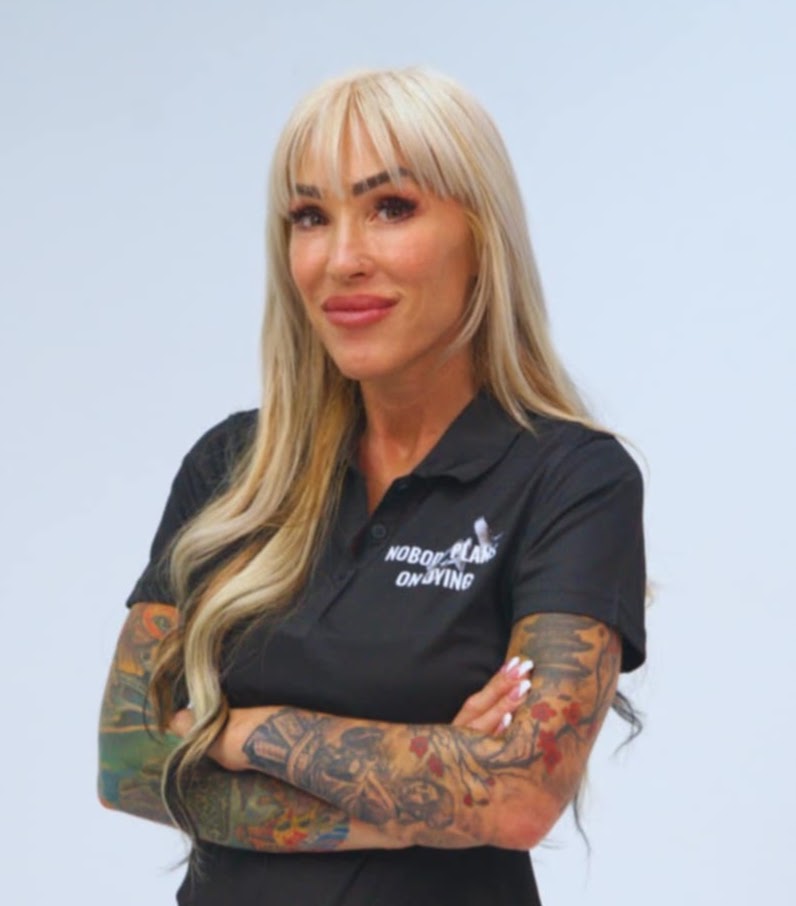
Sage Robinson is the Co-Founder of Nobody Plans On Dying, a youth intervention and prevention organization built on connection, belonging, mentorship, and purpose. With more than 15 years of experience in behavioral health, trauma-informed care, addiction recovery, and youth mentorship, Sage has spent her life helping people discover that they aren't broken – they're disconnected. Her mission was born from her own experience with addiction, profound loss, recovery, and the realization that shame never heals.
Today, Sage joins Jason to dismantle one of society's most damaging assumptions: that addiction is a moral failure. Instead, she explains why addiction is often rooted in pain, trauma, isolation, and unmet human needs – and why the path to healing begins with connection rather than condemnation.
In this episode, Jason and Sage cover:
Why the belief that addiction is simply a lack of willpower keeps people trapped instead of helping them recover
How growing up in a dysfunctional home convinced Sage there was "something wrong" with her
The devastating loss of her husband to an overdose – and the moment that ultimately transformed her own recovery
Why guilt and shame reinforce addiction instead of breaking it
The difference between punishing behavior and understanding the pain underneath it
What the famous Rat Park experiment teaches us about addiction, isolation, and human connection
Why programs like "Just Say No" often fail without providing real support and mentorship
How Nobody Plans On Dying is helping young people through long-term mentorship, purpose, and community
The simple question every parent, teacher, and mentor should ask instead of "What's wrong with you?"
Why Sage believes love, belonging, and connection – not shame – are the true antidotes to addiction.
Shame is the lie. Connection is the truth. This conversation challenges everything many of us have been taught about addiction – and offers a more hopeful path forward.
📺 Watch on YouTube → https://www.youtube.com/@therealjasonduncan
🎧 Subscribe wherever you listen to podcasts so you never miss a Monday conversation or a Wednesday What's Real drop.
📬 Get What's Real in Your InboxEvery Wednesday, Jason publishes What's Real – a newsletter exposing the lies most people believe and revealing the truths they were never taught. Subscribe here: https://www.therealjasonduncan.com/articles
👤 Who Is Sage Robinson?Sage Robinson is the Co-Founder of Nobody Plans On Dying, a nonprofit dedicated to youth intervention and prevention through mentorship, belonging, and connection. With over 15 years of experience in behavioral health, trauma-informed coaching, recovery, and youth development, she works to help young people build lives they don't need to escape from through meaningful relationships, purpose, and community.
🌐 Website: https://nobodyplansondying.org/📱 Social Media:
LinkedIn: https://www.linkedin.com/in/sage-robinson-b26a323b1
Instagram: https://www.instagram.com/sage.nyosei/
🎙️ Want to be a guest on the show? Apply at → https://www.therealjasonduncan.com/guest
❤️ Love the show? Leave a 5-star review on Apple Podcasts or Spotify – it only takes 30 seconds and helps more people discover conversations that challenge the lies they've accepted as truth. If this episode changed how you think about addiction, share it with someone who needs to hear it.
Key Takeaways
- The lie I want to expose is that addiction is a moral failure and that people struggling with substance use simply don't care enough, aren't trying hard enough, or could stop if they really wanted to.
About the Guest
Sage Robinson
Guest
Sage Robinson is the Co-Founder of Nobody Plans On Dying and the visionary behind its innovative youth intervention and prevention model. With more than 15 years of experience in transformative coaching, behavioral health, trauma-informed care, and youth mentorship, Sage has dedicated her life to helping individuals break destructive patterns and reconnect to purpose, resilience, and authentic well-being. Having experienced profound adversity and a lack of support during her own youth, Sage understands firsthand the pain, disconnection, and isolation many young people silently carry. After fully healing her own past and transforming her life through years of inner work, recovery-centered practices, and advanced training, she became deeply committed to creating the kind of intervention and support system she wishes had existed when she was younger. Her work is rooted in a simple but powerful belief: prevention must go beyond awareness alone – it must create connection, belonging, mentorship, and purpose before young people reach a crisis point. Her professional background includes working alongside governing agencies and recovery-focused organizations helping previously incarcerated individuals rehabilitate, reintegrate into society, and build sustainable lives in recovery. She has also collaborated with treatment facilities and wellness programs to develop holistic approaches integrating mindfulness, emotional regulation, behavioral support, and connection-based healing. Sage is a Certified Master Trainer with the Coherence Institute and holds certifications in substance abuse counseling, trauma-informed care, Dialectical Behavior Therapy (DBT), Cognitive Behavioral Therapy (CBT), mindfulness practices, and advanced transformational coaching methodologies, along with college studies in world religions. In addition to her work in behavioral health and coaching, Sage has extensive experience managing teams, overseeing large high-traffic businesses, and planning and executing fundraising initiatives, workshops, retreats, and community events. Through Nobody Plans On Dying, her vision is to help reshape youth intervention by creating proactive, relationship-centered support systems within schools and communities – changing not only individual lives, but entire generations.
Never miss an episode.
Subscribe to The Real Jason Duncan Podcast on your favorite platform.
I always just concluded that there was something wrong with me because of the ways the world reflected back to me.
There must be something wrong with me because I can't stop because I don't know how to deal with emotions because there's something wrong with me.
I'm inherently broken.
She spent years watching people that she loved destroyed.
by addiction and the lie that everybody kept repeating was the same.
Hey, they could stop if they really wanted to.
They just don't care enough or things like they're not trying hard enough.
So for my guest today, that really wasn't wisdom.
That was the thing that kept people isolated.
It kept them ashamed and it kept them stuck.
Welcome to the Real Jason Duncan podcast.
I am your host, Jason Duncan.
Every guest on the show is here for one reason.
They used to believe something that turned out to be wrong.
And some figured it out on their own.
Some had to get knocked on their rear end first.
But either way, by the time they sit in this chair across the microphone, they know the difference between what's real and what isn't.
And the lies that I found that do the most damage are the ones that look like wisdom.
They're the ones that everybody repeats.
They're the ones that you're so sure about that
nobody ever thinks to question them.
And a lie like that can build a cage around you.
And that's why people stay in it, because the cage looks gold.
It looks good.
It looks like the smart play.
It looks like the good life.
It looks like a strong community.
It looks like the right way to help people.
but nobody walks away from something that looks like a treasure.
And that's what the show is about.
The gold is the lie.
Every conversation here is about finding the cage and seeing that the gold was never really real.
And how do we walk out of that?
So the lie that my guest today believed is
is one that almost everyone believes about addiction.
Now, whether you've been addicted yourself, you've overcome it, you're in the middle of it, you know somebody close to you, you've probably believed this lie.
And the lie sounds like tough love.
It sounds like personal responsibility.
It sounds like the hard truth that people need to hear.
And that's what makes this cage golden.
She watched it happen.
She watched people that she cared about get trapped by shame and by judgment.
And she watched the things, these things keep them isolated.
And she watched the just care more message lock people into deeper, deeper suffering.
And then she realized something that changed everything about how she sees addiction and how she sees people and what it actually takes to heal.
And she's built her entire life's work around what she found
on the other side of this lie.
My guest is Sage Robinson.
She's the co founder of Nobody Plans on Dying, which is an organization dedicated to youth intervention and prevention rooted in connection, belonging, and purpose, not shame.
And she's a certified trauma informed coach, and she's a behavioral health specialist with more than 15 years of working in recovery.
And she spent years helping people who were told that they were broken find out that they were just disconnected.
And she understands this from both sides.
She's lived through it, and then she's dedicated her career to making sure that other people don't have to do that.
So, Sage, welcome to the show.
Thank you.
Thank you so much, Jason.
Yeah.
It's good stuff.
I think we're going to get in deep today.
And I do, like I said in the opening, I think that a lot of us
are walking into the today's episode believing, yeah, well, why don't they just try harder?
Why not?
They could quit if they want to.
So before we get rolling, I told everybody,
that you came on this show ready to expose something, a lie that you used to believe.
And that's what we're talking about.
This lie that everybody repeats about addiction, that addiction is moral failure, that people struggling with substance abuse, they're not, they're not trying hard enough or they don't care or they could stop if they really wanted to.
And you believe that at one point, but now you've dedicated your career to exposing why that's wrong.
So I want to start right there.
Where does this belief come from that if you just try
harder, it'll be fine.
It's a moral problem.
And how deep were you in that lie before you found out it wasn't true?
Yeah.
So I want to share a little bit about my story growing up.
And when I was a kid, I grew up in a dysfunctional family, like probably many, many people do.
I had an abusive father and an addicted mother, and I would act out.
I didn't know what to do with these emotions.
that I was going through my parents, they did the best they could with where they were at, but they didn't have the tools to be able to teach me or help me or guide me through things.
So I would act out like any kid in that situation.
And what happened was I would go to school and I would get punished.
At home, I would get punished.
And I was constantly getting punished for the ways that I was acting out.
And it left me with the conclusion that there must be something wrong with me.
You know, everyone's telling me, you know, stop doing this, stop acting out, stop using drugs, stop.
You know, it's like those are the people that I gravitated towards because that was the only place that I felt like I fit in because I didn't know.
I didn't know how to deal with emotions and I felt like they didn't either.
Right.
So nobody ever once asked me what's going on.
Why are you acting out?
You know what?
What is coming up for you that maybe we can help you through?
It was just punishment for the ways that I was acting out.
And I'm seeing that in schools today, but I see that in the world in a really big way.
It's like everyone said, you should just quit.
My father would tell me, you're a loser, just quit.
You know, stop doing those things.
He would say, you know, he would say those things and I would hear that mirrored back in all the ways from teachers, from school, from the way that I was being punished from all the things.
And what I see is like this is kind of this is a nationwide issue whereas.
You know, we're not asking the right questions here.
We are punishing for the ways that people are acting out, but you know, like all the people that we have
that are incarcerated, for instance, or that in substance abuse treatment, for instance, it's like they all were these children.
They all came from this place where they just don't know how to-- they feel disconnected, they feel judged, they feel isolated, and they feel like there's something wrong with them.
It's a moral dilemma.
And so that's the lie.
Well, I want to know about you because before you were coaching other people, before you built Nobody Plans on Dying, you, as you are indicating and alluding to in that story, you were on the other side of this.
You were on the other side of that lie.
So can you take me to a moment where you felt the weight of it and where you understood firsthand that judgment and shame weren't helping you heal?
And tell us what that was like.
You know, I think that when it profoundly hit me in a really big way was actually after my husband's death.
You know, he died of an overdose and there was, you know, a lot of pain that I had went through and I kind of hit a bottom with myself.
And it was like through that bottom, I finally surrendered to pain, all the pain that I had never learned how to
to deal with, how to feel, how to process.
Like all of a sudden, I would finally just surrendered to that pain.
And that pain just got me closer to myself.
You know, it was a portal to truth and to God, if you believe in God, you know, and, you know, and that, and with that, I really saw myself clearly for the first time.
You know, I saw myself, I saw my actions, I saw
I just had so much compassion and empathy for myself it's like I took responsibility for everything that I had done up till that point and you know because I was able to see it really clearly but I didn't see it from a place of guilt and shame anymore I realized that I carried all this guilt and shame and that guilt and shame was what was perpetuating the problem you know that's exactly what caused me to continue being a self-fulfilling prophecy
And being that person that I believed that I was, which was stuck in this moral dilemma.
And when I found that freedom to the other side, it was just the most beautiful freedom that I had ever experienced.
And it just became really apparent to me that why doesn't the whole world know this?
You know, and
You know, it's a lie.
Yeah.
Well, when you were in the middle of the, I guess, addiction, I mean, would you consider yourself a recovered addict?
Is that a fair thing to say?
Yeah.
Okay.
So were you in the middle of the addiction?
And somebody would say to you, maybe not your dad, because there's a whole familial relationship there that carries a whole nother element.
But if just anybody, just general, a friend, an acquaintance, somebody, or maybe somebody in authority that you would have respected said, just quit.
Like, what are you doing?
This is stupid.
This is terrible.
You're a bad person or anything like that.
When you felt that shame,
Did it drive you deeper into the addiction?
Did it not matter?
Did it give you steps to start climbing out?
Tell me about that.
Absolutely not once did when someone came at me with a judgmental tone, you know, to just stop or think, you know, or it always triggered the shame and the guilt and that shame and that guilt
always just took me deeper into it, you know, and those thoughts about, yep, I'm a loser, you know, yep, I can't do this, you know, would just continue to play in the background in my mind, because that's, that's the message that I hear.
That's the message that I'm receiving when I feel like there's something wrong with me, because I can't stop.
Right.
And like, and so, and that's what we're
And that's the message that this world has kind of been giving up until now.
We've been began to shift it, but it really needs to shift a lot more in a big way.
So how did, for you personally, how did the recovery start?
I know it wasn't shame.
It wasn't guilt.
It wasn't people saying, just quit, would you?
Like it's, that didn't work because those are lies.
That doesn't, doesn't help.
So what did.
What did, what was the trigger that said, you know what, I'm out?
Was it your husband's death?
Was that the trigger or was there something else?
That was, that was the, the final straw kind of, so to speak.
Excuse me.
That's, that's really what was the final straw.
Yeah, there was many times prior to that where it's like, I would try to quit and it just didn't stick, you know, it didn't stick because I didn't have
the tools that we're going to talk about in a little bit.
I didn't have that the community, the connection, you know, the the things that we need in order to find the way out of that dark place.
Right.
And but yeah, it was definitely it was definitely that it was the pain of that.
I got to a place I call it the gift of desperation, you know, where I finally reached that place where I surrendered, fully surrendered to the pain
of where I was at, you know, and you know, there's very few people, it's like, it's something like 2% or out of a hundred, maybe or 1% out of a hundred.
I remember when I was in school for this, they said, you know, look to the right, look to the left, you know, that's the percentage, they're not gonna make it, you are, right?
And there's one of you, one of you three would make it and so,
It's a small percentage on how many people actually make it out of addiction.
But it's like we have these, we keep going in these same patterns for so many years and it gets deeper and deeper and the neural pathways in our brain, the grooves, they get more solid and it's harder to find a way out.
And so if we can address this stuff when we are kids, with our kids, that's really the key.
here you know we're spending um spending billions of dollars on on institutions on incarceration you know in in our nation we're spending billions of dollars on substance abuse treatment facilities that we are paying for out of our tax dollars you know billions we are paying zero zero money on intervention that is helping the kids before they even get to that place but where do you think
You know, all of those people that are incarcerated, that are in treatment facilities, it's like they were once children.
Like, that's where it came from.
We haven't found a way to fully be able to intervene before it even gets to that place.
Well, it's unfortunate that your story ended or began, as it were, with the death of a loved one.
I guess the closest person on the earth to you, your husband, had to go through an unfortunate
overdose and death as a result of that, for you to wake up that final straw to say, I'm not going to do this.
And you got out of addiction.
And we can't expect that everybody have to get to that spot to get out.
So if we do want to get into intervention so that nobody has to get to that place where you've hit rock bottom and you're losing the people closest to you to climb out, what do we do?
How do we intervene?
What what are the steps?
And that's what I want to get into next.
Okay.
So that's where we're coming to.
But I first, before we get you the opportunity to answer that, I want to talk to our listeners a little bit about some stuff with our sponsor today.
Let's take a quick break to thank our amazing sponsors for making this podcast possible.
But before I talk about the sponsor, I want to talk specifically to you if you're a business owner.
if you're building something, a business, a practice, an organization, you already know that it takes a lot of work.
But before you can exit that, before you hand it off or even scale it, there are some things that need to get fixed first.
And if you want to learn how to do that, go to WhatToFixBeforeYouExit.com and you can join a live webinar that I do every single week.
There'll be one coming up this week.
It's free, it's very practical, it's live, and it might be the thing that changes what you're building.
So go to WhatToFixBeforeYouExit.com and book a time for the webinar.
Now, if you want to book a time directly with me, say, look, I just like to talk to you directly and we'll get into it deep really fast.
You go to TheRealJasonDuncan.com/talk and we can book a time for us.
Now let's talk about the sponsor.
Our sponsor for today is Dubb.
And if growing your business with personalized video outreach is on your radar, you really need to know about Dubb.
This is a video sales platform that I've personally been using since 2018, and I'm not exaggerating when I say I use it nearly every single day, at least every week for sure.
Dubb makes it easy to record and send videos that stand out in crowded e-mail inboxes because if you get an e-mail like
You get all these emails.
You probably delete most.
You don't even read them because they're just simple text.
But Dubb lets you send a video right in that inbox, and it's got clickable calls to action so viewers can instantly book a call or they can take a next step, and you get real-time analytics that tells you exactly who watched it, how long they watched it, did they click on the CTA, so it lets you know how your videos are performing.
Head over to therealjasonduncan.com/dubb to learn more.
You can get started with 50% off your first
two months and a free trial.
That's the real Jason Duncan.com slash dub.
Big shout out to to Darius and Ruben and all the guys over dub.
Been a big fan of theirs for a long time.
Thanks for sponsoring today's episode.
Thanks for listening to our sponsors.
Now back to the show.
All right, Sage.
So I asked you, what do we do for this intervention?
So what is it?
How do we how do we intervene as early as possible in a way that's meaningful and successful?
Yeah.
So I was walking through the schools, you know, because I was piloting our program.
Right.
And we were talking with the kids.
And over here we had a kid that was adopted and felt alone.
Right over here we had a kid who his mother's on, you know, drugs and home life is crazy.
Over here we had a kid, his his brother was incarcerated.
you know, and they wanted to talk about it.
They wanted they wanted to be able to share what's going on with them, you know, and and that, you know, and so it became really apparent that, you know, the same thing is going on today.
And let me tell you, you know, when I went into the schools, it's like it's even worse today because what they were doing, at least here in California, is the kids that are getting in trouble, they're putting them in special ed classes like they have like they have a
disability, you know, enough if there's anything wrong with special ed, but that's not, that's not what they need.
They don't need to be put in segregated into a special ed class.
You know, what we need to do is be able to find out why they're acting out, what's going on, right?
And getting them connected with things that they are, they're passionate about.
So I went to school, like I told you, I went to school for substance abuse and, and
One of the things that we learned in school was something called rat park experiment.
And years ago they had rats in cages and they would have rats in cages with the drug and the rat would continue to do the drug until it killed itself.
And they said, well, that's addiction in a nutshell.
And then somebody, this guy, he came along and he said, yeah, but look at its environment.
It's alone, it's isolated, let's change its environment and see what happens.
And so they created Rat Park.
Rat Park, they could have all the connection and love that they wanted, exercise and all the things.
And not once did a rat kill itself.
Rarely did it even go back a second time for the substance.
So what we learned about that and what all of substance abuse treatment in the United States is based in is this experiment.
And what that taught us is that love and connection is the cure for the disease of addiction.
That's the antidote.
And so what we've been doing up until now is the opposite.
You know, as a society, we've been doing that as the opposite.
And what we need to do is just that.
So like when we go into, like if you go into treatment, substance abuse treatment,
They have you do an intake.
In that intake, you are categorized in five different sections.
All of them are geared to find out where you're disconnected from.
Right.
And and to help that person to level up in whatever area that they're disconnected, whether it be mental health, whether it be home life, you know, whatever that is, we help you help the client to get
those levels up in those areas so that they get their connection back or they get a connection for the first time sometimes.
If we can do that, I believe that the reason
why we have less success rate, you know, with people recovering is because, you know, of those, the, you know, you hear that, you know, that saying can't teach an old dog new tricks, right?
Like the longer we are in these patterns, the more they're ingrained in us and the harder it is to get out, right?
But if we address this at the root cause with our children and we say, okay, where are you disconnected from?
You know, what are the challenges that you're having in your life right now?
And sometimes these kids don't feel like we don't feel like we can talk to our parents all the time, right?
So sometimes we need a person on the outside and it may not be, you know, going to going to a therapist because sometimes kids think, OK, that's punishment.
I'm going to a therapist, you know, just sometimes it might be just a mentor and someone that can relate.
So.
So that's what we're doing with our program today.
But it really is about finding out what the challenges are, what their pain points are, what they're disconnected from, helping them get self-esteem, helping them get connected to things that they're passionate about, and around positive friends that are all on the same path going the same way.
Well, I'm going to apologize to the listeners who are listening to this.
I'm getting some weird sounds every once in a while.
And we checked all this before we started.
They weren't doing this when we started recording.
Hopefully it's not coming through, but every once in a while I get a weird sound.
So hopefully it's not bothering you while you're driving your car or you're walking your dog, wherever you are listening to this.
But Sage, so Nobody Plans on Dying.
This is, first of all, interesting title.
I think I like the name.
So what are you doing?
Is it youth intervention plans?
Tell us a little bit about how you're doing this.
Yeah.
So, you know, this this actually started because we were seeing a lot of kids and and, you know, adults in the community that were dying, you know, and it was happening within my friend in our friends group and friends of friends group.
And it was happening so frequently because of this fentanyl overdose epidemic.
you know, that people are actually becoming, you know, numb to it.
It was happening so much that, you know, it was just, it was apparent that something needed to be done really quickly.
You know, that this fentanyl has really gotten out of hand and it has become the number one killer for people 18 to 40 and the number two killer for kids
you know, under 17 years old, the number one killer being guns.
So that being said, you know, we decided that we wanted to do a documentary and start, you know, covering a couple families that had lost their loved ones so that we can really take the stigma out of this and show that these are your, this is your family, this could be your brother, this could be your sister, this could be your father, this could be your kid.
You know, and these are real people.
And not that there's anything, I don't see anything different from the homeless guy, you know, on the street to, you know, a very successful person.
However, you know, this is happening to in all communities right now.
This is happening everywhere.
And so we really wanted to bring that forward and take the stigma out of it and we really helped to get across
the story that's going on and then bring that education into the schools because what was happening and what is continuing to happen is that the fentanyl has been being pressed in two pills, in marijuana, in cocaine.
And so they're doing, they're going to smoke a joint.
You can't, you know, like you can't experiment like you could when we were kids nowadays.
They go to smoke a joint and it's laced with fentanyl and they're dying.
You know, they take a pill that they think is that they think is a Xanax laced with fentanyl and they're dying.
You know, and we had a kid did their she did a line of cocaine and she was like 13.
You know she she died and this is a real issue.
So not only not only are we.
Is it affecting people that have substance abuse issues, but it's affecting people that have never touched drugs before and their first time they're dying, you know, and this is and it's been it's been really impactful.
So we wanted to make a difference.
So we started in a series of documentaries.
We completed our first one.
We're almost done with the second one.
And with that documentary, we're taking it into the schools.
We've created curriculum for the teachers to do with the students.
for a couple days after we're gone.
And that really does help to educate.
And then we are bringing in an intervention program.
So if they wanna be a part of our program, we open up the discussion while we're there.
And if they wanna be a part of our program, then they sign up for our program and we assign them a mentor.
That mentor will in turn do exactly what we talked about, helping them get connected with whatever it is they're disconnected.
from and whatever challenges they're going through.
And we provide self-esteem, character building opportunities for them and we get to follow them through all the way.
This is a long-term program, not a short-term thing.
And we've found that it is really successful when we address things this way.
So that's what we're doing.
So let's talk about this connection.
So if connections are what people need to help step out of addiction and you're working with kids,
I would assume only because it's an assumption I make as someone who's never had addiction problems, drugs have never been a part of my life.
So I can only make assumptions because I don't know that I don't know that world.
But my assumption is a lot of the kids who end up becoming addicts are the more loner, you know, they're, they're, they're more alone.
So if you if you're trying to help with connections,
What are you doing there?
Because it can't just be a program in the school and a documentary, which is amazing that you're opening people's eyes to it, but what interventions are going on otherwise and how do we get involved in that?
How do we participate in that?
Yeah, well, there's a couple of ways we can get involved.
First, I need clarity on the question.
I think though, that you were asking about it can't just be intervention programs and like, what do we do for the loners?
Yeah, well, I think just going into a school like I was part of just say no when I was in middle school and all the kids, all the kids that just say no, we're all drinking and doing whatever they were doing.
Like, not me.
I was always good.
I'll use good in quotation marks.
That just wasn't the thing that I did.
So so a DARE is another one, drug abuse resistance education, which I think you're probably familiar with.
I don't that was post my life in schools.
I don't know much about that.
But these are intervention or attempts to do it.
And those are laudable.
I think they're fine.
And I don't know much about your program other than just talking with you.
But what do we do beyond just the presentation of it?
How do we actually intervene?
Yeah, that's a great question.
So I actually did a thesis on this when I was in school, right?
Because the DARE program, the Just Say No program, this is your brain on drugs, like all of that, they failed miserably.
Not only did they fail, but you know, the percentage rates increased afterwards.
It didn't help.
Like we all remember it, so that's great, but it didn't actually make an impact.
And the reason it didn't make an impact is because it didn't come with a lifeline and a way out.
You know so like we can educate we can I remember being there and I was you know I am that old so I was I was there during that and I remember saying yeah just say no you know but like it didn't make any impact in my life.
It didn't give me any way out from the issues that I was facing.
You know there was no intervention with it.
It was just just say no you know that doesn't that doesn't do anything for us.
We have to be able to provide these kids with a lifeline and a way out.
That is the most important thing.
And so how we can get involved is one, if it's your kid, if it's your family member that is struggling, that you see that they're having a hard time, whether it be mental health, whether it be at school, socially, whether it be at home with you, we have to be able to
shift the conversation.
We have to be able to ask them, you know, what's going on?
How can I help?
How can I support you?
You know, and if they're not willing to talk to you, then get them connected to someone that, you know, someone that they will talk to, you know, a mentor, big brother and sister is something you can sign up for our program on our website, you know, we offer
over the phone and zoom mentorship and we will help with that.
And we are planning on getting in every area in the nation, but right now we're only in San Diego.
And so that is, you know that that's what we can do.
The other way is to help us to be able to fund these programs for the kids.
So, you know, we provide them with things that build character, things that they're passionate about when we create the life that we love, we don't want to escape from it.
Right.
And that that connection is huge.
So we help them to create a life they love, you know, whether it be with, you know, groups of kids and activities, you know, of kids that are actually doing positive things, character building things, you know, whether we offer them martial arts, art programs, music programs, extracurricular activities.
We have a skateboarding program taught by the pro the top pro skateboarder in the world.
We have, you know, we have
We have a lot of opportunities for them, and we'd like to be able to provide them with extra things like an education, computer programming, business, whatever it is that they have a passion for.
Because if we get them connected with what they're passionate about, that's the first thing, because that's going to give them self-esteem.
It's going to give them a path that they actually enjoy.
And then a community of like minded kids that they're hanging out with friends that they're hanging out with that are also on that same path that are doing good things that are, you know, positive role models for them, you know, and so we and like I said, we have a mentorship program.
So we are with them, you know, once a week we check in with them, we get to go to their things, support them, you know, and and really be bridge that gap.
And if they're
they're suffering from, you know, any type of challenge, you know, whether it be school or their studies or, you know, we help them with that as well to get them connected to tutoring, we get them connected to counseling, we get them connected to, you know, whatever it is that's gonna help that individual student.
But it is really a tailored individual path forward for each student.
So Sage, what do you now know after your life experience that you wish somebody told you
20 years ago?
And why do you think nobody told you?
That there's nothing wrong with me.
There's nothing wrong with me.
That was, I think, the biggest thing is like I always just concluded that there was something wrong with me because of the ways that the world reflected back to me, whether it was at home or whether it was at school, whether it was the community,
There must be something wrong with me because I can't stop because I don't know how to deal with emotions because I don't, you know, there's something wrong with me.
I'm inherently broken and that isn't the case.
And I wish that someone was there to just let me know that there was nothing actually wrong with me.
You know, I just needed a way out.
Why don't you think anybody told you that?
I don't think that we have the knowledge to know that these are the questions, that these are the things that we need to hear and we need to change the way we're addressing things when our kids are acting out and when we see someone doing things that are
I want to say they're not esteemable acts, right?
It's like, yeah, of course, you know, we don't condone those things.
We don't condone, you know, breaking into a car or doing those things or breaking a window.
We don't condone that.
And of course, we have to, you know, we have to address those issues as they arise.
And there's the other side of it.
It can't just be the punishment.
There has to be, you know, reaching them human to human
You know, what's going on in having these conversations.
So let's say plainly the lie here and everything that sits underneath it is this belief that addiction is about willpower or lack thereof or about morality or about trying hard enough.
And this is the part that I like about this episode is I want people to sit still with that because we've all believed this.
We've all believed that that's what it is, some more strongly than others.
And we have to understand, like Sage is talking about, this is not, that's not what it is.
This is a, in many ways it can come back to connection and a lifeline, you know, connection and lifeline out.
So I want to give you a minute, a full minute without me interrupting you of what this lie is.
why people believe it, and then most importantly, what it's costing people to stay in that lie, or we still believe that lie, whether you're the addict or the supposedly supportive person.
So you get one minute.
I'm not gonna interrupt you at all.
I want you to say it as deeply and passionately as you possibly can.
What is the lie?
Why do people believe it?
And what does it cost to stay in it?
Okay, the lie is that it's a moral dilemma, that it's, like you said, a willpower problem.
Right.
What's the next one?
So why do people believe it?
Yeah, well, people believe it because there's some people that can do that.
There's some people that could do it.
And when you don't, when you haven't had the disease of addiction either, it's like you don't understand it.
It's hard to understand something that you haven't experienced for yourself and they've now classified it.
in our medical books, right, that it is actually a disease.
And so to really address it like it's a disease.
And then what does it cost to continue believing this lie?
Well, aside from billions and billions of dollars that we're spending on prisons and substance abuse treatment, you know, it's costing us our
Our families, it's costing us our friends.
It's costing us our our future for, you know, for our planet.
I truly believe that love and connection is the antidote.
To this this epidemic.
You know, and so it's costing it's costing us that and.
And I know that I I truly believe that the majority of us when we are when we are
punishing, you know, when we're punishing our friends or we're saying, you know, we're judging our friends, you know, it really is coming from a place of love and wanting them to do better, right?
But when you realize that the way that you're approaching that is actually doing the opposite, maybe we can shift that, right?
Because we all have the same goal here.
It's just the approach just needs to be tweaked.
Sage, tell people how to reach out and find you.
Yeah.
So you can reach out at nobodyplansondying.org.
And we have a button there that you can you can sign up for a mentor as well.
And there's also a page to read all about us.
And we have an amazing team behind us and you can take a look at that.
And yeah.
All right.
Final question.
If if someone listening right now is still believing that lie, that believing believing that addiction is just moral failure, what's the one thing that you want them to hear before this episode ends?
You know, do the research.
Do don't believe me.
You know, do the research yourself.
And look it up, look up Rat Park experiment, look up the research that's been done in Greenland where they did this program and it was effective and they lowered the substance abuse by 70% and incarceration rate.
Look it up, look up all the ways that there's truth in this.
That's all I can say is you don't have to believe me, do the research yourself and you'll see that it's true.
And we all have the same goal here.
So it's not about who's right and who's wrong.
It's about what's more effective and what's the solution.
Sage, I applaud you for your work and your heart for helping mostly adolescents, but I know everybody avoid addiction and then recover from addiction.
And because you're right, nobody plans on dying.
I'm sure that was the same with any friends that you've watched go through that, certainly your husband and his situation.
Nobody plans on this and we can figure a way through this.
We just need a lifeline.
We need connection.
So, Sage, thank you for what you do.
It's a much needed work in this world.
Thank you, Jason.
Thank you so much for having me on.
Well, that's a wrap on today's episode.
If you saw a bar on a cage that you didn't expect to see, you didn't think you were in, send this episode to somebody who needs to see theirs too.
The gold, as we say, is the lie.
As always, I am your host, the real Jason Duncan, and Jesus is King.
We'll see you next time.
Hey, thanks for listening to this episode.
Remember, we release new episodes every single Monday, so make sure you tune in.
You can find all the show notes, everything from today's episode and more at the real Jason Duncan.com.
If you want to follow Jason, just search the real Jason Duncan on your favorite social media platform or your favorite AI platform.
You'll find him there.
We'll see you next time on the Real Jason Duncan Podcast.