Charisma Isn't a Gift, It's a Skill
Prefer audio only?
About this Episode
In Episode 383 of The Real Jason Duncan Podcast, you either have it or you don’t. That’s what the world believes about charisma. And the woman who literally wrote the book on it – she believed that too. Then the science came back and killed the myth entirely.
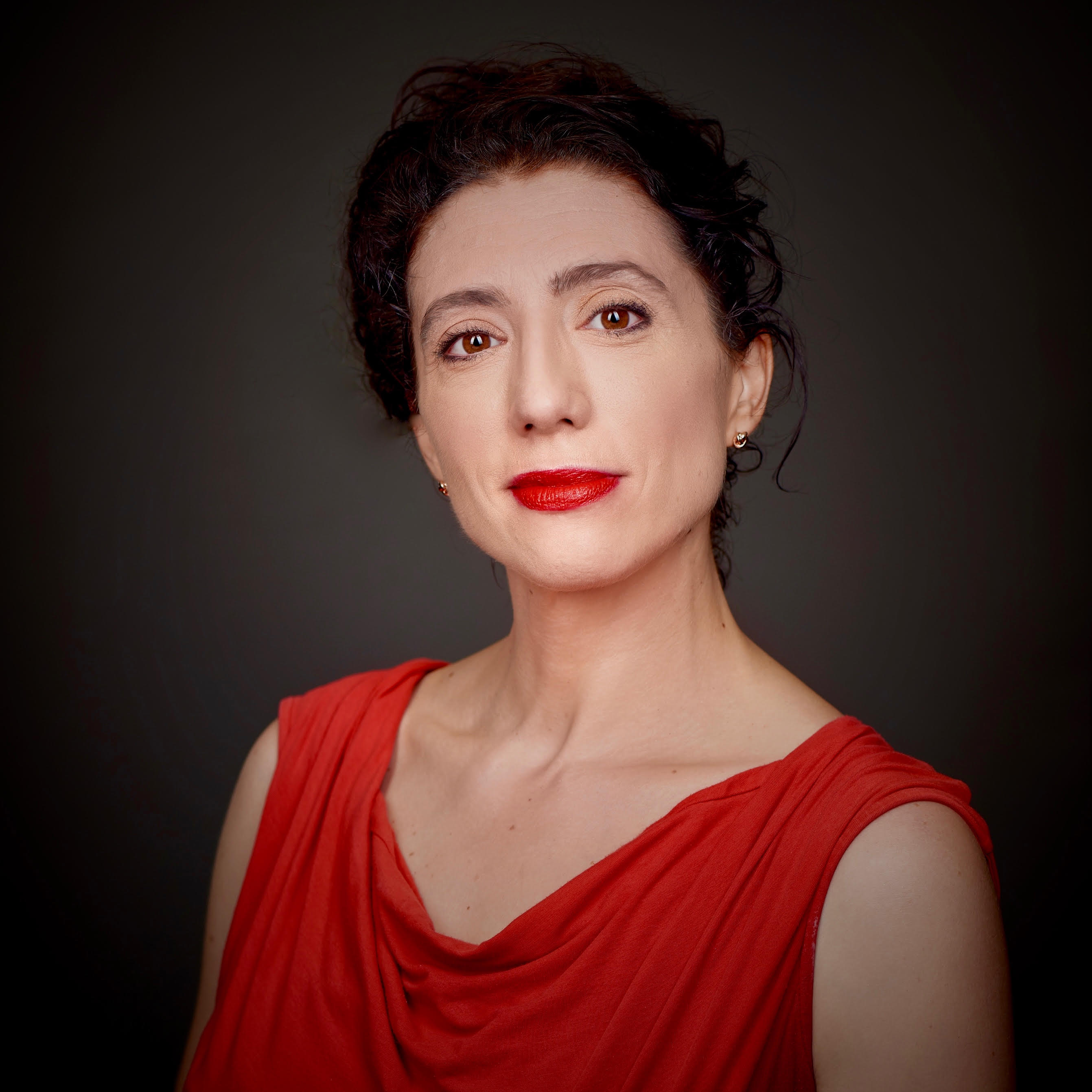
Olivia Fox Cabane is the author of The Charisma Myth, translated into 36 languages and one of the top five books Jason recommends to everyone. She has taught the science of charisma at Harvard, MIT, and the United Nations, coached the leadership of Apple, Google, and TikTok, and built her entire career on a single truth: the thing everyone calls a gift is actually a skill. She joins Jason today to expose the lie she once believed herself – that charisma is innate, magical, and either yours at birth or not yours at all.
Today, Olivia sits down with Jason to dismantle one of the most comfortable lies a person can believe. Because if charisma is a birthright, your awkwardness isn’t failure. It’s just the verdict about how you were made. Nothing to fix. Nothing to work on. You’re simply not one of those people. Except the verdict was fake.
In this episode, Jason and Olivia cover:
Why charisma was a taboo research subject for 50 years – and what changed in 1989
The two turning points in the science of charisma – and what the 2011 study proved that changed everything
The three components of charisma – presence, power, and warmth – and why introverts can be more charismatic than extroverts in certain contexts
How Steve Jobs learned charisma step by step in public – and what you can see if you watch him from 1983 to 2011
Why the most charismatic people learned it so early it looks like they were born with it
The guardrails of intent and impact – and why charisma is a tool like a knife in the hands of a surgeon
The real downsides of charisma that nobody talks about – and why Olivia keeps it turned off most of the time
What happens to leadership, medicine, parenting, and sales when charisma is added – and why it’s a force multiplier in every area of life
What online charisma looks like and why it’s different – audio compression, camera placement, and why gesturing matters even when it can’t be seen
What Olivia now knows that she wishes someone had told her 20 years ago – and why nobody did
The one thing Olivia wants every person still inside this lie to hear before the episode ends
The lie costs everyone who never heard their voice. Every quiet person with a better idea who stayed quiet. Every founder who handed the pitch to the natural in the room. This episode is the beginning of getting that credit back.
📺 Watch on YouTube → https://www.youtube.com/@therealjasonduncan
🎧 Subscribe wherever you listen to podcasts so you never miss a Monday conversation or a Wednesday What’s Real drop.
📬 Get What’s Real in Your Inbox Every Wednesday, Jason publishes What’s Real: a newsletter that exposes the lies most people believe and reveals the truths they were never taught. Subscribe and get it delivered before the audio episode drops every week. 👉 Subscribe here: https://www.therealjasonduncan.com/articles
👤 Who Is Olivia Fox Cabane? Olivia Fox Cabane is the author of The Charisma Myth, translated into 36 languages, and The Net and the Butterfly. She has taught the science of charisma at Harvard, MIT, the United Nations, and the Marine War College, and has personally coached the leadership of Apple, Google, and TikTok. Her work is built on a simple premise: charisma is not a gift. It is a set of specific, observable, trainable behaviors that anyone can learn at any age.
🌐 Website: askolivia.com 📱 Social Media: Search Olivia Fox Cabane on LinkedIn
🎙️ Want to be a guest on the show? Apply at → https://www.therealjasonduncan.com/guest
❤️ Love the show? Leave a 5-star review on Apple Podcasts or Spotify – it takes 30 seconds and helps more entrepreneurs find the truth they’ve been missing. Send this episode to someone who counted themselves out of leadership because they thought they weren’t one of those people.
Key Takeaways
- I used to believe that charisma was innate, you either have it or you don’t. Science proved me wrong: charisma is learned behavior.
About the Guest
Olivia Fox Cabane
Guest
Olivia Fox Cabane is a leading authority on the science of charisma and the bestselling author of The Charisma Myth and The Net And The Butterfly, translated into 36 languages. Formerly Director of Innovative Leadership for Stanford StartX, she has lectured on charisma, leadership, and innovation at Harvard, Yale, MIT, the Marine War College, and the United Nations. Her clients include the leadership of Apple, Google, TikTok, Deloitte, UBS, and JP Morgan as well as founders of Airbnb, Brex, Paradigm, and Presight. She has been featured in The New York Times, The Economist, and The Wall Street Journal. As cofounder of the KindEarth.Tech Foundation, she supports foodtech companies advancing environmental sustainability. Olivia is fluent in four languages and was the youngest person ever appointed Foreign Trade Advisor to the French Government.
Never miss an episode.
Subscribe to The Real Jason Duncan Podcast on your favorite platform.
Charisma is not innate.
It can be learned.
Understanding that it's not a magical quality, but just a series of behaviors.
You don't have to change your personality.
You don't have to become an extrovert if you're naturally an introvert.
What will change is the kind of charisma you get depending on which of these elements is strongest.
You either have it or you don't.
That's what the world believes about charisma.
And the woman who literally wrote the book on it, she believed that too.
And then the science came back and it killed this myth.
The thing that you think is a gift is actually learned behavior and anybody can build it.
Welcome to the Real Jason Duncan podcast.
I'm Jason Duncan, your host, and every guest on the show is here for one reason.
They used to believe something that turned out to be wrong.
And here's the thing about the lies that trap us.
They usually don't look like lies.
They look like wisdom.
They look like the way the world obviously works.
And a belief like that can sometimes become a cage for us because it's golden in the sense that it feels good, it looks good, but it's still, it's uncomfortable in the sense that it holds us back, but it's comfortable because it's golden.
We can make sense of the lie.
And when we pressure test it, it's not really true.
And these lies explain our life.
It tells why some people win and some people don't.
And it asks nothing of you in return.
And that's why nobody escapes on their own for a long time.
So you don't fight your way out of a cage you think is protecting you.
I mean, really, right?
We wouldn't do that.
Every conversation on this show, though, is about finding that cage, naming the lie that built it, and walking through the door because the gold is the lie.
Well, my guest today spent years believing exactly what you believe about charisma, that it's magic, that the magnetic people in the room got dealt a card that the rest of us didn't.
And you know what?
It's a comfortable belief because if charisma is a birthright, then your awkwardness isn't failure.
It's just the verdict about how God created you, how you are in the world, nothing to fix, nothing to work on, you're simply not one of those people.
But then she went looking for the evidence.
And the evidence said that the verdict was fake, that charisma shows up in the research as a set of specific, observable, trainable behaviors, presence that you can practice warmth, that you can produce power, that you can project, which means every person who ever counted themselves out of leadership, out of sales, out of influence because they don't have it,
counted themselves out over a lie.
And that's what we're gonna expose today.
Olivia Fox Cobain is the author of The Charisma Myth.
And if you're watching this on video, this is a copy of her book.
This is actually my copy that I ordered years ago.
It's one of the top five recommended books that I recommend to people.
If you haven't read it, you definitely wanna read it.
And by the end of this episode, you're gonna wanna go get you a copy of this book.
And she even has a new version of it that we'll talk about later.
into 36 languages.
She's taught the science of charisma at Harvard, MIT, the United Nations, even to officers at the Marine War College.
She's personally coached the leadership of Apple, of Google, and TikTok, and her entire career is built on the truth that we're talking about today, that the thing everyone calls a gift is actually a skill.
So welcome to the show, Olivia.
Jason, I got to tell you, this might be the single best podcast intro I've ever experienced.
That was awesome.
Well, I've been working on it because as I've been told, you can build this.
You can.
Well, before we get rolling, you know, I told everybody listening here at the opening that you came here to expose this lie that charisma is innate.
That's a lie, of course, and either have it or you don't is a lie.
Now, you believe that.
you believe that yourself before you became the person that Apple and Google called you to say, no, this is not true.
Teach us that this is not true.
So I want to start right there.
Where where did that belief come from for you and how did it go before you started questioning it?
So I was a socially awkward teen and we're talking social awkwardness to the point of clinical ineptitude, right?
really didn't do well in high school and classic nerd, I realized that this whole human thing is not going so well.
But before I give up on it all together and decide to exile myself to a desert island, which is still an attractive option on occasion, I should try and see if, you know, being a nerd, the answer is usually in the library, so it might be worth checking.
And here is where
I have to be honest and say that part of this was lucky timing because charisma was a taboo subject for a good 50 years before I started looking.
And there's a good reason for that.
The main researcher, Max Weber, the father of the study of charisma, grew up under Hitler.
So understandable that he said charisma was too dangerous.
But if I had gone looking 10 years earlier, I wouldn't have found anything.
I was fortunate that when I went looking, science had just proven that charisma was nothing but behavior.
And I'm looking at the original date.
So 2012 is when this book was first published.
Yeah.
So I don't know when I picked it up, but it was probably I'm going to guess around
somewhere around 2015.
So it was pretty early in the books, books life.
And in the book, you used examples of a few major people.
I think Bill Clinton was one of them.
And off the top of my head, it's been a while since I've read it.
I don't remember.
But there were other political figures.
I don't know if Trump was mentioned because this was pre Trump.
It was pre Trump.
Yeah, pre pre Trump as a political figure.
But what I found interesting is that
You would mention that charisma, I think people would see Trump, for example, to use him as an example, would be charismatic because he is so out there.
Now, good or bad, out there.
Where you'd look at Bush as the W, more not out there, so less charismatic, and then you'd look at Obama as very charismatic in the glad handing and talking to people.
But what was interesting is how you mentioned how they did it, and if I remember correctly,
I think you talked about a story of you meeting Bill Clinton and you described him as one of the warmest people that you'd ever met.
Is that true?
Am I remembering that right?
So a friend of mine met him and related the experience.
For me, what was key, if you look at the science of charisma, there's really two turning points.
There's 1989 when the first study comes out showing that it's behavior.
And that in controlled laboratory experiments, participants can raise and lower people's level of charisma as if they were turning a dial just by instructing them to display specific charismatic behaviors.
So first turning point is 1989.
Second turning point is 2011, when the second big study came out showing that not only is it just behavior, but it can be taught in a systematic way.
I write the book in 2012 and I was fortunate to meet people who had met a lot of the Clintons, the Bushes, Trump wasn't on the scene at that point, but that helped me understand that not only is charisma learnable, but there's different kinds of charisma.
And so Trump's charisma is completely different from the Bushes, from Obama's, from guess what, Oprah, from the Dalai Lama, from Colin Powell, they're all charismatic in different ways.
Yeah.
I love what you point out in the book that charisma is defined in three areas of power, presence, and warmth.
That stuck with me forever.
As a matter of fact, I don't know if you know who Tim's story is, but he's a life coach to the stars and he's worked with a lot of the A-listers.
I had the privilege of working with him as my life coach for a while.
I remember
telling him about this charisma thing and telling him power, presence and warmth.
And he was floored by it.
He's like, man, I work with a lot of A-listers.
And he said, that makes perfect sense out of what I see.
Because a lot of these people you would see are super charismatic because they're A-listers and they're stars and they're on the front of magazines and they're on stage.
But if you meet them, you wouldn't think they were charismatic.
But if you describe it as power, presence and warmth, not just stage presence,
That makes total sense.
And so to me, that's what it's meant to me.
So why do people believe that this is something that's innate and not a skill that you can learn?
So to be honest, there are certain genetic predispositions.
So it is true that certain people have an easier time learning charisma than others.
And I can't turn everyone into Bill Clinton.
Bill Clinton is apparently a freak of nature as far as charisma is concerned.
There are stories of him three years old already going around like a little politician in kindergarten, right, introducing himself to all the other kids, just freak of nature.
However,
What is clear is that most people who seem like naturals learned their behavior really early in life.
And so by the time you get to know them as public figures, it looks like they've always had it.
But then it gets the really interesting cases like Steve Jobs, who absolutely learned his charisma step by step and did so in the public eye.
So if you follow Steve Jobs from like 1983 to 2011, you can see him learning first presence, then power and finally warmth.
So the reason we believe that it's innate is because people learn it so early that by the time they're adult, it looks like they've always had it.
In reality, you can learn it at any age.
One of my experiences has been that
There's an extrovert-introvert continuum.
People are extrovert, people are introverted, but there's a continuum.
And I don't remember which book it was that told the idea of an ambivert or omnivert, where you're kind of in between.
And that was, I don't remember who wrote it, but I remember reading that thinking, okay, I kind of see myself as an omnivert or ambivert, whatever you would call it, in between, because there are certain situations
where I could show up and I could have the presence and the power and the warmth in that situation and in that context.
And then there are others where I'm more natural.
I would probably sit back and not exercise any power, presence, and warmth.
Maybe not the warmth.
I still want to be warm to people, but I'm not exercising any power.
I'm not exercising the presence.
Is that what you mean by certain situations you can dial it in and dial it back?
Is that what you're talking about?
So once you have control of the switch, you can pretty much flip it on or off at will.
But what will happen for most people is that for them, it has been situationally dependent for most of their life.
And most people don't realize that they have had charismatic moments in their life, moments when they felt on top of the world, totally confident and they probably were charismatic.
What you're essentially learning with learning charisma
is learning how to put that switch under your control and ideally learning not just how to be charismatic or not but also the ability the versatility to choose what kind of charisma you'll emanate because you need a certain amount of presence and power and warmth to reach the activation threshold to be charismatic.
The only thing that changes the kind of charisma you'll get afterwards depending on which of these elements is strongest past the activation threshold.
How do you, as a researcher and an author and a speaker on this topic, how do you coach or counsel people around the self-consciousness of being inauthentic?
Here's what I mean.
If I'm naturally
I'm in a crowd and I don't talk to a lot of people.
And I'm kind of not a wallflower.
I'll mix and mingle, but I'm not in the front.
I'm not the guy wanting the center of attention.
But if I was running the event, I could show up and be the center of attention.
I could do it.
How do you counsel people around, hey, that's okay, that's not inauthentic.
You're performing or you're exercising charisma as necessary in the context.
Because honestly, what I just described to you is a situation I deal with frequently because I'm more of the guy, I'll be in a crowd and I might not say much, but then if I'm running the event or I'm supposed to be a leader in the event, I will show up as that person.
But I struggle, people see me as inauthentic when I do that.
So I look at the two main guardrails of intent and impact.
Is your intent good and is your impact good?
And if those two are good, all right, now let's look at the last piece, which is how do you feel internally?
And that I'd look at brushing your teeth.
When you start learning how to brush your teeth when you're three or tying your shoes, it doesn't feel authentic.
It doesn't feel natural 'cause a three-year-old is gonna take a while.
or potty training, frankly, to learn, and it won't feel natural for a while, just like any new skill, like playing the piano.
And so from my perspective, as long as your guardrails of intent and impact are good, green lights on both, then after that, I'd rather you see it more as does this feel natural or not, that I'm less interested in, are you learning a new skill, like playing the piano, learning how to brush your teeth, and
Is it stretching you in good ways or does this feel morally wrong?
Listen, if it feels morally wrong, stop it right now.
So that kind of goes back, the guardrails of intent and impact goes back to the Hitler example.
Yeah.
Because Hitler was very charismatic.
Very.
But wrong intent and wrong impact.
Charisma is a tool.
Yeah, and that goes back to the age-old leadership question, who are some of the greatest leaders in the world?
And when I have those conversations, Hitler has to be one of them.
Obviously, where he was leading is not where anybody wants to go, but you can't deny the fact that the leadership was strong and the charisma was strong.
And I think that might be why some people like me have this, well, I don't want to turn it on in certain situations.
I don't want to be seen as...
Not necessarily as a Hitler, obviously, but I don't want to be seen as somebody with the wrong intent or being inauthentic.
Now, for you, let's talk about you for a second.
You said that you were awkward as a kid and you had this stuff.
But when did it shift for you where you said, you know what?
I'm not going to accept the mantle of an awkward lady or an awkward person or whatever, and I'm going to practice this charisma thing.
When did that happen for you?
And how did that come about?
Last year of high school.
this is really painful being this level of awkwardness.
And it really had it really felt like everyone else had a manual on how to be a normal human and I hadn't gotten it.
And I decided I'm going to learn how to pass for a normal human.
I'm going to learn how to interact with the normal humans.
And if I'm going to learn how to do that, I might as well learn how to be
really popular or persuasive or effective or fill in the blank.
And then looking at that, when I learned that actually there is research on charisma, I said, hey, that's what I'm going for.
So it really was a step by step.
of understanding that charisma was learnable, then understanding that it broke down to these three components because each of the studies called it something different.
Like power was certain studies call it dominance, others call it assertiveness, but it's all behaviors of power.
Warmth, certain studies call it friendliness, but it's always broad category of behaviors of warmth.
And so understanding, all right, the research is out there, what tools can I build on top of that to learn it?
So I want to ask you about people who knew you before and after.
But I want to hold that question because I want to talk a minute about a couple of things I need to speak directly to the audience.
So we'll be right back on that conference concept.
So let me take a quick break and talk to the business owners who are listening right now.
Let's take a quick break to thank our amazing sponsors for making this podcast possible.
If you are thinking about selling your business sometime in the next five years, there are things that are broken in your business right now that will cost you real money.
And I know that because I was somebody who went through the same situation.
So in order to help people fix that, I've put together a free webinar called What to Fix Before You Exit that walks you through exactly what buyers look for and what kills the deals.
Go to what to fix before you exit.com and you can sign up for the webinar.
It's free.
It's coming up this week.
It's one hour of real training.
That's what to fix before you exit.com.
Now, if you'd rather just talk to me directly about where your business stands, you can always just book a call directly with me at
the real Jason duncan.com/talk.
That's the real Jason duncan.com/talk.
Now let's talk about our sponsor for today's episode.
Are you ready to take control of your business cash flow to create
your own private source of funding and transform the way that you build wealth?
Well, stay tuned here.
There's a proven strategy that's designed for entrepreneurs that lets you access capital when you need it without banks, without gatekeepers, without tedious applications, and your money will grow every single year.
You've got liquidity for investments and expansion.
Your savings are protected for market shocks and savvy entrepreneurs and business leaders all over the country are using this method.
If you want to look
Learn about it.
Go to TheRealJasonDuncan.com/bankonyourself.
That's TheRealJasonDuncan.com/bankonyourself and you can book a confidential session with a specialist who can show you exactly how this fits your financial goals.
That's TheRealJasonDuncan.com/bankonyourself and you'll get to talk to a specialist, somebody I trust to do this for me.
So go check it out right now.
Thanks for listening to our sponsors, now back to the show.
All right, so Olivia, back to you.
Now, when you, last year of school, you started realizing, holy crap, I don't want to be this person.
I can be somebody different.
What about the people who knew you before, the people who knew you after?
Was there this shock factor or was it a polite awareness but they didn't say anything?
Or was it big enough difference that anybody would notice?
Well, people started asking me, how did you do it and can you teach me, please?
And that's really the first time when I started realizing, you know, I might want to look into this more.
But I got to say, there's been kind of a bell curve where I got very deep into the study and practice of charisma.
So I'm probably at my my 100% of charismatic, which is not Bill Clinton's 100% of charismatic or anyone else.
Right.
I'm not Oprah, but I'm probably at 60 to 80% that I would have been at my max because
Having it on full blast.
One, it can be exhausting.
Let's be clear.
Some things become second nature and easy and don't take any effort.
Other things do require effort.
But the other thing that was fascinating is that
I ended up realizing that there's a real cost of being charismatic.
There's real downsides.
And everyone's like, oh, boohoo, poor you.
No, but really, there really is.
So these days, I actually keep it turned off most of the time because of the side effects of charisma.
So if you look at me now, I can flip it on and off when I need to, but I'm not.
You'll find videos online of me a lot more charismatic than what I am right now.
What are the negative side effects?
What are you meaning?
So the first ones I heard from the charismatic pros I was interviewing, they told me one, people can get addicted to you.
And I was like, you know what, you're right.
After I got deep into the study, it became real that people will, charisma is a high.
People can really become addicted to your presence and this is a real big problem.
they can start spilling their guts, sharing way too much than they would actually have shared if you didn't have the charisma turned on.
And then an hour later or the next day, their ego slams in and goes, Oh God, what have you done?
And then you get the backlash for that.
Then there's the slightly subtle but real problem that you can convince people even when you're wrong.
And this I heard consistently from founders who told me, this is a real problem.
I have raised money when I shouldn't have.
I've launched products I shouldn't have because the charisma, the darned charisma, as they phrased it slightly less politely, would convince the investors and the team.
And we ended up running into a brick wall because once it hit the market, the market told us that it wasn't the right fit.
But the charisma made me more convincing than I should have been.
So it's like any tool that you have in your tool belt.
It can be used appropriately or inappropriately.
That's exactly it.
I really see it as charisma is like a knife in the hands of a surgeon can save lives.
The knife in the hands of a criminal, it can end them.
It really is a tool like any other.
I see the tool itself as value neutral, and that's why I'm so focused on intent and impact as the two guardrails within which to use charisma, hopefully for good.
Well, and I don't want
audience to think that, okay, well, there's enough reason for me not to even try this.
So I don't want people to believe the lie that you're born with it because what it gets me about this lie is that it doesn't just cost the person who believes it.
It costs everyone who never heard their voice.
Every quiet person who had a better idea but stayed quiet.
Every founder who handed the pitch to the natural in the room.
You know, that's not what we want.
That's the lie costs a lot.
So now you stood in front of Marines, you stood in United Nations diplomats, Silicon Valley executives, and you've seen what happens when people find out that the verdict was fake.
So what do you now know about all of this that you wish somebody told you 20 years ago, 30 years ago?
And why do you think nobody told you about this?
Why do you think we're just now figuring this out?
So second biggest lie after charisma not being a magical innate quality is the belief that charisma is for extroverts.
Absolute BS.
It turns out that certain forms of charisma might be better suited for extroverts, sure, but guess what?
Other forms of charisma are really more useful for introverts.
And Elon Musk in his previous incarnation, when I met him 10 years ago, I think in the valley, he was really charismatic as an introvert.
Bill Gates is famously charismatic.
You wouldn't think of him.
Apparently when you meet him in person, he's got a really powerful charisma as an introvert.
And the reason for this is
If you look at the three components of charisma, presence, power, and warmth, guess what?
Presence is the ability to stay focused on the other person and keep the spotlight on them.
So much easier for introverts than extroverts.
Interesting.
Now, I think you wrote another book called The Net and the Butterfly, right?
And that book identifies the idea of dismantling another innateness myth, which is about the breakthrough of ideas and they belong to born geniuses.
So now you've spent these two books proving born with it is wrong in two different domains.
And I don't believe that's a coincidence.
I think that something is a target.
It's a territory.
It's what you're looking at.
So are there other, you either have it or you don't have it, lies that culture is still swallowing as a whole and why do we keep these up?
I'm waiting for the third idea.
If any of your audience has ideas for the third book, Penguin wants one, so please let me know.
But yeah, the second book was really kind of looking at creativity and even genius.
We finally know which part of the brain is responsible for human creativity and genius ideas.
And it was really looking at, here's what this part of the brain is called.
Here's how you access it.
Here's how you can get the most out of it.
Goodbye.
So I think that it's, in a sense, it's what you said in your intro.
easier to not challenge yourself if you believe that charisma is innate and magical and god-given.
I mean, literally the Greek root of charisma is a gift of God.
It's so it's easier to
You don't have, because it takes courage to try new things.
And some of the charisma exercises are super easy.
So for example, presence, if you're ever in a conversation and you find yourself distracted, focus on your toes.
Right then, right?
Focus on the physical sensations on your toes.
That's easy, doesn't take a lot of courage.
It's a quick fix.
There are other exercises that will take courage.
And so in a sense, what you said in your intro is that the prison is comfortable.
And it takes less courage to stay in the nice little cage.
And what's the cost of staying in that cage for, say, another five years and waiting on somebody to tell you that you can be charismatic?
I mean, what's the cost of that?
This is where it gets insane.
If you look at the impact of charisma, not only do charismatic people, of course, make more money, have more romantic options.
Fine, we could have guessed that, right?
But it turns out that
If you're in a leadership position, if you've got employees, they will experience more meaningful work and greater life satisfaction.
If you're a physician, your patients will adhere better to the regimen.
And it even seems that charismatic physicians even get sued less, which might or might not be a good thing.
I'm just saying that charisma extends in so many areas, including getting your kids to listen to you.
It is from the PTA mom to this has been studied across military leaders, CEOs,
across the board and across ages, across cultures, charisma has a, it's like a force multiplier in every area of your life.
And here's the thing that drives me crazy.
In a sense, it's unfair that the naturals at charisma can get away with doing a lot of not great work.
but they get away with it because of the charisma.
And I'm like, if you gain the charisma and you do the good work, it's like finally getting the credit for the good work you've been doing all along.
That's what charisma is good for.
Well, before we kind of start wrapping the show up, I do want to give you an opportunity.
I want to give you one full minute where I won't interrupt you and I want you to tell the world as directly and as passionately as you can what this lie is, why they've been believing it,
and what the truth actually is.
Go.
Charisma is not innate.
It can be learned.
And understanding that it's not a magical quality, but just a series of behaviors means that you can actually learn charisma.
You don't have to change your personality.
You don't have to become an extrovert if you're naturally an introvert.
You do need to acquire a certain amount of presence, a certain amount of power, and a certain amount of warmth
But after that, what will change is the kind of charisma you get depending on which of these elements is strongest.
Now a key thing to understand is that in today's attention economy, charisma matters more than intelligence, integrity, and competence put together, which is a problem.
And one of the reasons I'm so desperate to democratize charisma and make it available to everyone is precisely so that the people who are doing the good work finally get the credit they deserve for the work they've been doing all along.
Charisma is an X factor and a force multiplier.
It's learnable.
So just start.
It's not that hard to begin.
Now you were telling me before we started recording today that you've got a new copy of the book coming out with updated information, et cetera.
So what are a few of the new pieces that you've included in the new book?
The fascinating thing was, you know what?
Let me actually back up and say some of the stuff I was wrong about.
So when I wrote book first edition, I assumed along with everyone else that deeper voices are more charismatic, right?
Wrong.
It turns out that the fluctuation of the voice more than the absolute pitch is what matters.
And Steve Jobs, who tested out at one of the most charismatic voices of any leader, has a voice that is occasionally so high it went into the female register.
But the fluctuation was so right that it got the charisma.
Now, the most important update is really online charisma because so much of our life now is done on screen and online charisma is different.
And some of the fascinating pieces were, for example, that if you've got a limited bandwidth, you might want to turn off your camera because audio compression can lead to emotional confusion with emotions like excitement and enthusiasm being misheard as impatience and anger.
So online charisma has been a fascinating new study.
Wow.
So briefly, I want to kind of probe that for just a second.
So online charisma, are you meaning visual online, like what we're doing now and Zooms and all this other stuff that people do?
Or are you talking about like social media presence, that type of thing?
What are you talking about?
Or is it both?
Both, because anytime that charisma is being filtered through a screen and through digital means, it changes.
You're going to lose the micro expressions.
Audio compression can have a bigger impact actually than the quality of the video.
And in terms of a good example, simple example, is that you know how they always say to place the camera at eye level?
Maybe slightly above, but never below?
Sure.
But in addition, it turns out that it's important for you to be able to gesture.
Even if the gestures can't be seen on the screen, they can be heard in your voice.
And so sometimes, if you want to seem particularly charismatic and dynamic, not only is it important to let yourself talk with your hands as much as you want, but you might even want to occasionally stand up for a very important call because that will increase and change the dynamic range of your voice.
That's one thing.
Turns out that taping either a photo of someone you really like or even a stuffed animal above your camera and speaking to that can really change the amount of warmth in your voice.
So small tips can have a big difference in your online charisma.
Yeah, that's really good.
Well, I will be looking forward to consuming the new book and all of its new content.
How would people get in touch with you?
Is your website the best place to get in touch with you?
What would you say?
I think so.
AskOlivia.com.
There's a bunch of sample chapters they can download.
All the exercises of the book are available in a PDF there.
There's audio samples.
And I really welcome all the questions people have because it's always fascinating to me to hear how people are looking at charisma all around the world, different ages, different places.
It is so different.
It's fascinating.
Well, I'll hold this up one more time.
I know the new book is going to look different than this one.
Is the cat cover the actual cover that you're going with or is that just a joke?
It's so hilarious, but it is the very real cover for the UK.
I saw that and my assistant Kathleen, who's listed it today.
she she has several cats and I said you'll like this look at this and we saw you on LinkedIn and it had the cat cover so go look at go go look at Olivia Fox Cobain on LinkedIn and follow go through scroll her feed and you'll see the cover it's got cats like like pose like.
A hug cats would never do I really thought it was a joke I have cats no cats would ever get into a group hug like this ever but yeah that's the UK for you.
Well this is this is what the book looked like the original
version.
It's called The Charisma Myth: How Anyone Can Master the Art and Science of Personal Magnetism.
And I was telling Olivia before we started recording, I had this book in my queue in Amazon for a long time before I ordered it because the subtitle made me think like I was buying a book for egotistical, self-centered reasons.
Like I want to have personal magnetism when in fact I got over myself and I ordered the book and I read it and it is not at all what you think.
It's not at all what I thought.
Let me
So go check it out, The Charisma Myth.
Olivia, final question.
If someone listening right now is still inside that lie, even after listening to us, they're still believing it, what's the one thing that you want them to hear before this episode ends?
Your life could change once you start learning charisma.
The world becomes your lab and every person you meet is a chance to experiment and your life will unfold in ways you could never have imagined.
That's awesome.
Olivia, thank you for being on the show today.
Truly a pleasure, Jason, thank you.
Well, that's a wrap on today's episode.
If you saw a bar on your cage that you might not have noticed before, why don't you take a second to send this episode to someone who needs to see theirs.
The gold is the lie.
And as always, I am your host, The Real Jason Duncan, and Jesus is King.
We'll see you next time.
Hey, thanks for listening to this episode.
Remember, we release new episodes every single Monday, so make sure you tune in.
You can find all the show notes, everything from today's episode and more at therealjasonduncan.com.
If you want to follow Jason, just search The Real Jason Duncan on your favorite social media
platform or your favorite AI platform.
You'll find them there.
We'll see you next time on The Real Jason Duncan Podcast.