School Didn't Teach You How to Learn
Prefer audio only?
About this Episode
Somewhere around age twelve, you were told that school would teach you how to learn. It didn't. Sabrina Sussman has two degrees and runs a $3.1 billion program, and she says the skill her whole career runs on is one no classroom ever taught her.
Recorded live at the Standard Club in front of the Leadership Society, this episode starts with the lie and lands in the middle of everything happening in Nashville right now. Sabrina is the city's first Chief Program Officer for Choose How You Move, the largest capital program in Nashville's history, and she explains why the question she asks in every job interview is "how do you learn?"
She tells the story of the Excel spreadsheet assignment three weeks into her first federal job that turned out to be the invite list for a cabinet secretary's national tour. She explains why Nashville's traffic signals haven't been touched in 60 years, and why a police officer standing at a corner pressing a button called "the pickle" is how downtown traffic gets managed on event nights. She breaks down what your half cent actually buys: 86 miles of sidewalks, nearly 600 smart intersections, safer streets, and more bus service, plus the signal upgrade that lets fire trucks turn lights green before they arrive.
She also tells the story she carries into every day of this work: getting hit by a car on a morning run in 2014, half a block from her front door, and the two and a half years of physical therapy where she relearned how to walk, how to run, and how to feel safe on a street. And she describes the three little girls who chalked a hopscotch game onto a sidewalk that didn't exist four weeks earlier, ending with "good job, you're finished."
If you're a business owner thinking about your own exit, register for Jason's free live training at whattofixbeforeyouexit.com, or book a call at therealjasonduncan.com/talk.
New guest episodes every Monday.
SHOW NOTES: Learn more about Choose How You Move: nashville.gov/transit Connect with Sabrina Sussman on LinkedIn: linkedin.com/in/sabrina-sussman Free live training, What to Fix Before You Exit: whattofixbeforeyouexit.com Book a call with Jason: therealjasonduncan.com/talk Instagram: instagram.com/therealjasonduncan YouTube: youtube.com/therealjasonduncan Subscribe to What's Real?, Jason's weekly newsletter: therealjasonduncan.com/articles
Key Takeaways
- People believe schools teach you how to learn
About the Guest
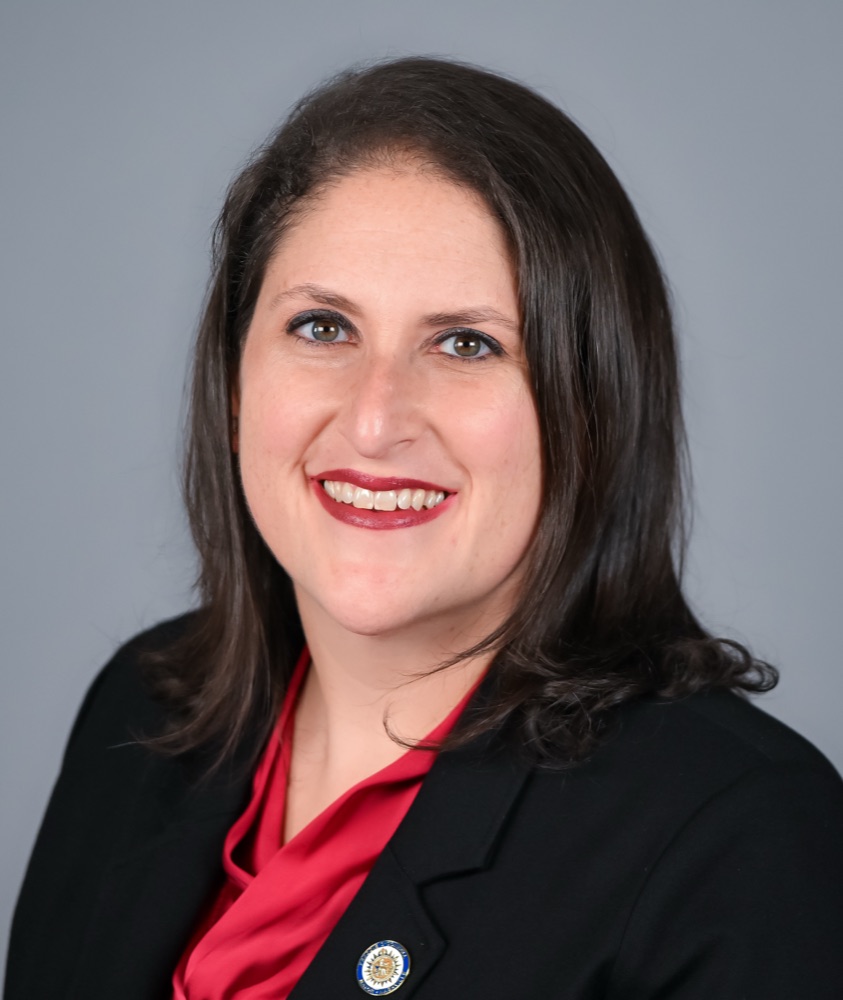
Sabrina Sussman
Guest
Sabrina Sussman serves as Chief Program Officer for Metropolitan Nashville's Mayor O'Connell's historic Choose How You Move (CHYM) transportation investment program. In this role, Sussman oversees the implementation of the $3.1 billion program across multiple Metro departments and stakeholders. CHYM is the largest capital program in geographic scope and scale to be undertaken in Nashville's history. Sussman has worked on the leading edge of transportation policy for nearly two decades. Prior to her move to Nashville, Sabrina served at the U.S. Department of Transportation as Chief of Staff to Deputy Secretary Polly Trottenberg, and Senior Advisor to Secretary Pete Buttigieg. Her prior experience dots both the federal and local landscapes with experience working in city government in New York, federal government in D.C., and in coalition building between public and private enterprises. She is a proud advocate for Vision Zero, with a deep personal passion for pedestrian safety. Sabrina holds a Masters in Political Management from The George Washington University and a Bachelors in Communications from American University.
Never miss an episode.
Subscribe to The Real Jason Duncan Podcast on your favorite platform.
The lie is at school teaches you how you learn.
And look, it teaches you ways to learn.
It teaches you how to test that learning.
But it's not really until you're out on your own that you have to really figure out how you learn best.
It's actually a question I ask in every interview.
Every job interview when I'm looking for team members, I ask, how do you learn?
Because I think one of the things I've found is if you don't know how to answer that question, it's really hard to join a new team and learn a whole new set of things and a whole new.
Somewhere along the way, probably sometime when you're 12 years old or so, you were told that in school you would learn how to learn, but you actually didn't learn how to learn in school.
And my guest is here tonight to prove that.
She runs a $3 billion program and she says none of the stuff that she learned
where she was supposed to learn how to learn helped her do what she's doing today.
So stick around.
We're going to get into it tonight.
We're live at the Standard here in Nashville, Tennessee, recording in front of a studio audience, something I don't do very often on the Real Jason Duncan podcast, but I'm glad that you're here today, listening, watching wherever you are on YouTube or Spotify or Apple Podcasts.
We're glad that you're here.
Thank you for tuning in.
We are doing a show in front of a live studio audience with Sabrina Sussman.
I'll introduce and tell a little bit about who she is in just a minute.
But the point of this show is the lies you believe and the truths you don't.
We've all been trapped by some things that we've been taught.
Whether they were taught overtly or whether we learned them through just osmosis or being around our parents or at church or around the community, we've learned these things and they just become lore.
They become real, but we've never even think about questioning
those things.
And those are the lies that trap successful people the most because those types of lies make us feel like, well, this is the right thing.
This is the good marriage.
This is a good business.
This is the good decision.
And we don't sit back and question, is that really true?
And that's what this show is about.
So every week on Mondays, I sit down with somebody and release a show where I ask them, hey, what did you learn
that turned out to be a lie?
What lie did you believe?
What truth did you not believe?
And we uncover it.
We talk about it.
And that is exactly what we're here.
So every guest on the show, that's why we do what we do.
And tonight is no different.
It's just a little different in the setting.
So if you're watching this, you're used to hearing or seeing me sitting with my headphones on in my home studio, this is a little bit different, but I'm glad you're here.
We got a smoke-filled room at the Standard in front of the Leadership Society, and I'm glad that you're here.
Now, the lie I said that we're going to talk about is that school teaches you how to learn.
So my guest is Sabrina Sussman.
She is Nashville's chief program officer for Choose How You Move.
That is a $3.1 billion transportation program.
It's the largest program financially in the history of Nashville.
I didn't know we were spending anything with a B, billions on any one thing, and we are.
And we're going to talk a little bit about that tonight.
66% of Davidson County voted for this.
in November of 2024.
And it's, as I said, the largest capital program in our history.
But before Sabrina was here in Nashville, and she's only been here in Nashville for 13 months, and before she was here in Nashville, she was with the Department of Transportation as a chief of staff to Deputy Secretary Polly Trottenberg and senior advisor to Secretary Pete Buttigieg.
She spent nearly two decades in transportation,
City Hall in New York, the private sector at Zipcar, and the federal government twice.
And now the program is going to change how this city moves for the next generations.
So we're going to be digging into that.
The whole theme.
of tonight, the reason we're doing this in front of the Leadership Society is that we want to talk about what's going on in Nashville.
So not only are we going to address the lie that she kind of brought to it, which is schools don't teach you how to learn, and we're going to find out why she believes that.
But we're also going to dig a little bit into Nashville.
So it's a little bit of a different theme on the show tonight as opposed to what we typically do.
So Sabrina.
Thanks for having me, Jason.
Glad to be here.
Well, we've got a lot to talk about, but I want to talk about, before we get to Nashville, I told everybody that you came here just like most guests do to talk about a lie that you believed.
And when we were preparing for the show, you said, you know, I want to talk about, you know, the lie that schools teach you how to learn.
So walk me into that.
Where did that, I mean, that's a pretty big claim on a blank piece of paper to say, hey, what lie do you want to talk about?
And that's what you came up with.
So why?
Why that one?
The best way to answer a question is with a question.
How do you learn?
I'm a visual learner.
So I think the thing about school is you get taught that there's a buffet of ways to learn.
But it's sort of structured.
And the reality is you're taught to learn in the ways that they are teaching you.
So whether it's reading or lectures or tests, this idea that you're receiving information at once and then have to recall it back later.
The reality is learning in the real world looks very different.
And I think whether it's your first job or you're heading out after school, spending even time with friends, the learning that happens in real life doesn't always take that path.
And it takes you a little while to realize how you were actually learning best.
So do you remember where you were when you were like, oh, this is not how I learned.
This is not what I thought I learned in school.
Was there a moment when that became a reality for you?
There's definitely been a couple.
I mean, I think back really early in my career, I had only been at USDOT the first time for about 3 weeks where a very senior member, an assistant secretary sort of came by my desk and said, hey, you're new.
Do you know how to use Excel?
And I said, yes.
Do you know how to Google?
Yeah.
How about Louisiana?
Are you familiar with the state of Louisiana?
Yes, sir.
I'm familiar with the state of Louisiana.
Great.
I need an Excel spreadsheet that lists every elected official in the state of Louisiana in the next three hours.
Thanks.
And walked away.
And that's not a hard assignment, right?
Like, you know how to do something like that.
But you do sort of sit there and say, I wonder why I'm doing this.
He came back three hours later.
I'd finished it off.
He said, thanks so much and walked away.
And then I didn't hear from him for the rest of the day.
And I remember thinking, like, is that why I'm here?
You get this big, awesome job.
You're really ready to put to use the things And he's just asking you to make an Excel spreadsheet.
The next day he came by my desk and said, hey, do you have a minute?
Will you come into my office?
And I said, sure.
So he went in and sat down.
He goes, look, I just got to be honest with you.
A lot of times in your career, really important people, people more important and smarter than you, are going to ask you to do things.
And they're not going to tell you why.
The really good ones, they'll come back later and explain why that mattered.
So today, I want to explain to you why you made that spreadsheet.
And he said, have you ever heard of surface transportation reauthorization?
And probably like you, at the time I had not.
Never heard of that.
Super wonky.
But it's sort of how do we fund transportation at the federal level in this country?
And I had obviously never heard of this.
And frankly, I was at USDOT sort of by accident.
I wanted to work in healthcare or in education.
But at the time, I was like, government's government.
So I'll start at dot and transition over.
And he went on to sort of explain to me how we fund transportation in this country and how it works and said, you just built the invite list for the secretary's first national tour.
He's going to make a bunch of stops and we're starting in New Orleans and you built that list.
And here's why that matters.
Because when we build policy, we have to talk to people before we do it.
And I think in that moment, really highlighting
that while I had never had any access to that information, it was that little thing, that thing that had nothing to do with transportation or government or politics or lawmaking, it was the Excel spreadsheet that was sort of my intro in.
So it's funny that was the that was the task, because now ChatGPT or Gemini or Claude could do that in a second.
That's a task that we don't even need a human to do anymore.
So it's interesting.
So that my question when you started telling that story is like, was this guy your boss or some random dude in the office avenue do these things?
He was like my boss's boss's boss, basically.
He was way up there.
I sat near his office and so I knew his name and sort of what role he had, but we hadn't really talked much before.
I mean, he's still in my life and he's an incredible mentor, but I mean, I think he did really acknowledge a truth about the world, which is you don't always know why you're doing something.
There's learning in that.
People don't always frame it that way, but doing it is half the journey.
So you've worked in the federal government sector, you worked in the private sector for startups in the transportation world, back to dot, worked for City Hall in New York.
And with all those transitions, I'm going to make the assumption that you were the least expert in the room first day.
And so do you remember one of those rooms that was the most challenging or the most surprising and why?
A thing that's been fun about my career is in a lot of my jobs, I've been the first ever dot, dot, dot.
So it's not just here in Nashville where I am the city's first ever chief program officer.
I was the first ever in a lot of my roles.
And the good news about that is it means, while you may be the least expert, no one else knows it either.
And so it's about show up, figure out why you're there, and why you're there in that moment.
I sort of have this belief that jobs and life, there's sort of three buckets, right?
There's a bucket of things I'm really good at, naturally gifted at.
There's a bucket of things I really enjoy spending time doing.
And then there's this third bucket, which is the company, the organization, the entity, what do they actually need done?
And the best jobs are when those 3 buckets overlap, right?
And you can spend your time doing what they need, but you enjoy it and you happen to be good at it.
The best jobs are those, right?
And I think that's how you are an expert, because you are the only person who's equipped to in that moment blend all those things together.
And particularly in a lot of the rooms I've been in,
where it's been about innovation or been about doing things differently, you actually don't want the person who's been doing it.
You don't want necessarily the expert.
You want someone who's bringing a unique set of perspectives to say, we're going to shake it up and we're going to do it in this brand new way.
What's the most recent thing that you've learned in your role working in the city of Nashville?
Oh, I mean, I will tell you in this job, I learn something new every day.
You're right.
You know, I'm running a generational investment.
and we're doing things we have literally just never done before, right?
Tennessee is sort of interesting.
They are one of five states in the country that don't deficit spend on transportation, right?
So they don't bond, they don't get any debt.
That's a state policy.
But at Metro Nashville, we have a history of never having spent cash.
This program is the first chance the city gets to spend cash.
And so just a couple months ago, I sort of said to the finance team, like, I'm ready, I'm gonna go spend some cash.
And we had to take a minute and go find the lawyers and say, well, wait a second, how do we even do this?
So what's awesome about a job like mine is it's not just that I'm learning, it's not just that I'm new, but that a program like this is in some ways breaking government and changing government and making us do it in different ways.
So spending cash and it's a $3.1 billion program, where's that cash come from?
So there's a half cent sale surcharge that voters voted on.
And so the structure of the program was in November of 24.
There was a referendum on the ballot that said, hey, here's a list of projects.
It's 86 miles of sidewalk.
It's nearly 600 traffic signals, intersections.
It's 39 miles of streets that we're gonna make safer.
It's transit investments.
It's a whole list.
And for this list, all you have to do is approve that half cent surcharge.
So that's what 66% of voters voted on.
was this idea that in exchange for that half cent, you can unlock 15 years and this whole list of projects?
And when does that project start?
So we started the election, the referendum was in November of 24.
The first half cent was collected in February of 25.
We at the city didn't get our first half cent until about the end of April, because the money goes to the state first.
I showed up in late June of last year and we cut our first ribbon in November of last year.
So we're out there.
There's concrete pouring, dirt is flying.
Where's the first thing that people will see?
Well, there's a bunch of things that you can see.
Our very first ribbon cutting was out on Murphysboro and it was a huge on plane.
I've done a couple sidewalks in the last couple of months.
It would be great to see come in.
I just did a traffic cabinet install last week, which most people won't even notice.
But on those little corners, there is always a silver box, and that's where the brains behind the traffic signals live.
Switching those out, Nashville hasn't touched that technology in 60 years.
It's incredible, right?
It's the first thing I noticed after coming here.
It doesn't have to be that way.
It doesn't have to be that bad, honestly.
And so one by one, we're changing them out to really bring them into, I guess, the 21st century.
Well, so when you, what you said, a couple of facts.
Like Tennessee is one of five states that doesn't deficit spend on transportation.
Nashville has a history of deficit spending.
Those are facts.
And those are, you know, you're a very smart person.
I think everybody listening to this show, smart people, we can hear a fact.
And if it's relevant and important, we lock it in.
We'll remember that.
But when you learn maybe not a concrete thing, just to go back to the learning thing before we dive too deeply into Nashville, do you find yourself, the learning style and the ability to learn something differently where it's an abstract concept versus a hard concrete fact?
It's interesting.
I mean, I think about how I learned.
So the thing I didn't learn in undergrad or in graduate school was that I learned by listening to really smart people talk through problems.
That's the room that I want to be in.
It's one of the things that USDOT really changed about my career is, again, I had said I wasn't really interested in transportation or so I thought, but because of my job, I spent a lot of time in rooms listening to people work through problems.
And so for me, whether it's a fact or it's a more abstract sort of concept or it's learning about people, watching it unfold in front of me is really the best way for me to learn it.
I think that applies to lots of people who say I learn by doing, right?
There are some people who want to go out there and actually do the thing.
And an abstract concept is hard to really retain until you've seen it work in some cases.
So I think it sort of depends on how it is, again, that you're learning.
As a former educator myself, I would say that, what we were taught when I got my master's degree is that there's three primary ways that people learn.
It's VAK, so visual, auditory, and kinesthetic.
So as you were just describing, you're more of a kinesthetic person.
You want to get involved in it and see it happen, and if you can experience it, becomes a reality.
Where I'm more, I can learn that way too, but I'm much more of a visual learner.
If I can see it, I got it.
Auditory is probably not my best, and frankly,
If you look at just statistics, auditory is probably the least way people learn.
Yet in our education system, it is what we teach the most through lectures and through speaking from the front of the room.
And it's the one that doesn't work.
It doesn't work for most people, but it does work for some.
So what do you, I know you're not in education.
That's not your role.
But how would you propose that in a government setting?
Like how do we teach people to learn?
How do we get students to think and to understand, oh, I learn better in this scenario and how can
How can we make that a reality where we can educate our kids better?
I mean, you're so right, because right now the system is about mass, right?
You're trying to teach a bunch of people in a classroom, whether it's a class of 30 kids or 250, you know, at a big school.
It's about how do you make information that the professor or the teacher has accessible to them?
One thing we've never thought about is, well, what if you broke up classes by type of learning?
What if you had teachers who only taught the visual learners?
What if you had teachers who focused on the auditory learners, right?
This idea that if we know that information, if we get that into students' hands earlier, they could self-select or they could sort of choose their preferences.
That's just not how our system is structured right now.
And I think when you think about testing, it's another great example of the structure doesn't always really address the question of is someone learning?
I can take a test, but the best way to figure out if I've actually learned something is a conversation like this, right?
That's when you're really gonna get a sense of, did I just learn the answer for the test or do I really understand a complicated issue that we've been talking about?
So I made a joke earlier when you said about the traffic lights.
And of course, the joke is based in reality.
So we all, those of us from Nashville know that that's an issue.
So when you've got the proposal in the system, as I understand it, 600 smart intersections, am I saying, is that number?
592, almost 600, yeah.
All right, so almost 600 smart intersections.
First of all, define smart in that context.
What does that mean?
So it means a lot of things.
I'll tell you a little bit of a story of what we have now, which is not smart.
Right now, Nashville's known for a lot of big events, right?
It's something we really pride ourselves on.
To do what is responsive to traffic, right, which is to watch what's unfolding before you and make sure that the people who need a green have a green and need a red have a red.
Right now, the way that we do that is a member of the Metropolitan Nashville Police Department stands on the corner at the cabinet and there's a button.
And the button is called a pickle.
and they push the button.
And that is what changes the color of the traffic light.
So a human is watching what's happening and he changes it.
Yes.
Okay.
That's what happens today.
And we call that dumb.
Not smart.
Yes.
Okay.
So what we're doing is a bunch of things.
We're changing out what you actually see.
So those yellow hanging signals, we're changing those out, we're changing out the cabinets, we're adding in fiber, we're connecting everything.
There's something called a traffic management center.
It's where you can sit and actually manage and watch traffic, deal with live events, and have what are traffic responsive signals.
We did an install on Lebanon Pike.
We finished it up in December.
And after that install, where you can actually line up all those lights and be traffic responsive, there are people who are saving 30 to 35% of their time because we've been able to do that.
So what it really does is it changes it into more of a network
rather than those sort of stationary little intersections.
It allows you to manage them like people move, right, which is through corridors.
Yeah.
A good job on the pronunciation of Lebanon.
Thank you so much.
I have other tricks I've learned.
Yes.
When you're in Nashville, Mount Juliet, not Juliet, it's not Lebanon, it's Lebanon.
Lafayette, not Lafayette.
So way to go.
Demumbrian.
That one was that one took me a double try.
Yeah.
No, it's not Demon.
If you read it, doesn't say Demon.
It says Demumbrian.
It's hard to pronounce.
It is very hard to pronounce.
It's demon, but it ain't Bruin.
Okay, so smart intersections.
I actually had this experience, I think it was yesterday.
I live in White House, which is just north of town.
And I was sitting at a red light and I was, I needed to turn left, a fairly large intersection for White House, not a very big one, but I think it's two lanes going across either direction on either, you know, going the same direction.
So 4 lanes on all four pieces of the intersection.
And the red light had everybody stopped, but the road across, people turning left in front of me, it had backed up because the red light down there was backed up.
So the entire intersection is flooded.
It now turns green for the people to the left to go across and there's nowhere to go.
And I'm thinking, this is dumb.
Now I know that happens.
That's not just a unique thing to White House or any city.
Why have we and why has that not been something that's been figured out?
Is the technology that limited and we're just now figuring out how to make it happen or is the expenses just not been made to do it?
No, look, this is the story of Nashville, right?
And it's advice I actually got during the interview process and it's been the most important thing for me to sort of remember.
This person said to me, look, there's only one thing you need to know to be successful here.
Nashville's a small town.
It is a small town that one day it woke up and then it was like a medium city.
And then one day it woke up and it was a big city.
But you are running this big city on a small town frame, on small town infrastructure.
And I mean, this story, right?
You've watched it happen.
Nashville had explosive growth and didn't have the resources or the time to invest in managing that growth.
And so we are behind.
And part of what Choose How You Move really did was it said to voters, look, it doesn't have to be this way.
We have not touched our signals in 60 years, and everyone else in the world has, right?
And so if you make these investments, you can make those upgrades.
But to your point, we didn't make them for 60 years because the money wasn't there.
The capacity wasn't there.
The city grew up really quickly.
And now we're sort of going back and saying, let's do some of the things that will help equip us to move the kind of people and the amount of the economy that the city moves every single day.
Well, so as I understand it, the project is like a 15-year timeline project.
So it's not just, not today, it's a 15-year timeline.
But Nashville, I mean, especially in the last two decades, we're reinventing ourselves every five years.
There's something new, something big.
So how do you do a 15-year plan for Nashville that doesn't exist today?
It's interesting.
Choose how you move was really built off of probably more than a decade of planning, right?
This was not Nashville's first attempt at dedicated transportation revenue.
They gave it a shot in 2018.
Then it was a $9 billion plan and that didn't pass.
And people sort of went back and there was some thinking to do about maybe what was going to get it across the finish line.
and they came back in 24 with a smaller plan that was a bit more on the basics.
And it's sort of a bit of an honest take, which is like before you can go do the really sexy transportation stuff, which I promise you there are, you kind of got to do some of the basics, right?
You got to do sidewalks, you got to do traffic signals, you got to make sure people are safe.
Those kind of investments catch us up so that we can even begin thinking about what comes next, which we're also doing.
But it's really hard to talk about what's next when you know you're behind.
So I want to go back to your personal story, which we haven't talked about yet.
In 2014, you were on a run in DC because you lived there for 20 years.
And you got hit by a car.
And so you had surgeries, 2 1/2 years of physical therapy.
And you said that changed the way how you think about all this.
So I want you to tell us what does a person learn in 2 1/2 years that, you know, in that scenario that no degree program could have ever prepared you for?
Look, learning to walk and as an adult
It's not a thing you think you're gonna have to relearn.
We don't even really consciously do it, right?
We're so little, it sort of happens.
But there's no part of my life where I was like, I'm gonna have to relearn this skill.
I'm gonna have to relearn how to run.
I'm gonna have to relearn how to be outside and feel safe in the street.
And I think learning how to learn those things are hard too, because it's really hard after a crash like that, after injuries like what I sustained, it's hard to trust.
And frankly, it's like hard to feel real in your own body.
But the thing that I hit me maybe the hardest and is a part of my work every day now is it changes the way you think about your community.
You think about your neighborhood.
I was 1/2 block from my front door.
It was a Monday morning.
It was 540 in the morning.
I was training for a race, went for a run.
You know, I obviously don't remember it, but a neighbor, a friend saw me and helped call 911.
That spot will forever be tied to that.
And it changes the way that you think about the people who live around you and the infrastructure around you.
That street was zoned for 25 miles an hour and there was a speed hump.
And the woman who hit me, they think was going over 40.
And those choices, her choices to travel in that corridor in that way had a huge impact on the kind of injuries I have and what that meant.
And 2 1/2 years of physical therapy is 2 1/2 years of knowing that your body's not doing all the things that it can.
Have you been able to run now?
I have, yeah.
I ended up in 2016, ran the race that I had been training for in 2014.
So did it, my physical therapist ran next to me, which was amazing.
The first day I ran outside, he came with me because he said, you got to try it.
And I said, no, I don't.
And he said, sure do.
And so we went out and did it.
But it's definitely a part of both a personal and professional journey.
It's weird to work on something, to work in transportation safety and then have this happen to you.
It forever changes the way that you do this work and the way that you have conversations with people about why these investments are important.
They're important because they can stop people from happening, what happened to me?
So the 86 miles of sidewalk, I'm sure that's important to you for a lot of more reasons than the average person because it's about safety, about being out of the traffic.
Yeah, absolutely.
But I'll say sidewalks are kind of the grand equalizer, right?
You sort of think about it.
It's funny.
Life is very strange.
Babies and our senior adults have similar needs, right?
Getting around and then throughout your life, whether you're pushing a stroller, pulling a suitcase, in a wheelchair, on crutches, hauling a big bag of hockey goalie gear, moving through our community, sidewalks are really ways that you get to where you're going.
Because even if you drive,
You don't get from your car into where you're going completely unassisted, right?
There's all those other pieces of infrastructure that touch you.
And so for me, sidewalks are the thing that literally everyone has built the foundation on.
You know, again, my contacts, the city that I live in, in White House, they're putting sidewalks on 31W.
And I've heard some negative comments about it.
I've heard like, why do we need sidewalks?
Nobody's walking through here.
Well, it's easy to get lulled into the, yeah, let's complain about it.
We're spending money.
But how do you get past that from your seat?
Like, you know something we don't know.
Like, I would assume that, well, nobody's walking because there's not a sidewalk.
You put a sidewalk, no people are going to walk.
It gives you the opportunity to do something you couldn't have done otherwise.
That's my assumption, but is there more to it when we're trying to sell the idea?
No, I mean, I think that you said it well, but you know, earlier we were talking about your dog.
right?
Like that's one of the first things I go to is where do you walk your dog?
On the street because.
We don't have sidewalks in our neighborhood.
And what we'll tell you is like that's not safe.
It's not safe for your dog.
It's not safe for you.
It's not safe for your little kid who's walking with you, right?
These things matter and these investments change things.
You know, I earlier in the spring I told you that we broke ground on our very first sidewalk and choose how you move and I went out and it's classic Nashville where there was a sidewalk that just stopped.
It just stopped.
It ended in the middle of nowhere, right?
It ended in someone's
on someone's grass.
And so we went in and we filled up the sidewalk, right, so that there wasn't that gap anymore.
And so we broke ground and I went back to my desk and a couple weeks go by.
And then the mayor and I went out about four weeks later.
And we went out because they were about to finish the sidewalk.
And so they had left sort of 1 square open for us and we were gonna pour the final concrete.
We were gonna stamp it, you know, kind of celebrate with the crew that they had finished this huge milestone.
And we pulled up and I got out of the car and we were standing in front of this house.
And there are these three little girls sitting on the porch and they are eyeing us very suspiciously because we have a cement truck, we have all these cameras, there's cars, there's people, there's lots of vests.
And you look and they're eyeing us a little bit because they had turned the entire sidewalk, the sidewalk that didn't exist 4 weeks ago, that sidewalk they had turned into their game and they had chalked it all out.
And there was a start line.
And it was do 7 twirls here and hop on your left foot here and then turn around here.
And at the end of the game, they had written in giant letters, good job, you're finished with all these exclamation marks.
And so I walk up to it and the construction guys look at me and be like, hey, you see that?
They said, good job, you're finished.
That's for us.
And I was like, well, I don't know about that.
I think it's for the game.
But they sat there on that porch staring at us.
They were waiting for the bus.
And the thing that you realize is for years before us, they waited for the bus in the street.
We built the sidewalk and they built a game to play while waiting for the bus.
Now that day they were on their front porch because we were there on their sidewalk.
But that kind of change, that can happen overnight in local government.
It's super powerful.
So everything in this city seems to run through sports.
I mean, we've got the new Nissan Stadiums being built.
It's going to be amazing.
There's been endless talk about bringing a baseball team to town.
I know we have the sounds here, but we don't have an MLB team.
You know, on a game day,
you've got 60 plus thousand people wandering around that weren't here the day before or even the morning of.
So how does the infrastructure that this Choose How You Move program help what happens on game day?
Such a great question.
We're doing a lot of things.
And look, you know now, right?
The Super Bowl is headed our way.
And so that's more than just a game day, right?
A Super Bowl is quite literally that.
It's the Super Bowl.
We got to get people moving differently, right?
One of the things we've been trying out is the Titans have a partnership with WeGo, our transit agency here in Nashville, where if you drive to a WeGo Park and Ride, you can park your car, you can get on the bus, we'll shuttle you into the stadium.
You can do, you know, you can tailgate, you can drink, you can hang out at the game, and then at the end, right, we'll drive you back out.
That kind of thing is putting more people so that they're not standing waiting to get in and out of the parking lot.
That really changes the way people experience sport games.
sports, right?
It changes the way that you think about, can I do this and still have a good time?
Can I bring my kids?
How much time?
How much is parking going to cost me?
And so it's about optionality.
Not everyone's going to do that, but we've heard from a lot of Titans fans that they really like that opportunity because it just takes the stress of getting to the game off their plate.
So let's talk about the WeGo.
I actually didn't plan on asking the question, but since you brought it up,
Those are the purple buses all over town.
So what is the usage of those buses?
Because my perspective is, and I only live in downtown, so I don't ride the bus.
All I know is from when I'm here and watching them at nighttime go through and the lights are on, it doesn't look like there's a lot of people.
So what is the usage of the buses?
It's a great question.
So we have all sorts of people riding the bus.
One of the things that I love about Nashville is we have a lot of school kids riding the bus to and from school.
So you're obviously, you're going to see them in the morning hours and then in the afternoon hours, not all day.
We've seen huge ridership increases in the last year.
You sort of talked earlier about build it, and they will come.
When you make bus riding more frequent, more reliable, safer and more convenient, more people ride it.
So we're in some places we're seeing 30% year over year increases in ridership.
We're running more buses more often.
You may not be tracking that, but that's actually what's been happening.
And so to see those ridership growths month after month, year after year, it's sort of that investment that really goes back to show that this is moving a lot of people in our community.
I was behind three buses in that traffic jam that I was talking about.
It took me 15 minutes to get, you know, just half a block.
Not the bus's fault.
They just happened to be there.
But so going back to the smart intersections,
This is really coming from a place of absolute ignorance.
I don't know how this works.
Do the bus drivers, I mean, I know they have a route, but do they choose where they go?
Because why would three buses be at the same spot going the same direction at the same time?
Just a question, honest question.
It's part of what happens when there's traffic and when there's congestion, right?
Like you'd never plan a bus route to have three back-to-back-to-back buses.
Now, depending on where you were, we go central, the Elizabeth Duff station is right around the corner from here.
And so that is the major station where buses come in, drop off, switch out, you can transfer routes, drivers can get out.
And so right here on Rosa Parks where you are, they're ending here.
And so you're running into probably 3 coming to the end of theirs.
But when you're out
in the city and you're seeing buses, we call it clumping sometimes, it's probably because one got stuck behind something or because one sped up a little bit.
And so that's part of how we manage buses is by making traffic better by using smart signals and other things.
Not only are you making traffic better for every person who drives, but you're making it better for the people on the bus and you're avoiding just that.
Do you see a future where the buses are going to be autonomous?
Look, it's such a great question.
And we have autonomous cars roaming the streets in Nashville right now.
It's incredible technology.
In my career, I spent a lot of time actually working on high-tech transportation, and autonomous technology has the ability to change the way we do everything.
It's not something that's sort of in the near future for us here, but it's definitely something that's on the radar for who knows how many years out.
If we're talking about what you do now here in Nashville, the transportation thing, what do you know now that you wish somebody told you 20 years ago?
Oh, that is a good question.
You know, there's always a path forward, right?
It's never really a crisis.
There's a way to work through it.
And you can come and have different perspectives and different goals and still work through it.
And I think, you know, I spent a lot of my career in politics.
And sometimes we like to assert that there are bigger differences than there are, right?
Turns out things like traffic signals, things like sidewalks, like they help everybody.
And if you approach a problem in the right way, everyone can agree on that.
So out of the, you got the sidewalks and the smart signals are the two things we've talked about, but what else are we missing?
What else is that in that plan that we haven't really dove into yet?
So we talked about the four S's, so sidewalk, signals, service, and safety.
So we talked a little bit about service, which is right, running more bus service, but making it so that it's more appealing for more people to ride also.
Making it more frequent, making it super clear when the bus is coming and knowing that you're not gonna have that sort of bunching that we talked about.
Making sure people who are using it feel safe using it and have access in broader parts
making it more efficient.
So maybe instead of coming all the way to downtown to transfer, we're building out transit centers elsewhere where you can transfer further out and avoid coming in to just come back out.
And then the last category, safety, is obviously one that's super close to my heart, but is a huge part of a transportation network.
Every single person who uses your network, regardless of how they're moving, they need to be safe.
And so there's lots of St.
improvements we can make to make our streets safer for everyone involved.
Sidewalks and crosswalks are a piece of that, but there's lots of other ways to really build our streets to make sure that everyone who's interacting with them are safer.
You mentioned the lady that hit you was on the street 25, doing 40, and there was a speed, you mentioned a speed hump.
Are speed humps part of the plan, like to protect and provide safety?
I mean, what's your?
What's there a tool?
I sort of talk about it as like there's a toolbox and there's lots of different things you can do.
speed humps, some communities call them speed bumps, traffic cushions.
You can call sort of that type of what we call, it's vertical, right?
Like you're making a vertical impact to the road.
That's one approach, but it's definitely not the only one.
There's a road in Madison.
I don't know what it is, but my mother-in-law lives over there in Madison.
Sometimes when we go out the back way, it's a good connector from Gallatin to Dickerson.
And there are not humps.
There are these really big rubber speed bumps that have been attached.
And there's a route around all of them.
You can see where people drive around them.
And I can see why people would do it.
I mean, it slows you down significantly.
I mean, you can't do the speed limit on that road.
You can between speed bumps.
You can go really fast, but
You have to slow down unless you don't care about your car.
I heard a long time ago, and I don't know if this is true, but they actually impact negatively the safety for emergency vehicles.
So emergency vehicles are harder to get through.
Is there any truth to that or is that just people being mad at speed bumps?
When they're done correctly, right, you do the measurements and so that they can sort of
Emergency vehicles are larger, right, than our typical cars.
And so they can drive without having them impacted when you sort of measure and put them down correctly and are driving over them correctly.
But one thing that's really interesting about the new signal system is that there's actually, the firefighters are the most excited about this.
There's something called emergency vehicle preemption.
And so you can, when you upgrade your signals to the smart signals, you can actually have signals that talk to the fire trucks.
And so when a fire truck is coming,
It actually programs it to change over the lights so that they get preempted, they get to move, and other people are waiting.
Think about the incredible impact to safety that something that simple has, right?
Because instead you're actually telling traffic, stop, get away, let them come through.
That's the thing that every time I meet one of our firefighters in Nashville, they're like, when is that coming?
Like, it's around the corner.
It's on its way.
I don't know about the guys in this room, but I kind of always thought that was a thing.
I think that's kind of like folklore, like the ambulances, there's a button that they can hit.
And oh, my cousin's got one of those.
He gave it to me for the weekend.
But that doesn't really exist until now.
Well, and you know what?
Other cities have had it, right?
This is sort of the thing is it's been forklore here because we haven't had the kind of investments to do that, but we're doing it now.
Now, one request, I don't know if you have anything to do with this, but I think educating people on how to zipper merge would be amazing.
Can I just tell you?
It's amazing down here.
Yeah, it's, I think it got skipped somehow.
I didn't hear about it until I was an adult, had been driving a long time.
And as soon as somebody said it to me, like,
Why did nobody ever tell me this?
Wait, how did you learn about it?
I think I saw it on Instagram or YouTube or some, maybe not.
I think I learned it before those were around.
But I saw it on television or something.
There was no human that said, hey, when you come to this, every other car should go.
I watched a video of it happening and thinking, oh, and so I'm the guy that if there's construction traffic and they got cones that says, everybody move over, I'm the guy that goes all the way until the end and then I get over and everybody gets mad.
And you get these truckers that want to be the police
no, dude, there's a whole lane that nobody's in.
I want to drive all the way down the lane.
Why are we all backing up two miles before we have to?
We got to wrap.
Your car with like a, let me teach you about the zipper method, you know?
But we got to.
Choose how you move.
We need to have classes on zipper merge.
Choose how you merge.
Choose how you merge.
You heard it here first.
Yeah.
There we go.
Mayor O'Connell need to put that in the thing.
I'll give him a call tonight.
You got to tell him, choose how you merge.
Yeah, we figured it out.
But actually, you don't get to choose.
You have to do it this way.
You just have to merge, right?
Yes, how to merge?
That's right.
Yeah.
All right, so before we close our conversation, you know, the theme of the show is always about the lies you believe and the truth you don't.
And I know we talked a lot about Nashville tonight because of where we are.
And for the people that are listening and are watching,
When we shut these cameras off tonight, we got a room full of guys and leaders from the city, owners of businesses, and we're gonna be doing a deep dive into all things Nashville that you won't get to see.
So if you ever wanted to be a part of the after conversation, you need to come look up the Standard, look up the Leadership Society, just hit me up on any of my socials at the Real Jason Duncan.
But before we finish up tonight, Sabrina, what I wanna give you the opportunity to is you can look directly to that camera.
And I want you to give one full minute.
I will not interrupt you.
What is the lie that you're asserting and why should people give up the lie about learning?
The lies at school teaches you how you learn.
And look, it teaches you ways to learn.
It teaches you how to test that learning.
But it's not really until you're out on your own that you have to really figure out how you learn best.
It's actually a question I ask in every interview, every job interview when I'm looking for team members. I ask, how do you learn? Because I think one of the things I've found is if you don't know how to answer that question, it's really hard to join a new team and learn a whole new set of things in a whole new world. And so for you, I'd say figure that out. And if you don't know, really think about it. And then ask the people who you think are smartest in doing best how they learn. Because the reality is there are lots of ways to do it and it's different for everyone.
All right, thank you. So now,
If somebody listening says, what, I want to get in touch. I want to find out what I need to know about what's going on in Nashville. Is there a social media or is there a website that people can go to connect with you?
Yeah, so find me on LinkedIn. You'll see me there, Chief Program Officer for Choose How You Move. To learn more about the program, you can go to nashville.gov backslash transit. We have a big announcement coming later this week, so keep your eyes peeled.
All right, so we're recording this on April the 12th.
I think the release date for this show is going to April, August. They start with A, I was close. So August the 12th, August the 12th. This is going to release in a couple of weeks. So by the time this releases, that big announcement will have already dropped.
The news will be out.
You can tell me what you think. Go ahead and tell us now because we won't tell anybody.
Well, that's true. It's our next big batch of capital funding. So we're spending more cash, time to more projects.
And that's being funded from this half cent.
It's your half cent at work.
And so you keep going buying crap in Nashville, you're helping.
Thank you so much. Yeah, exactly.
All right, so Sabrina, thank you for being here. So the final question is if somebody listening right now is still living inside the lie that they just believe that schools are going to teach you how to learn, what do you want them to hear before we finish?
I think I want them to hear that you don't have to hold back.
And school taught you ways to learn, but it may not have taught you the best way for you to learn the things that you need to be successful. And so really start to think about, are you growing? Are you changing? Are you being put in spaces where there's learning that has to happen? And if not, it might be time to shake things up.
Thanks so much for being here.
Thanks for having me, Jason.
Well, that's a wrap on today's episode live here at the Standard Club in downtown Nashville, talking with somebody from the mayor's office about the Choose How You Move initiative. If you want more information about this, go to nashville.gov slash transit. You can learn more about that. Look up Sabrina Sussman on LinkedIn, connect with her.
And I'm just grateful that she was here. Thank you for listening. Make sure you tune in again next week when I talk with somebody about a lie that's had them trapped and how they broke free from that golden cage. As always, I'm your host, the real Jason Duncan, and Jesus is King. We'll see you next week.
Hey, thanks for listening to this episode. Remember, we release new episodes every single Monday, so make sure you tune in. You can find all the show notes, everything from today's episode and more at therealjasonduncan.com. If you want to follow Jason, just search The Real Jason Duncan on your favorite social media platform or your favorite AI platform. You'll find him there.
We'll see you next time on the Real Jason Duncan podcast.