You Don't Need the Big City to Build the Big Business
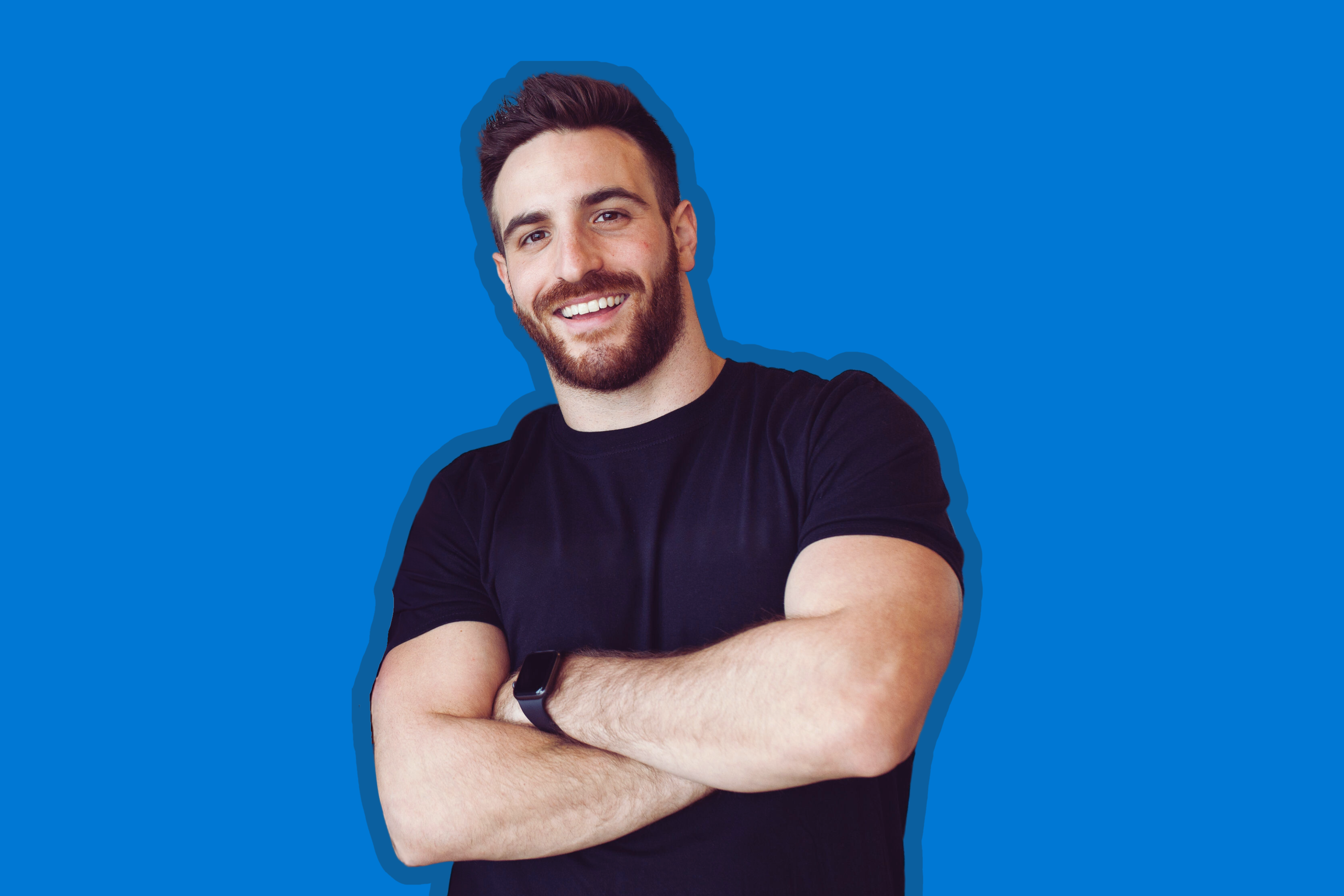
Prefer audio only?
About this Episode
You've heard this rule your whole career. If you want to build something real you have to be where it's happening, in a city that matters, close enough to the right people that they know your face. Cory Blumenfeld built an audience of 70,000 people and the company he runs today from a block off the beach in Playa del Carmen, Mexico.
Cory Blumenfeld has started five companies and raised close to $5 million along the way. Today he runs BlueMoso, which matches business owners with virtual assistants so they can get their time back. His team is in the Philippines. One of his business partners is in Finland. He lives in Mexico. Nobody is in the same room, and that is the whole point.
For his first three companies he believed the opposite. He was in Toronto, in health tech, in the startup programs everybody told him were the ones that mattered. He lost two hours a day to a commute, lived at home because rent was impossible on an entrepreneur's salary, and budgeted every trip down to the dollar. He and his co-founder once drove to Boston in a single day through a snowstorm because they couldn't afford the plane tickets. Nothing came of it. They flew out of Detroit when it was cheaper. Every investor they had access to was in Toronto, because access meant coffee.
COVID broke it. He wasn't allowed to leave the house, his Canadian company sold into the US market, and the border was closed. Building relationships online stopped being a preference. He moved to Playa del Carmen, started posting on LinkedIn with zero followers, and built every relationship he has today from there. He tells Jason he has been more successful living abroad than he ever was in the city, and explains how being in a big city quietly locks your thinking to one geography.
Jason doesn't accept the lie as submitted, and says so on tape. He lives thirty minutes outside Nashville and still believes physical proximity does something real. That pushback produces the sharpest turn in the episode. Cory reframes it: the people this lie actually costs are not the ones already in the city. They're the ones in small towns who won't start until they move, and that is five years of not building. Jason names it as an angle he hadn't considered and gets on board with it out loud. They also get into where venture money actually goes and why those hubs are loosening, how AI is making it cheaper to start a business and more crowded to run one, and the single thing Cory says matters most for a business owner in 2026: create content, so people already know who you are before you ever reach out.
Connect with Cory: Website: bluemoso.com LinkedIn: linkedin.com/in/coryblumenfeld Instagram: @coryblumenfeld TikTok: @cory.blumenfeld Substack: substack.com/@coryblumenfeld Email: [email protected]
Subscribe to What's Real?: therealjasonduncan.com/articles Book Jason to speak: therealjasonduncan.com/speaking Get the book: therealjasonduncan.com/book The podcast: therealjasonduncanpodcast.com
This episode is sponsored by Dubb. Get started at therealjasonduncan.com/dubb.
New episodes every Monday.
Key Takeaways
- The lie: you need to live in a big city to build a real business. The truth: you can build meaningful relationships and grow a business online from anywhere, without ever setting foot in a major city.
About the Guest
Cory Blumenfeld
Guest
Cory Blumenfeld is a 5x founder with two exits and more than a decade of experience across startups, operations, sales, and product. Across his companies, he has helped raise nearly $5 million and built an audience of more than 70,000 followers across social platforms. Having started businesses in industries he knew nothing about, Cory learned that success rarely comes from having all the answers. Today, he is the founder of BlueMoso, which helps business owners get their time back with high-performing virtual assistants matched to how they actually work. Cory is on a mission to help one million business owners spend less time buried in day-to-day tasks and more time focused on what matters most, whether that's growing their business, serving more clients, or building a life outside of work.
Never miss an episode.
Subscribe to The Real Jason Duncan Podcast on your favorite platform.
You've heard this rule in your whole career.
If you want to build something real, you got to be where it's happening, in a city that matters, close enough to the right people that they know your face.
Well, my guest today built an audience of 70,000 people and the company that he runs today without any of that.
It really comes down to start creating content, start putting yourself out there, start creating real relationships online.
Don't let your circumstance where you live stop you because the opportunity is there to start doing, start growing, start building.
Welcome to the Real Jason Duncan podcast.
I am your host, the real Jason Duncan, and every guest on this show is here for one reason.
They used to believe something that turned out to be wrong.
And some of the guests figured it out on their own.
Some had to get knocked flat first.
But either way, by the time they sit in this chair, they know the difference between what's real and what isn't.
And I have learned that the lies that do the most damage are the ones that they look like wisdom.
They're the ones that everybody repeats, the ones you're so sure about that nobody thinks to question them.
And a lie like that can build a cage around you.
And here's why you stay in that cage is because that cage looks like gold.
It looks like the smart play.
It looks like the good life.
It looks like the strong marriage, the right way to do business, the right way to do things.
And nobody wants to walk away from something that looks like treasure.
And that's what this show is about.
The gold is the lie.
So every conversation here is about finding the cage, seeing that the gold was never real and walking out.
Now, here's why that particular belief that we're going to be talking about today is so hard to get out from under because it isn't dumb.
It was true for a long time.
Deals really did happen over dinner.
The introduction that changed somebody's life really did come from standing in the right place at the right time.
So when somebody tells you to go where it's happening, that actually sounds like the smartest advice you've ever gotten.
That's the goal access.
And it's the feeling that you're close to where things are actually getting decided.
And the cage, the cage is what it costs to stay close.
So you move or you feel behind because you haven't.
You pay rent in a city you can't really afford and you keep buying the plane ticket every year and you start measuring how you're doing by the whose table you got invited to.
But my guest today believed all of that and then built what he wanted from a place that nobody told him to build it from.
And that is where we're going today on the show.
My guest is Corey Blumenfeld.
He started five companies.
He's raised close to $5 million along the way.
And today he runs BlueMoso.
I hope I'm saying that name right 'cause I didn't ask him.
I hope I'm saying that right.
So today he runs BlueMoso, which matches business owners with virtual assistants so that they can get their time back, which is worth saying out loud because his entire company runs on the idea that the person you need
doesn't have to be anywhere near you.
Welcome to the show, Corey.
Glad you're here.
Thanks for having me, Jason.
I'm excited to be here.
And yeah, it took me a long, long time to really uncover this.
And now I'm living in Playa del Carmen, Mexico, a block from the beach.
I barely go, but I know it's there.
Close enough to get to if you want to, right?
Exactly.
But everything changed for me once I started
That lie unraveled.
It's like knowing that you can work from anywhere.
And you're seeing more of this now with business owners, but you can build something big.
You have access to, I think, more individuals than ever.
So it's gonna be a fun show, I think.
Well, before we get rolling, I told everybody, as you heard, everybody that's listening, that you came in here to talk about a lie that you used to believe, which is that you have to be in a big city to build anything that matters.
And now you've got five companies behind you, 70,000 people following you, and you did it without that.
So let's start right there.
I want you to say it in your own words.
What was that belief and where did you first pick it up?
Yeah, my first three companies.
I thought you had to be in the big city.
You had to be in, you know,
the room with the right people.
You had to be in all those big programs, especially in the startup scene.
There's all these big programs that you're told to believe are super important.
I thought that I had to go through those things.
And COVID happened.
You couldn't be in the room with people, but yet you still needed to make those relationships.
And I moved to Mexico at that time because I wanted to...
I just, I don't want to be stuck inside anymore.
So things were open in Mexico and it was really cool.
There was all these entrepreneurs here.
The term digital nomad was flying around.
I'm not a digital nomad like the true digital nomad.
But I came here and I realized, okay, well, I still want to keep building these businesses.
I need to keep building relationships.
Nobody else can go out.
I can just do this online.
So I didn't even have a LinkedIn following at that time.
I didn't have followers at that time.
All of that was built from here in Mexico, right?
It all started here.
I feel like I've been more successful while living abroad than I was living in the big city.
Because when you're living in the big city, yes, you have access maybe to more, but you're geographically locked in.
You're not focused on other cities, other countries as much.
Yes, you're thinking about it a little, but
You're locked in.
Right now, my mindset is global.
I can meet with anyone, anywhere, and I have more time to meet with them because I can do it on their hours, my hours.
Nothing's stopping me.
Well, so you came up, as I understand it, researching, reading about you before we get on the show, you came up inside a version of the world that teaches this belief harder than anywhere else, right?
Next 36, Toronto, Health Tech, and this is where the money and the hospitals and the pilot programs are all sitting in the same few square miles.
So take me to...
into a specific stretch of that.
What were you actually doing to stay close and what was it costing you at that time?
Right.
You know, like I was going into the office every single day.
I don't know if anyone's been to Toronto here, like subway, our transportation system, it's like two hours.
It's not always reliable.
If you're driving, you're in traffic all day.
Like it's just big city and you're wasting
at least two hours a day just trying to get to work, right?
So there was two hours of my day gone when I was doing this.
These programs were great.
I built some really good networks.
But at the same time, well, actually during COVID, I was in a program online, built the same network there and had the same opportunity.
So I'm wasting time traveling.
I'm locked to the folks I can meet in Canada.
And in Toronto, particularly, the investors I had access to, mostly in Toronto.
Because we weren't thinking about how do you build relationships online at that point.
You were thinking, I need to go and grab a coffee with this person.
If I happen to be in another city, I'll try to arrange some meetings.
But you were really thinking about who you had access to based on where you were located.
And I would say, in hindsight, that held us back because we didn't have this mindset of we can connect with anyone wherever we want.
Well, so you mentioned the time.
It does cost a lot of time to be in the big city and to have proximity to people, physical proximity to people.
So I would guess that somewhere in there, the math stopped working for you.
And so my guess is probably it's one of two moments.
Either you were in the room that you've been chasing and then you walked out with nothing or
The biggest thing that ever happened to you came from somebody you'd never stood next to.
So which one was it to take me to that day?
Well, looking back on it, I would say the cost to buy back my time in those scenarios when you're just starting out as an entrepreneur, it's super expensive in the big city.
Now I live in Playa del Carmen, Mexico.
I feel like I have a lot of freedom now because I've bought back my time.
I have someone that comes and cleans my house.
I have a dog walker.
I have a nice place to live all at a lower cost, which gives me it removes a lot of weight off my shoulders so I can focus on my work.
When I was in Toronto at that time, I was still I was living at home.
It was very expensive to get rent.
The entrepreneurial salary, when you're first starting out, it's not that much.
If you're going to travel or you need to get places, you have to budget everything.
That was on my mind.
My main priority when I was back in the city was, can we afford this?
Can we afford to go to Boston?
I remember we had to drive to Boston.
We had to drive there in one day because we couldn't afford the plane tickets.
We had to go and meet someone for coffee.
We had to go take part in a Canadian program.
We had to drive there and get there in one day.
I will never forget that drive because there was a snowstorm.
It was dangerous to get there.
But we just had to fly somewhere, we had to go to Detroit because it would be cheaper to fly to the place.
So we spent so much time just trying to get around because we were looking for the cheaper alternative versus now I can buy back my time.
spending more money than I was before.
I'm probably spending less and I'm getting a better quality and I'm able to focus more because I made a decision to live in another country, in another city.
Well, but let me go back to the day, though, that stopped being true for you.
So for example, if you went to Boston, you did that long drive through the snowstorm, did anything pan out?
Did it work?
Did you get what you wanted out of it?
No, it was a great story to tell.
That's one of those highlights.
It taught me, as a business owner, yes, sometimes you have to put in the work and you have to make a sacrifice.
So that's where that goes.
where it all changed for me, it really was COVID.
I made a decision.
I'm like, I can't be in Toronto.
There's nothing going on in general.
Everyone's online.
I need to go to Mexico.
I need to get somewhere warm.
I hated the cold.
Have you ever been in a cold Canadian winter?
I've not done a Canadian winter, but I've been to Canada and I've been in cold places and it's not for me.
Not for me.
So it's like, I'm going to the palm trees.
I always wanted to live
in the tropics when I was growing up.
And I was just like, this is the moment to make it happen.
Let's see what happens.
So if you went to Boston, you go to Detroit and you're making the time and the effort and energy and money to get there and they're not panning out.
So that's one side of the lie starts to crumble.
Like, I don't have to be close to these people because crap, it's not even working.
Was there another side of this where
Holy crap, a big deal happened and I never even saw this person in real life.
It was either online or like this or video.
I'll be completely honest.
Like most founders, we have the blinders on.
You don't realize that until after.
So no, I was like, this is what we need to do.
Because the stories we heard from other entrepreneurs at the time was just like this.
Oh, I had to drive to New York and be there in the morning.
And I told this story to an investor and they didn't know I wasn't located in New York.
So the truth was, no, everyone we were surrounded with was telling us, get to the big city.
You listen to podcasts now.
There's some really good podcasts I like that talk about this.
You have to be in the big city.
But no, the blinders were on.
And I think it was until recent that I realized until the last year or two, long after these early businesses that I realized you don't need to be in the big city.
Well, I want to ask you a little bit more about what it costs you, because we've talked about time, but I want to talk a little bit more about the cost.
But before we do, I want to talk directly to our listeners for just a minute, so bear with me.
Hey, so.
Let's take a quick break to thank our amazing sponsors for making this podcast possible.
Now, our sponsor for today's episode, this episode is brought to you by Dubb.
That's spelled D U B B.
Now, if you've never heard of Dubb, Dubb is a video messaging platform, uh, where you can record a short video off your phone or on your laptop, uh, and you send that instead of typing another paragraph that nobody's going to read.
And, and this is why this matters is because you're, you're sending proposals, you're following up on deals that have gone quiet and you're trying to check in, you're
or you're trying to get somebody to respond who has 40 other emails sitting in front of yours, a video gets opened and Dubb puts a button right in that video so the person watching can book a call with you the second they're done.
It tells you who watched, how long they stayed, what they clicked, so you know exactly who's worth the follow-up call.
And I've been using Dubb since 2018 and I use it nearly every single day.
And Ruben and Darius, they're two guys that built it, they've sponsored the show for a long time and I'd be,
And I'd be telling you about it either way, because I love it.
I love what they're doing over there.
If you want to check it out for free and get a discount, go to TheRealJasonDuncan.com/dub, again spelled D-U-B-B, and you can get started.
That's TheRealJasonDuncan.com/dub.
Thanks for listening to our sponsors.
Now, back to the show.
All right, Corey, so I want to talk about what this lie, the lie is that you got to live in the big city, you got to have physical proximity to make it.
I want to talk about this lie, what it cost you, because there's a version of this story where you just figured it out one day and moved on and literally moved.
I don't think that's necessarily what happened.
I think there's some other stuff behind the scene.
Operating like being close was a requirement.
Moves, money, time, relationships, all that you kept warm because somebody happened to sit close to you and nobody hands that back to you.
So what do you now know that you wish somebody had told you 20 years ago?
And why do you think nobody told you?
Yeah, I think just people didn't know at that point.
Most people didn't know.
It was COVID.
The moment that really changed us all for everyone, it was COVID.
You were not allowed to go out.
In Toronto, we were not allowed to leave the house.
Yeah, Canada was shutting you guys down.
What else were we going to do?
Was I going to stop building the business?
Was I going to stop trying to raise money?
Was I going to stop trying to look for new customers?
Our business at the time was a Canadian business focused on the US market.
So this was the other business I was building.
Couldn't go to the US, wasn't allowed to leave Canada.
So what happens in that case?
We were forced to start going online.
And this was way before I even moved.
And so that was
just the moment where we started to really spend all that time just building relationships, booking virtual coffees.
That's what people were doing back then, finding ways to connect.
So I think the blinders were on until that moment.
That was the official moment where it was like, you can give up or you can keep going and make it work.
Yeah.
Well, so
So I have to admit that when I was reading and preparing for the show and I read the lie, because all guests that come on the show have to submit a lie that they want to help expose or have to help expose on the show.
And I remember reading this going,
I don't know if I 100% believe it.
I get the sentiment.
Here's what I mean.
I live in Nashville, which is becoming a big city.
It's a couple million people now, and it's the hub of a lot of cool stuff that's going on.
But I don't live in the city.
I live 30 minutes north of town.
I would never live in the city.
Not interested at all.
It's close enough, like you said, the beach.
I could get to it if I want to, but I don't have to be in the middle of it.
Part of me believes wholeheartedly in physical proximity.
You know, when we, especially in the business world, if we can be physically in proximity to other people, cool stuff can happen.
Now, does that mean, though, that every meeting has to be physical, every lunch, every coffee, every presentation?
And again, for that reason, I'd say no.
And I think maybe part of what you're saying is
a little of both, and I'm more on the latter than the former.
If you live in BFE in the middle of nowhere, it's really going to be difficult to succeed in business.
But if you live in closer proximity, you don't have to live in the middle, but if you live in proximity, you'll probably have a better hand up.
But that doesn't mean you have to do everything in person.
How do you respond to that?
Yeah, I think you have to create those moments now.
My entire team is in the Philippines.
One of my business partners is in Finland.
You have to create that proximity.
You can do that online.
And that's what I'm trying to say.
I understand, just like you were saying, you are born in a big city.
Yeah, you do have an upper hand because there's a lot more going on.
But I think there's more opportunity now for folks that aren't in the big city, for folks that are in smaller towns that are in the middle of nowhere.
to build something.
For example, with my team right now, we're not in the same office and we're never going to be in the same office.
But we create moments online.
We do co-working online.
I do events online with my network so I can grow with them.
We work on projects together.
We force ourselves to create that proximity.
And I think you can do that today.
I'm not leaving Playa del Carmen anytime soon.
I'm not doing that.
But my mindset is not going to be limited.
Just because I'm not in a big city, I can't make myself feel like I'm close to these folks.
Another thing I do is I'll invite people that I'm friends with.
I'm like, come to Playa del Carmen.
We're by the beach.
I have some friends that I met on LinkedIn.
I started a business with a couple of them.
I brought them to Playa del Carmen.
Who doesn't want to take a beach vacation?
But you have to just build that proximity.
online and you make it real.
I think you can do that in today's world.
Well, I don't I can't disagree with that.
I think that we can make the most and going back to COVID, I think COVID proved that we are a mobile, mobile society, mobile culture that things can be done.
I mean, heck, right now we're using an app called riverside.fm and we're recording this podcast.
You're in a whole different country.
than me.
And yet we're able to do this.
When I first started this podcast back in 2020, I did all the episodes in person.
Believe it or not, December 23rd of 2020 was the first episode ever recorded.
And I did the first 30, I think 30 or 40 episodes all in person.
And then it became a little more difficult to do it.
So I just went more virtual and now all but four episodes this year in 2026 will be recorded virtually.
So I think I agree with you, Corey, that
We can make it happen virtually.
What I wouldn't want to believe though is that you don't ever have to be physically proximate to someone else.
And I'm not saying that.
I know there's value in being in the same room with an individual, but I'm saying it's not a requirement anymore.
We have more opportunity than ever.
to grow something, to build something, even if we're not in the same room.
You should try to get in the same room.
I know that if I go and speak at conferences, that's the best way to get in the room with some of the folks that I may want to invest in a business I'm starting or find customers.
But I'm saying for those that don't have the opportunity to do it, you're not limited as much anymore.
The barriers have gone down.
So here's where I want to bring in something else you submitted when you submitted the information about the show and what we wanted to talk about.
One of the beliefs that you talked about was that a lie that you believe is that AI would replace your business.
And you say you actually believe the opposite, that AI is going to enhance it.
And I think this is a good place to bridge those two ideas because we
In COVID, AI didn't exist.
AI is post COVID.
It didn't happen.
Agentic AI happened this year.
It didn't happen until 2026.
So we're in a whole nother universe.
One of a former guest I had on the show actually said that 2025 is the dividing line in entrepreneurship.
25 and back, there was one diversion of it and 26 and forward is another because of agentic AI.
So with that, how do you, how do you
What would you think AI and physical proximity and digital nomad, how do all those things work together in your mind?
Yeah, well, it's making it easier and cheaper to start a business now.
The one thing it's doing is it's creating more competition because it's so much easier to create a business.
So with a lot of the tools, you don't need as big of a team.
you can be more efficient, you can build up your own capacity and it allows you to like, I use AI every single day and I can build the business in Applya, we call Applya here.
I can build the business here and not have to worry about, you know, building an in-person team because a lot of the stuff that I do, I outsource to agents and then I have the right people managing these.
So I have people in the Philippines that I work with, my team, they're amazing, that are supporting the company.
So, you know, there's the AI component, there's the ability to work with people across the globe because the systems, the tools are in place that allow you to communicate well and combine these things.
You can run a very lean, cost effective business and scale it
very effectively with these tools that are available and with the resources that are available today.
All right.
So I want to ask you what I think I already know the answer to, but I want to ask it anyway.
But what do you believe the cost of staying inside that lie for another five years is for somebody?
And let's pretend for a minute that somebody still believes, nope, I got to live in the big city.
I got to be where the action is or I'm never going to make it.
What's the cost
of believing that for another five years, in your opinion?
Yeah.
Let's say you're not living in the big city, and you're doing for five years, I can't do this until I move to the big city.
That's five years of not building.
This is what I find with a lot of business owners or people that want to start a business.
They have some reason why they can't start.
So that's five years of not starting.
If you're believing that I have to be in the big city.
If you're in the big city, well, this isn't a problem and you can build it within that big city.
Yeah, you do maybe have the upper hand.
But if you're not in a big city and you're using that as a reason, I got to save up until I have enough, I need X, Y, and Z before I start.
I think it's the starting problem that I see a lot of times.
Everyone's just always got a reason why they can't get started.
You know what?
That's an angle that I had not considered.
But for me, what you just said, make the other shoe drop.
Because the lie really is not about the people who are living in the big city thinking they have to stay in the big city.
The lie really is if you're living in the middle of nowhere and you're not doing anything because you think you have to be in the big city to get it done.
Corey, now I am 100% on your side.
I'm all in on the lie because I get it now.
Because if somebody lives
I'm in Tennessee and there's five big cities in Tennessee.
You got Nashville, Knoxville, Chattanooga, Memphis, and then Clarksville is kind of another big city that most people don't know about.
But there's five big cities and everything in between, there's mid-sized cities, but there's a whole lot of just country bumpkin towns.
And as long as I got internet, there's no excuse for you not starting.
Don't wait to move to Nashville.
You don't need to be here.
Hell, we got too many people as it is.
Don't come here.
So I'm all with you on that.
So thank you for clarifying.
Now, let me ask you for some advice, though.
If I am that guy or woman, whatever it is, and I'm living in the middle of nowhere, I have internet access.
What's a tip for helping bridge the gap between physical proximity and using tools like this?
Do you have a specific tip or two that you give us on how to do that?
Well, I just want to add one thing there, too, right?
If you're looking at the tech ecosystem, right, and if you look at where venture capital is deployed, they say it's deployed in San Francisco, Boston, Toronto, these big hubs, right?
I think that that's changing.
And so the big city mind, even if you're in Nashville, in terms of tech, previously, it wasn't like-- you don't move to Nashville to build a tech platform.
You would move to San Francisco.
You'd move to Boston if you were in the medical space.
You'd move to New York.
And I think that that's changing too.
So there are certain hubs that they used to say you need to be in proximity to.
even if you're in a big city like Nashville.
So I think that's also changing the mindset that you need to be in these big hubs to build something.
And then the one thing, going back to your question, that I would say, this is the most important thing.
This is what changed everything for me outside of moving away and realizing I could start the business.
So when I started creating content, when I started to be seen, right?
You've created the podcast, right?
If people recognize who you are from it, I started putting out content on LinkedIn.
It made it so much easier to get in touch with folks in different areas because they felt they already knew me.
I was nurturing relationships.
So the one thing I'd say, probably the most important thing for a business owner in 2026 and beyond is create content.
Create content.
People buy from people who they see as experts, right?
And so start that podcast, start that newsletter, start putting out content on LinkedIn, start writing that blog, start putting yourself out there and you'll start being able to build relationships with folks all over.
Well, Corey, before we close out today, I want to give you one minute where I'm not going to interrupt you.
And I want you to tell the world as directly and passionately as you can what the lie is, why they've been believing it, and what the truth
actually is.
Go.
Yeah.
For far too long, we've been told that we need to be in the big city to build a business.
We need to be in close proximity with the investors, the people that we want to buy our business, our customers.
But the reality is that's not true anymore.
If you're stuck in a small town, if you're stuck in a big city but not close to the big hub, let's say you're in tech,
and you're not close to San Francisco, it doesn't mean you don't have an opportunity.
It's easier than ever to start a business.
It's easier than ever to build relationships online.
And it's important that we don't use as an excuse.
We just get started.
We start building our personal brands.
We start growing and we start making those connections online.
I don't think that you need to be in that big city anymore.
It's a thing of the past.
Corey, tell people how to find you.
Yeah, you can find me on LinkedIn, Instagram, Substack.
You can come to my website, blumoso.com, B-L-U-E-M-O-S-O.com.
I've just started a newsletter that's on Substack.
And yeah, if you have any questions about outsourcing, how to find the right person to work with, come chat with me and I'll be there to help you out.
All right, Corey, final question, if someone listening right now
is still inside that lie.
They're still believing it.
What's the one thing you want them to hear before this episode ends?
Yeah, it really comes down to start creating content, start putting yourself out there, start creating real relationships online.
Don't let your circumstance where you live stop you because the opportunity is there.
Just start doing, start growing, start building.
All right, man.
Thanks for being on the show today, Corey.
I appreciate you.
Jason, I end every call with a fist bump.
So boom.
Thanks for having me.
Boom.
Good to have you, man.
All right, well, that's a wrap on today's episode.
If you saw a bar on your cage that you had noticed before, send this episode to someone who needs to see theirs.
The gold is the lie.
As always, I am your host, the real Jason Duncan, and Jesus is King.
We'll see you next time.
Hey, thanks for listening to this episode.
Remember, we release new episodes every single Monday, so make sure you tune in.
You can find all the show notes, everything from today's episode and more at the real Jason Duncan.com.
If you want to follow Jason, just search the real Jason Duncan on your favorite social media platform or your favorite AI platform.
You'll find him there.
We'll see you next time on the Real Jason Duncan podcast.