Does Running a Business Ever Get Easy?
Prefer audio only?
About this Episode
Every business owner believes there's a stage where it finally gets easier. Build the systems, hire the right people, and one day the thing runs without you. Erik Huberman has spent twelve years building a company that has scaled more than 5,000 brands, and he says that stage does not exist.
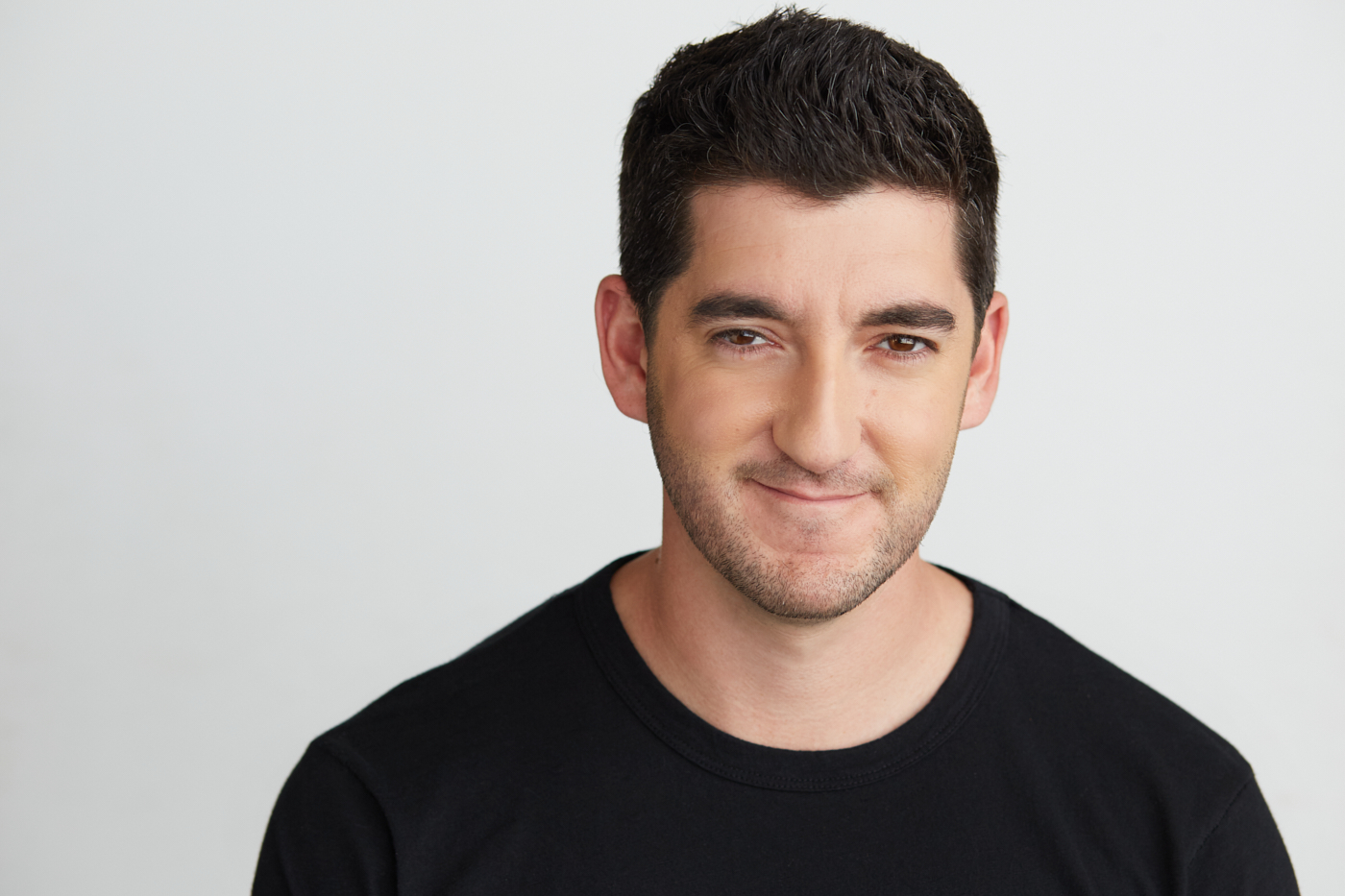
Erik Huberman is the founder and CEO of Hawke Media, which he started with no outside money in 2014 and still owns 100 percent of today. Before Hawke, he founded and sold two e-commerce companies by the age of 26. He's the author of The Hawke Method.
Erik traces the lie back to what he calls the internet charlatans, the ones posting from a beach about the team running everything back home. Nobody is going to run your company the way you run it, because nobody else has what you have on the line. If your COO blows up the business, he gets another job. If you lose it, you lose everything. Erik brought in a full executive team years ago and believed the day-to-day was finally handled. They were telling him what he wanted to hear while the company went into a downward spiral. It cost millions, six months of bracing for the next thing to fall, and a year and a half to feel like himself again. It landed the same week he lost his dad, with his first child two months away.
Jason doesn't let all of it stand. He tells Erik that passive is a fantasy, but twenty hours a week isn't, and that his clients get there without losing revenue or profit. Erik takes the point and draws his own line. There's no version of this where you still care how the business grows and somebody else runs it. If you want out, build something a buyer wants, sell it, and be done. What changed for Erik wasn't finding the exit. He spent two years rebuilding the CEO job into one he no longer wants out of.
Also in this one: the only two reasons businesses fail, the 8 p.m. phone call that shows the gap between an owner and an employee, what 25 acquired agencies and 250 employees did to his week, and the Greek restaurant line his head of sales uses on him. Erik closes by telling you to go in with your eyes open about what happens when you hand your company to someone else.
Connect with Erik Huberman: Website: erikhuberman.com LinkedIn: linkedin.com/in/erikhuberman Instagram: instagram.com/erikhuberman X: x.com/ErikHuberman Email: [email protected]
Subscribe to What's Real?: therealjasonduncan.com/articles Book Jason to speak: therealjasonduncan.com/speaking Get the book: therealjasonduncan.com/book The podcast: therealjasonduncanpodcast.com
This episode is sponsored by Bank On Yourself. Book a confidential session at therealjasonduncan.com/bankonyourself
Full episode page: therealjasonduncan.com/podcast/399
New episodes every Monday.
Key Takeaways
- The lie: That running a business eventually becomes "passive" or "easy." The truth: It never does. Every stage of growth brings a new set of challenges, and building a great company requires continuous work, adaptation, and leadership. It's not over until you're done.
About the Guest
Erik Huberman
Guest
As the Founder and CEO of Hawke Media, Erik Huberman’s entrepreneurial vision has transformed the company from a bootstrapped startup in 2014 into one of the fastest-growing marketing consultancies in the United States. Under Erik’s leadership, Hawke Media has scaled over 5,000 brands, using tailored and data-driven strategies that have redefined the marketing landscape and generated over $2.9 billion in gross revenue. Erik began his entrepreneurial journey in e-commerce, founding, scaling, and successfully exiting two companies by the age of 26. This early success sparked his passion for helping other entrepreneurs and laid the foundation for his future ventures. Building on this momentum, Erik launched Hawke Ventures, a venture capital firm that has invested in over 50 startups, fostering an ecosystem where innovation thrives. He also developed Hawke.AI, an AI-powered platform delivering actionable insights from over half a billion dollars in ad spend. In addition, Erik authored the bestselling book The Hawke Method, which distills the principles of marketing success into three actionable pillars: Awareness, Nurturing, and Trust. What sets Erik apart is his unwavering commitment to excellence and his fearless approach to tackling challenges. His resilience and ability to identify opportunities and take calculated risks distinguish him as a dynamic leader. Known for his candid insights and engaging storytelling, Erik connects deeply with audiences. Whether sharing lessons from his entrepreneurial journey, exploring the future of AI in marketing, or reflecting on building one of the industry’s most successful agencies, Erik delivers actionable advice that inspires and informs.
Never miss an episode.
Subscribe to The Real Jason Duncan Podcast on your favorite platform.
Every single business owner believes that there's a stage where it finally gets easier.
You build the systems, you hire the right people, and one day the thing runs without you.
And Eric Huberman has spent 12 years building a company that scaled more than 5,000 brands and he says that stage doesn't
exist.
So the why is that other people are going to run your business to success for you and you can be passive and just hang out and watch your business grow and build and make money for you and you don't have to.
Do anything.
Well, welcome to The Real Jason Duncan podcast.
I'm your host, the real Jason Duncan.
I'm your host.
And every single guest on the show is here for one reason.
They used to believe something
that turned out to be wrong.
And some figured it out on their own, some had to get knocked on their butt first.
But either way, by the time they sit in this chair, they know the difference between what's real and what isn't.
And the lies that do the most damage are the ones that look like wisdom.
They're the ones that everybody repeats at the dinner party.
They're the ones you're so sure about, you never even have to think about them.
You don't have to question them.
And a lie like that can build a cage around you.
And here's why you stay in that cage.
It's because the cage looks like gold.
It looks like the smart play.
It looks like the good life, the strong marriage, the right way to do business.
Nobody walks away from something that looks like treasure.
And that's what this show is about.
The gold is the lie.
And every conversation here is about finding the cage, seeing that the gold was never real, and then walking out of that stupid thing.
Now, there's a promise
that's sitting underneath almost every business book that's ever written.
It says this, you do the work now, you build the right systems, you hire the right people, and eventually it gets easy.
And eventually the thing runs and you get to sit back and, you know, sit back and drink a margarita or whatever it is you wanna drink and you get to watch it.
And that promise, that promise is the gold.
And it's most of the reason people sign up for this life at all.
But here's the cage.
If you believe the easy part is coming, every hard season starts to feel like proof that you did something wrong and you're not building anymore.
You're waiting and you can wait 20 years because the day you're waiting for was never on the calendar in the first place.
And my guest today sold two companies young enough that he thought he'd already crossed that line and then he built something much bigger and then learned the line isn't real and that
That, ladies and gentlemen, is what we're getting into today.
Eric Huberman is the founder and CEO of Hawk Media, which started with no outside money in 2014, and he grew into one of the fastest growing marketing companies in the country.
And before that, he founded and sold two e-commerce companies by the time he was 26 years old.
He's the author of The Hawk Method.
So welcome to the show, Eric, glad you're here.
Yeah, thank you for having me.
Well, before we get rolling into this, Eric, I told everybody listening there at the onset of the show that you came on here to talk about a lie that you used to believe, that running a business eventually goes passive and that at some point it gets easy.
And so for you, you've built one of the biggest marketing companies in the country, and you're telling me, who's built a lot of companies that, you're telling me and all of my listeners that that day never showed up for you.
So start me at the beginning.
Where did you first pick up the idea that it was supposed to get easy?
And how long did you carry that lie before you started going, maybe this is not true.
Yeah, I'd say it's a lot of internet charlatans that are like, I have my CEO running my business.
Are you running to see people that say that, oh yeah, I hired a team to run my business and I'm just hanging out on the beach.
And there is truth to that.
I'm not saying they're all liars, but
What it is is and to sort of validate the point, you're not going to be able to, no one's going to run your business for you until you don't care what happens to your business because the chances of that person being successful is
the minority of cases at best.
And you have to be done.
And what that can account to is you're actually done.
You're just like, screw it.
Someone else run this.
You take the profit.
Let me know if you make money.
I don't care anymore.
Or I sold it.
I got out.
I want to caveat this, but there's ways that that can work out.
But the idea of I'm going to hire an executive team, still want to see my business grow and build the way I've been doing it.
But they'll just handle it for me and I can work on the business, not in the business.
And all these cliches you hear from people that have never actually built big businesses.
It's really just a fallacy.
And I learned that the hard way, where I brought in a full executive team years ago and started to feel like I had the people to run my business so I could focus on the things I wanted to focus on.
I still wanted to focus on growth, expansion.
I still like working, but the day-to-day, as I put it, was being handled by other people.
And you realize the average executive at Google West, I think it's two, three, no, it's three years.
The executives are still working for you.
And to find someone that is an entrepreneur that wants to run your company and work like you do,
the incentives just aren't there and it's really hard to bring them there.
I guess if you give the person ownership in half the company, maybe.
But the idea that you're going to hire a COO and they're just going to handle everything, even though you're paying them a salary and bonus and maybe even some equity, that they're going to care as much as you do is ridiculous.
By the way, I don't mean that in a disparaging way to executives.
I love my executive team.
They're amazing.
But the thought that they're going to care as much as I do
Here's the difference, and this is a really important one.
What happens if your COO blows up the company and loses their job?
What's their worst case scenario?
What do they have to do?
They get another one.
Correct.
What happens to you if you lose your company?
You're probably bankrupt.
Yeah, at least emotionally bankrupt.
It is a disaster for you and it is not even close for anyone else.
So when push comes to shove, when shit's going bad, their fear goes to, God, I might have to get another job.
your fear goes to I might lose everything.
So it's just a different motivation level.
It's a different attachment.
The other side of it is the upside.
If your business grows to be worth, I don't know, pick a number, a billion dollars, how much of that does your COO make versus you?
And so again, it's just rational to think that these people are going to actually care as much as you do.
Not that they don't care.
Again, I love my executive team.
They're amazing.
They do care.
But like,
It'd be just irrational for me to expect them to lose the sleep I lose when things don't feel like they're going well and have the motivation I do.
They have an engine, they care, but they even will say it.
I care about this business more than anyone except for you.
And I agree with that, and I believe them, and I think that's totally valid.
And now, again, I have a good exec team now.
The problem is sometimes those good execs get burnt out, they start looking at other jobs, etc., and they start checking out.
And guess what?
and don't leave things in a good place.
Maybe ethically they feel a little off and icky, but they justify it and move on.
And so you have to keep a firm pulse on everything because again, their worst case scenario is they're getting out of their job.
And sometimes they're already looking for that other job because they've lost faith, their vision, or just burnt out on what you're doing.
And that's when their jobs start.
We're doing it right now with, thankfully, not a senior exec, but someone that was great for us for a while, but he got offered a crazy number to take another job.
And I've watched for the past month, the guy was such a rock star that all of a sudden, a month ago or so, he started slipping.
And I'm like, this guy could always rely on him.
It was pretty stark, the difference between when he was really good and not.
And then two weeks ago, he lets us know he's taking another job.
It's like, well, that makes sense.
So the idea that those people are going to be the ones that run your business without you watching is crazy.
It's never going to happen.
And so I've actually talked about this, I have a mentor that really taught me this.
And he's told me anytime I could sell the business for a big check, just take it, get out.
Everybody thinks they're going to make a billion dollars.
Go take $50 million in Crown on Beach somewhere.
Thankfully, we've blown past that valuation, but that was his line.
And then I told him some of the stuff we're doing recently, and he's like, Never sell this business.
What do you mean never sell this business?
He's like, You're doing way too well.
You're making too much money.
Don't give it to anyone else.
You guys have an incredible company.
Don't get rid of it.
Don't **** it up.
also said, I'll never get anyone else to run this for me.
So you tell me I'm going to work 14 hours a day, ******* seven days a week for the rest of my life.
I like working, but I like some balance in there too and being able to do some other stuff.
He's like, no, no, no.
What happens is you get to the point where you're still going to work 50, 60 hours a week, just maybe not 100, but you're going to do it
you're going to give up like 10% of your profit because you're going to have **** *** and things that you can't catch because you're not on it as much.
But you just accept that you're making so much money that God forbid you make 10% less to have a little bit of a lifestyle.
That's how you do it.
And I actually believe I completely agree with him.
This guy is a very successful, very seasoned entrepreneur and he's right.
Like it gets to the point where, and again, if I want to sell it and get out, I could be done.
But as long as I'm the CEO seat,
This business, no one else is going to run this business.
So at some point, if you want a little more balance and not to be on it all the time, and as my head of sales calls me, he says, I'm the owner of the Greek restaurant that's opening the cash register every couple hours just to make sure no one stole anything.
He's like, you're that ******* guy, which is hilarious.
And again, it's half joking, but he's right.
I am in our bank account every day.
I am in our P&L.
I am in our sales channels.
I am watching what's happening.
Cause I know people want to do their jobs, but if they miss, if something goes wrong, it's a little bit of a, I've had it.
Well, let me unpack a little bit of that because I know we don't know each other, so you don't really probably know who I am or what I do.
And so part of what I do, and this is not about me, but I want you to know why I'm about to say what I'm about to say, is I run a pre-M&A exit advisory firm called the Exeter Club.
And what we do is we help businesses get prepared to sell
But in the meantime, we teach something called exit without exiting, which is how your business can run without you at the center.
Now, what I will say is that the sentiment that I hear you're delivering to me, 100% true.
There is zero falses.
But what I would push back on a little bit is that there are ways that it can be run, but not passively.
So the lie that you wrote that are on my screen over here about, hey, this never gets easy, never gets passive.
That's true.
But it doesn't mean you have to work 40, 50 hours a week.
Most of the clients that I work with have been able to figure out how to get to 20 hours or less, running the business at no loss of revenue, no loss of profit, while they're preparing to sell their business, which makes their business worth 30 to 50%.
more than it would have been otherwise.
So here's where I want to camp out.
So take me to the week after your second company sold.
You're 25, 26 years old, you got money in the bank, nobody's boss.
What did you actually think the rest of your life was going to look like from there?
And how long did that version last before you started something new?
It's the same thing because we get approached all the time for PE with this company too.
I've always been in the reality, I'll never retire.
So there was never like, oh, that's it, I'm done.
And I don't think that'll ever come.
And so I like working, I like doing things.
So it's not do this.
Hawk Media, I wouldn't have to sell it.
I could turn off Hawk Media to my
and my lifestyle wouldn't change.
I don't need Hawk Media or the cash flow, which thankfully it has a lot of, I take most of our cash flow and reinvest it in other things.
I thankfully have made it past the point, I guess that would be the retirement level where my passive income on my investments makes more money than I can spend.
Even at that point, I wasn't quite there.
I wasn't at a point where I didn't have to work ever again, nor was that ever in my mind.
It was the first time I didn't have a plan, and I took a week to go to Mexico.
But by the time I got back a week later, I was getting offered jobs everywhere, including the people that bought my company, like, hey, come work for us.
And that's when I started consulting.
I was like, oh, I need stuff to do.
bizarre to most people, but I look at wealth like a scoreboard or a video game, and I'm like, I want to see that number go up all the time.
So the moment I start spending more than I'm making, I get anxiety about it, even though I could never outspend what I've made.
Not never, but I'm not an idiot.
If I wanted to go blow a bunch, I could.
But even living a great lifestyle, I'll never spend the money I have.
But I hate seeing it go down at all, let alone what I could spend.
So I always wanted to make income to cover my lifestyle.
So I started consulting to pay the bills, even though I could have paid the bills with cash.
I was like, nope, that has to go up, not down.
And so that started that.
And then I saw how broken the marketing world is.
99% of agencies are completely full of ****.
And the few that are good only work with the Fortune 2000.
So I was like, this is a crazy industry.
I should build a team that can be the best at what they do, but also easy to work with.
And that became our mission statement and how I built Hawk.
And it was fun.
I didn't actually think I was gonna build something big then.
I started it just like, I need to help my friends companies like right in front of me that I was consulting for and this guy that bought my old company, like I should probably help them out and started helping them and it worked and it went really well.
So I'm like, this is fun.
I'm working with a bunch of different brands, totally satiates my ADD.
I can jump into different brands all day, every day and run around.
And this is kind of cool.
And I like the cash flow nature of it too, where it's like what you make money today.
It's not like with product companies, you're dealing with cash cycle problems, you're dealing with inventory problems, you're dealing with you never have enough money because you always need more inventory to then sell more, et cetera.
Whereas with a marketing agency, there's like no CapEx.
It just builds as you build.
And so I've really enjoyed building this business and so that's where it came from.
And Hawk Media, it didn't stay small.
I mean, you went from bootstrap to thousands of brands, a venture fund and AI product.
And somewhere in all that growth, there had to be a specific day that you looked up and realized the work.
The work hasn't really gotten lighter, it's gotten heavier.
So where were you when that landed and what was the problem sitting in front of you that day?
This morning, yesterday morning, the day before, I don't know.
It never ends.
But is that what you want?
Is that what you want?
Yeah, I'm not a victim.
I could leave tomorrow.
I'm here by choice.
So yeah, I mean, how do I put it?
Again, I do have an incredible executive team.
So I have a lot of people around me that I love working with to solve big problems, but I'm not here to maintain.
So you kind of said it, these guys have done this without losing profitability.
To me, maintaining profitability and maintaining revenue is a ******* nightmare.
I want to grow and build and achieve.
I'm addicted to achievement personally and professionally.
I'm doing my third triathlon right now.
Every year I pick a new hobby to try to get proficient at.
I love just doing things and learning new things and personally and professionally.
So professionally, if we're just doing the same thing over and over again, I'm dealing with the same problems, watch how miserable and depressed I am.
I wish it wasn't that way.
I wish I could be totally satisfied with the status quo.
I am the opposite.
And so you mentioned of some of the stuff with the AI tool, the venture
And that all came from periods where it felt stable.
So I needed to do something to take another swing.
And now we've got, on the venture side, I think it's 35 million under management.
We're raising another 35 million right now.
We've got the
The AI tool that we started investing in AI systems 11 years ago, and so we're way ahead of the market on that.
We've got 250 full-time people at Hawk.
We've acquired 25 other agencies.
The list goes on and on and on about all the things we've been able to do because I go, I'm not satisfied.
This month is a good example of July is always slow.
People are on vacation, people are doing stuff.
Nobody's looking to really get after it on the marketing side.
When I say so, I mean in terms of growth, we're fine maintaining.
So we're probably going to end this month similar to last month, right around the same number, meaning no growth month over month, God forbid, 12 years into business.
That ****** me off.
I'm looking at all the things that I can ensure that that doesn't happen.
Just being transparent, that's where we're at.
And so super sustainable, no risk of any problems.
We have no investors.
There's no one breathing down my neck.
No one's looking for their returns.
I own 100% of Hawk Media.
So this is all based on just my own ambition to build something great.
All right.
I want to talk a little bit more about the lie and when you stop believing it, because it's evident to me now as just listening to you talk for the last 15 minutes about
Like this, it really is in your blood.
This is how you're driven to do it.
But but I think it is in competition with the idea that you used to believe that at some point it would get easy and you've passed that.
I want to get to that in a minute.
Before we do, I want to talk to my listeners just for a minute.
Let's take a quick break to thank our amazing sponsors for making this podcast possible.
Let's talk about our sponsor for today's episode.
Today's episode
is brought to you by Bank On Yourself.
Now, if you've never heard of it, here's what it is in one sentence.
Bank On Yourself is a strategy that uses specially structured whole life insurance policies as your own private banking system.
So the money that you're saving grows every single year and you can borrow against it whenever you want.
Think about what that would solve for you right now.
Right now, when you need capital or anything like that, you have to go ask a bank, you have to fill out an application, you hand over your financials, you wait.
And somebody who has never run a company before decides whether you get to grow this quarter.
And with this, this bank on yourself, there's no application, there's no approval.
You just call, the money shows up, and you set your own repayment terms.
The cash keeps growing while you've got it out working and your savings don't take a hit when the market takes one.
And structured correctly, there are real tax advantages on top of this.
And this is the piece most owners are missing.
You can spend years building a company, you can sell someday, and then you've got
No private source of capital in the meantime.
So if you want that private source of capital, this is what you can get it with Bank On Yourself.
If you want to set a time to talk to somebody about this, I've got people that I recommend.
Go to TheRealJasonDuncan.com/bankonyourself and you can book a confidential session with a specialist who can show you what this looks like in your situation.
Use my link so they know that you came from this show.
That's TheRealJasonDuncan.com/bankonyourself.
Thanks for listening to our sponsors.
Now, back to the show.
Okay, so Eric, there was a point at which you did believe that, man, this has gotta get easier.
I'm working 100 hours, 80 hours, whatever.
This gotta get easier.
There's gotta be this passive because as you said at the beginning, all the internet charlatans that are telling you that it's hustle and grind for a little while and it finally gets easy.
So when did it shift for you and you realize, okay, that's...
BS that it's really not like that.
Do you remember when that shifted?
Yeah, vividly.
Can't go into too much detail for liability reasons, but I basically found out the executive team I thought I had built was lying to me and we were in a downward spiral when I thought we were crushing it.
Like lack of a better word, they're telling me what I wanted to hear and not giving it to me straight while it was a disaster.
So fixed it, went through a lot longer story, but went through a ton of **** that still gives me anxiety.
This is again, years ago.
And yeah, that was when the same guy I mentioned that sort of mentor, I called him with the disaster I was going through and he's like, Yeah, most companies go bankrupt when they deal with something like this, but you're pretty smart, so I think you might figure it out.
Thanks, man.
Photo confidence is really appreciated.
And so thankfully, I did figure it out.
We did not go bankrupt, but fixed it.
And it was just a reality of these weren't nefarious people or bad people.
They just got burnt out and stopped caring, didn't want to deal with it.
And what happened to them?
They all got great jobs after that.
And so it was a reality of even though they completely burned me, they didn't lose any sleep, they actually probably ended up better off in some senses.
So it was that was a reality is like that, like, you know, you want to believe karma or what goes around comes around or people can be accountable.
But at the end of the day, it's not always the case.
And so yeah.
Yeah.
So what so what did it cost you?
I mean, if you think about like crap believing this idea that at some point it's going to be there, you alluded to financial difficulties and, you know, like, do you know what it cost you to have that belief?
Like financially what it cost me?
Yeah.
I mean financially, but otherwise.
Burn millions of dollars like actually so we can quantify that, uh, which in terms of like we burn millions instead of making millions.
So the disparity between those two gaps, what we should have made and literally what we burned, um, while they didn't report that in our accounting, just to throw that in there, um,
And thankfully I watch our bank account like the Greek restaurant owner is my salesperson.
So I got it, but it took me a few months to really because I just didn't believe that they were just straight lying to me.
But that being said, figure that out.
And then it was what else did it cost me?
I mean, a year of sleep and happiness because I was just like I actually was totally anxious and like spun out for like six months.
Because I'm a big guy and do what you say you're going to do and trust and all that.
And to the point, I thought I had gotten to a place.
I snowboarded 30 days that winter.
I was having a lot of fun.
So it was like I had to reshape my entire view of my professional life while, again, this is the other context.
I had just lost my dad.
My mom came to me telling me that she needed a kidney from me.
Turned out she didn't.
She's OK.
But just in the same week, I had my first baby due two months later.
We got a frivolous lawsuit from a former employee, while longer story there, but was stupid and obnoxious.
And our taxes were misfiled.
So we got this crazy IRS bill all in the same week.
So it was just like,
Anything else?
I spent probably six months just waiting for the other shoe to drop of what's going to actually take me out.
When I realized that's not how life works, thankfully, then I started to come around.
It took me about a year and a half to really get my chutzpah back.
I remember talking to a friend that had been through something very similar who told me exactly that.
A couple months in, he's like, oh, I went through this.
Yeah, it took me a year and a half to feel it back to normal.
And the time, I'm like a ******* year and a half.
And then when it goes
Like it's actually not that long.
And now in hindsight, like good lessons, you know, I understand the framework a little differently where it's like, it's the trust, but verify thing.
Like have great people delegate, trust them, but verify.
And to your point, you can get to running your business 20 hours a week.
You might not be driving as much growth, but for a lot of people that's okay.
Mm-hmm.
I think what you're talking about too, this lie, is that you believe that it should be passive and it should be easy.
And so you trusted, you put your trust in people falsely and you allowed them to do things that
Because you thought, hey, the lie, of course, you thought, is that this should be that way.
I should be able to go snowboarding for 30 days.
They should be able to run it.
Nine years profitably without any investment.
I think I'm at a point where I can take a few days off or even a couple months.
So what do you now know that you wish somebody had told you 20 years ago?
On the same topic.
Yeah, on this topic, what do you wish somebody had told you that you're just now learning like, oh, this is how it really is?
I think people told me it's just I didn't comprehend it, which is like, no one's going to care as much as you by even close.
And again, it's not because they're bad.
It's very reasonable that they don't care as much as you.
They have nowhere near as much to lose and nowhere near as much to gain.
No ****.
And so they're going to...
That's the truth.
I think the way that same mentor puts it, he has a very specific view on employees.
He's just like, I don't care how senior you are, they're an employee.
They think differently than an owner.
And that's just the truth.
I don't always feel the exact same.
I think a lot of people really do have a passion for this in ownership.
But at the end of the day, there's some truth in the middle there where it's just like, it is a different level of
You have a completely different level on the line that drives a completely different level of behavior when things are really bad or really good to make it work.
I remember my stepdad said this to me when I was first getting into entrepreneurship right out of college.
He was like, it's not so bad to get a job and be able to go check out at night, go home and go to bed without thinking about it, because he was an entrepreneur.
And again, at the time, I heard what he said, I got the logic of it, but I get that now because on the other side of that,
I had it last night with one of my execs.
I won't call him out, but we were not seeing some great performance on one part of the business.
I'm here going over everything.
I call him to check in and it was 8:00 at night, just to be clear.
And I don't do this normally, but sometimes I do.
And I'm like, have you checked on this?
Yeah, I tried to get a hold of a couple of those people, but I couldn't get them.
So I was going to talk to him tomorrow.
I'm like, no, tonight, this needs to be solved.
We are in a bad place on this part of the business.
Again, this is not a disaster.
I don't want to make it sound
But like it was something that needed to be addressed right away and I would address right away and I expect my executives.
But that's the point is like to him, it's like it can wait till the morning.
It'll be fine.
And he may be right, but it's that level of urgency and almost desperation that a business owner has like, no, no, no, we need to ******* solve this right now that even a senior executive a lot of times won't have most of the time.
Well, let me let me say the cage out loud one more time.
So there's a guy
He builds a company, it works, he spends the entire time waiting on the season when it finally gets light.
And that season never comes.
So he decides he's the problem.
So give me two founders, you got the same revenue, the same size team, same market, same amount of hard sitting in front of both of them.
It's all hard.
But one is waiting for it to get easy, the other stopped waiting.
So what's actually different about how those two guys run their week and where are those two companies in five years, in your opinion?
Question.
You start looking at given that as reality, what do I need to do?
Because the other thing I love to repeat over and over again is businesses fail for two reasons.
Two reasons only.
Get underwater financially or leadership gives up.
That's it.
There's no other reason.
So don't manage your money.
Don't get underwater financially.
Don't take on too much debt.
Don't raise too much money.
Be responsible on the money you bring in.
And then build a business that you want to sustain and keep going with.
So if I know that it's going to be hard and it's not going to be easier, well, then what can I do to build a framework where I enjoy it, where the hard is a given, but I don't have to deal with the things that I don't want to deal with?
Maybe this is a bad thing to say publicly, but I always tell my team, 3% of people are sociopaths.
We've got 600 clients here.
About 18 of them by statistics are sociopaths.
Not all of them are going to wig out on us, but we're going to have a few here and there that are ******* crazy.
And I can point like it's about...
We know what part of the world they live in too.
Yeah.
We deal with that and I hate dealing with it.
I don't want to deal with an irrational person that's just being a bully.
The problem is I like to fight and argue, so I'll get after it.
I don't like to hold myself back.
I've got a great COO that you deal with that and he's really good at it.
Now that I know that I have to be in it, I have to drive, I have to be the CEO, that's how this thing's going to be successful.
Well, how do I make that role really fun for me that I'm not looking for the exit or for the way to make it easier?
I'm not looking for someone else to run my business because I love running my business.
That's been the shift and it's been
So to that point, thank you for asking.
I spent about two years figuring that out and about the past two years really transforming this company into a place that I really love to run.
And we're there now.
So I'm having a blast.
And so I'm not waiting for that time where I cannot do this because I love doing this.
Yeah.
So before we close, I want to give you one minute and I'm not going to interrupt you.
I want you to tell the world as directly and as passionately as you can what the lie is
why they've been believing it and what the truth actually is.
Go.
Yeah.
So the why is that other people are going to run your business to success for you and you can be passive and just hang out and watch your business grow and build and make money for you and you don't have to do anything.
And so what was the other part of the question?
Yeah.
Why?
Why have they been believing that?
I mean, people say it.
Listen, I think people want to hear what they want to hear.
So it is hard.
Running a business is hard.
Working for someone else is hard.
Life is hard.
Like just the reality.
We're all going to deal with hardships.
It's part of it.
It's the human experience.
And so we're always looking for something to save us, something to make it easier.
And by the way, I see this with friends that have sold their businesses for massive amounts of money.
They're depressed because now they don't what the **** to do all day.
So everything's hard.
Being a billionaire is hard.
You're being a target by politicians now.
Whatever, pick your poison.
So we're always looking for something to make our life easier.
And the truth is, I think hardship is relative.
You're going to find hardship.
So you just have to own it and decide what that's going to be.
If your heart is, I don't want to work all day, I want someone else running my business, then you're going to deal with your business not growing as fast, potentially being backstabbed.
Again, most of the time it won't go well.
Sometimes you will find someone that will run your business.
Well, I've seen it happen, but it's just unlikely and you're probably going to still have to keep a pulse on it.
And so it's a pick your point.
That's what I've learned.
There's no utopian existence then, unless you're done.
That's the part that I want to caveat.
If you really don't want to run your business anymore, to your point of how you work with companies, getting yourself out of it, building something sustainable that someone can buy and feel good about, and then you can take your money and go do whatever it is you do want to do, whether it's sit on a beach or start the next thing or whatever.
That is an option, but you got to be done.
The idea that you care about your business and the way it continues to grow, but you're not running it is a really tough one to reconcile.
Eric, tell people how to find you.
Super easy.
/EricHuberman on any social media channel.
Really easy to reach.
And it's E-R-I-K-H-U-B-E-R-M-A-N.
That's E-R-I-K-H-U-B-E-R-M-A-N for Eric Huberman.
You can find him on all the social media channels, his website, EricHuberman.com, LinkedIn, Instagram, X, Facebook, all those places.
Eric, final question for you today, man.
If someone listening right now is still inside that lie, they're still believing it, what's the one thing you want them to hear before this episode ends?
I want you to understand the risks of pursuing that.
I think by nature as an entrepreneur, you have to be an optimist and think about all the cool things that are gonna happen, but understand the risks of trying to hire a team to run your business for you and where it might go wrong.
Because again, you might be one of the lucky ones that does build a team and they actually do let you step out a little bit, but you really wanna understand the risks, the pitfalls, and what you're trying to do and go eyes wide open.
Eric, thank you so much for being on the show and congrats on your success and what you're building with someone with your hushpah and ready to go attitude.
It's going to be really cool to see whatever you build next, man.
Congrats.
Appreciate you.
Well, that's a wrap on today's episode.
If you saw a bar on your cage that you hadn't noticed before, take a minute and send this episode to someone who needs to see theirs.
The gold is the lie.
As always, I am your host, The Real Jason Duncan and Jesus is King.
We'll see you next time.
Hey, thanks for listening to this episode.
Remember, we release new episodes every single Monday, so make sure you tune in.
You can find all the show notes, everything from today's episode and more at therealjasonduncan.com.
If you want to follow Jason, just search The Real Jason Duncan on your favorite social media platform.
or your favorite AI platform, you'll find them there.
We'll see you next time on The Real Jason Duncan Podcast.