Are Rich People Really Evil?
Prefer audio only?
About this Episode
You know how rich people got rich. Somebody got cheated, somebody smaller got stepped on. My guest grew up believing every word of that, then became a millionaire himself and found out who's actually funding the help he used to need.
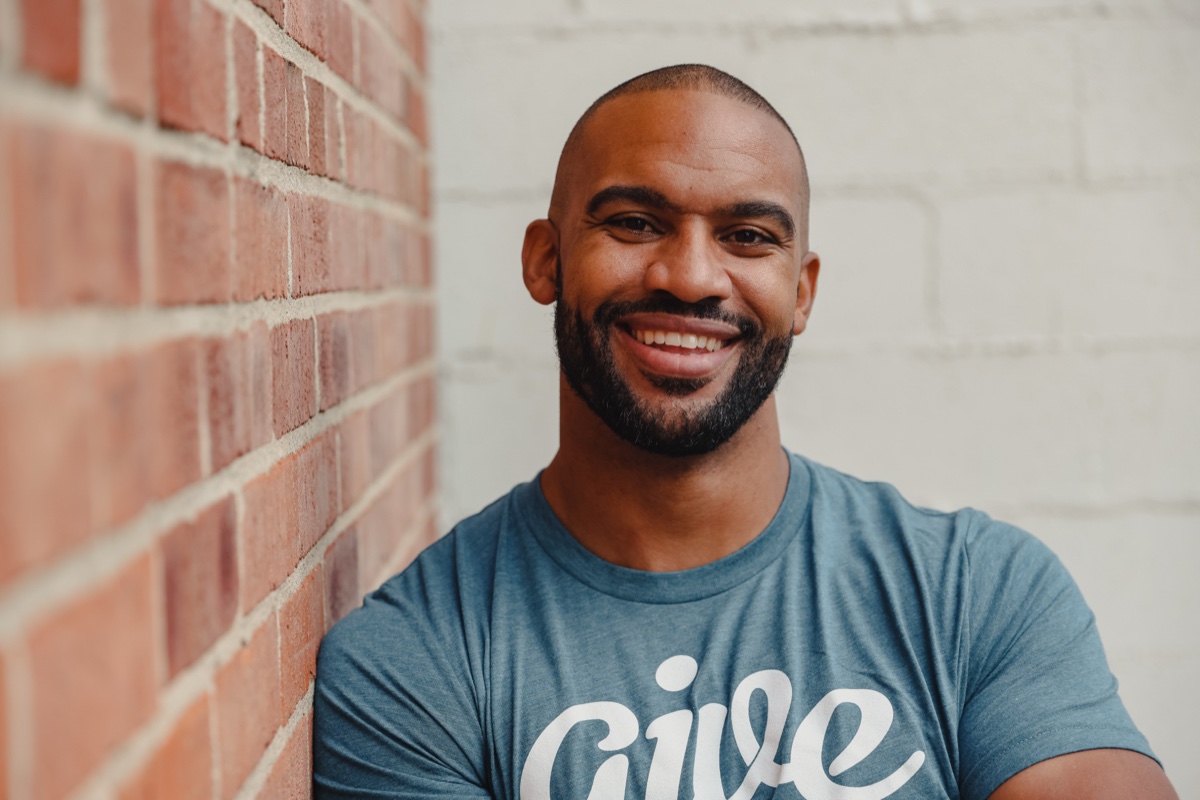
Anthony Trucks went into foster care at three years old and was adopted at fourteen. He grew up in a house where the rule about money got said out loud, more than once: if somebody has a million dollars, they burned somebody to get it. He earned a football scholarship, reached the NFL, lost that to a shoulder injury, built a gym business on the other side of it, and now coaches people through what he calls identity shift. Somewhere in that climb, the rule stopped matching anything he was actually seeing.
In this conversation, Anthony names where the belief came from and why it was so comfortable to keep. He walks through the slow erosion of it: the college donors who had no reason to be kind and were anyway, the agents and neighbors who had money and weren't villains, the business owners making a million a year who turned out to be decent people. He and Jason get into why the lie survives, from a misread verse about the love of money to the political version of bread and circuses to the fact that the billionaire is the bad guy in almost every movie we buy a ticket to watch. Anthony talks about what it was like to receive help as a foster kid and believe he was just collecting what he was owed, and what changed when he understood that nobody owed him anything. He explains the law of marginal utility with hamburgers, describes what most people with real money actually look like, and puts two men side by side at fifty: one who kept the belief and stayed clean and broke, and one who didn't. His answer on what that belief costs over another five years is the part worth sitting with.
This is Anthony's second time on the show. He was here in 2021, back when it went by a different name.
CONNECT WITH ANTHONY TRUCKS Website: anthonytrucks.com Website: DarkWork.com Instagram: @anthonytrucks LinkedIn: linkedin.com/in/anthonytrucks Email: [email protected]
Subscribe to What's Real?: therealjasonduncan.com/articles Book Jason to speak: therealjasonduncan.com/speaking Get the book: therealjasonduncan.com/book The podcast: therealjasonduncanpodcast.com
Episode page: therealjasonduncan.com/podcast/401
This episode is sponsored by Dubb, the video sales platform Jason has used since 2018: therealjasonduncan.com/dubb
Key Takeaways
- The lie I was told growing up that anyone who is a millionaire earned their money by shady means and by stepping on the little people. The truth is that millionaires are often times the ones in the greatest service of those in need because they're actually creating solutions and using their income to support those in need. Thats why nonprofits pursue millionaires to fund them..... How else would it get done?
About the Guest
Anthony Trucks
Guest
Anthony Trucks is a foster kid turned NFL athlete and serial entrepreneur with one serious super power. Making “Shift” Happen. Remove the “F” and you get what it means. This is achieved by doing the “Dark Work” to access the power of identity, because you cannot have a dream above your current identity. Dark Work is how you optimize your identity for peak performance. After overcoming over 30+ traumatic life events, and navigating the identity shifts that followed, Anthony has come to be known as the leading expert in Dark Work to make an Identity Shift. Which is taking the difficult actions necessary to make a shift internally, to elevate how you operate externally, which in turn changes your life. With his unique coaching system called “The Dark Work Experience”, Anthony weaves together neuroscience, psychology, technology, and hard fought life lessons to help anyone with a desire for more in their life or career achieve any goal they want. Buckle up, It’s time to do the Dark Work to make “shift” happen.
Never miss an episode.
Subscribe to The Real Jason Duncan Podcast on your favorite platform.
Now, you already know how rich people got rich, right?
Somebody got cheated.
Somebody smaller got stepped on.
Well, my guest grew up believing every word of that.
And then he became a millionaire himself and he found out who's actually funding the help that he used to need.
I believe the lie that the world has for us is that anybody who has a lot of money is evil and did something pretty bad to get that money.
This lie was one that I was raised on and to be honest, I got into a life where a lot of people that were all unhappy, were sad, were
The reality was, as you start to climb the ranks, the people that have money are the ones that have created something to solve a lot of people's problems.
And I think what it does, it's better for people who have, we'll call it not a lot of money, to blame somebody outside of themselves for why they don't have it.
Welcome to The Real Jason Duncan Podcast.
I am Jason Duncan, your host, and every guest on this show.
They used to believe something that turned out to be wrong.
And some figured it out on their own, and some had to be knocked on their butts first.
But either way, by the time they sit in this chair across from me, they know the difference between what's real and what isn't.
And I've learned that the lies that do the most damage in our lives are the ones that usually look like wisdom.
They're the ones that everybody repeats, they're the ones that you're so sure about, you never even think to question them.
And a lie like that builds a cage around you.
And here's why you stay in that cage, because the cage, it looks like gold.
It looks like the smart play.
It looks like the good life, the strong marriage, the right way to do business.
And nobody walks away from something that looks like treasure.
That's what this show is about.
The gold is the lie.
And every conversation here is about finding the cage, seeing that the gold was never real and then walking out.
Now, that belief that we're going to be talking about today comes with the bonus that nobody says out loud.
If rich people got there by cheating, then being broke means you're honest.
That's what the other side of this law says.
You didn't sell out.
You didn't step on anybody.
Your empty bank account is proof of your character.
And that's the gold in this one.
Not money.
innocence.
And it's the cage because the man who believes it will spend 40 years avoiding the only thing that would let him fix what he says he cares about.
He stays clean, he stays broke, and he can't help anybody.
And he calls the whole arrangement integrity.
And my guest today grew up in a house where that belief wasn't an opinion.
It was just how the world worked.
Then he went and became the thing that he'd been taught to distrust.
Anthony Trucks is my guest and he went into foster care at three years old.
He got adopted at 14.
Uh, he came up broke, he made it to the NFL and he lost that to a shoulder injury and then he built a business life on the other side of it.
And today he coaches people through what he calls identity shift, which is the work of changing who you are underneath before you try to change what you do on top.
And he was on this show way back in 2021 on episode
30 when we were still going by a different show name and he's back today for a very different conversation.
So Anthony Trucks, welcome back to the show.
Thank you for having me, man.
How you doing?
I'm good.
We were talking pre-show the last time you were on.
I flew out to California.
I was on a podcast tour.
We sat down in the living room of this Airbnb and had a great conversation.
You and I had never met before, and we've stayed in touch all these years, and I've admired what you've been able to build and how you're growing your brand and your business.
But before we get into the show, get this thing rolling, I just told everybody in the opening that you came on this show today to talk about a lie that you used to believe, and that lies that anybody with a million dollars,
person got it by cutting corners and stepping on people smaller than them.
And you didn't pick that up from a book.
You actually grew up inside a world where that was just a fact.
So why don't we start there?
Who taught you that and how sure were you about it?
Well, it was my mom and dad, to be honest.
I think we grew up in a space in which most people do statistically, which is blue collar scraping by.
Very poor, didn't have much.
It was always this thing where if you look at what the story was, it was hard to make money.
It was impossible.
It's always hard to get.
When you don't have it, your usual thing is not to go, Is it my fault?
You usually go, Whose fault is this besides myself?
Because I don't want to take ownership.
The reason I don't have money is I'm a good person.
I work hard, but I don't have the money.
Someone did something bad to get it.
I don't think they meant ill by it, but I think it was just passed down over the years of like, if you are a person that's got a million dollars, the only way you got that because it's so much money, you had to do something to burn somebody else on the way.
And that was the dance because what you do is you go, I don't want to be evil.
I don't want to be a bad person.
So what do I do?
I avoid the thing that most of us want and desire.
Did anybody ever say those words to you, or was it just implied?
No, it was actually said.
I can't remember the exact conversation, but it happened more than one time.
It was ideal, why do we have stuff?
Well, 'cause rich people took it all from us, and then they did all those crazy things to people to get that money.
They're more conniving, they're just more creative ways to burn you.
It's weird that you think these people that have money, they just must all be bad.
How dare they?
It creates this group think
that turns everybody against the rich people.
So no matter what people that have money say, they're just bad.
And everything they say is just ways to kind of make it more evil.
And you see this, like I've recently watched a Patrick David podcast with him and some girl and he's breaking down like, no, I grew up working for like Burger King.
I didn't have much.
He's like, well, if your work value is not that much, that's what it is.
And she would not hear the words, but it's so crazy that you're watching a person
so dialed in and desiring to make herself right that logic can't enter.
And it was like one of those things you dance with it.
But yeah, growing up, we had a lot of conversations with family.
That's what it was.
And so, yeah.
That's interesting because I had that belief too.
And I think a lot of listeners probably had that same belief.
Maybe the ones who grew up rich didn't.
But those of us who either grew up poor or middle class, we probably had that belief.
But the differences between you and me, Anthony, is that I don't think anybody ever said it to me.
If they did, I don't remember the conversation.
I just got it as an implication.
Every time you look at the guy driving the nice car, must be nice.
Or if you see the big house, well, who knows how they got that?
It's all these little innuendos, but the lie is still there.
But here's what I want to get to that you and I didn't get to back in 2021.
There's this gap
between believing that rich people are crooks and then deciding to go make real money yourself.
And most people never cross that.
They stay on the side where they get to be right about everybody else.
And being right is worth a lot when you don't have anything else.
Just like that woman you were describing on Patrick by David.
So for you, what was the first thing that made you willing to cross that gap?
What did you think crossing it was going to make you in the eyes of the people that you came up with?
Well, you get exposed to stuff.
So you start questioning the beliefs that are underneath that.
So what my exposure was, a weird way, was football.
Played college football and get to the NFL.
In college, a lot of donors that seemed like nice people that were paying money to be there and they were treating you right and giving you things.
I'm like, oh, that's cool, right?
Come use the ranch for the barbecue.
This person doesn't seem that mean or evil, they're giving us free food, let's do that.
And they get the NFL and you start making money and get around people that aren't just players, but people that are, we'll call it support of players between your agents and your financial advisors.
And you're like, these people, they also make good money, but they're not evil.
Or like you're at your house and you have neighbors who are making good money also, but didn't play sports.
You're like, They don't seem evil.
So you start eroding away this thought process.
It's the immersion in an environment that is separate from what you thought.
You can't help but notice something's off.
They're not trying to take from me.
They're just giving.
And they're not mean.
They're not disrespectful.
They're not rude.
I don't feel less than.
And so you start noticing, oh, it's not that crazy.
And then when I left the game of football, I went back to the real world.
I get a business and build a gym business and those kind of stuff.
I'm around people that are doing the same thing in their own businesses, making $1 million in their coaching business, but they're so great.
So little by little, what it was is I didn't have to question, do I jump this and go against this thing?
I started to notice and have the complete rewiring of the belief by surely being in contact with the people I was told for so many years are evil.
Do you remember it that way as a gradual process, or do you have a moment where you're like,
This dude is not supposed to be like this.
Why is he doing this?
Was there a moment or was it more of a gradual realization?
It was more of a gradual.
I don't have a specific one I can go to and go, this happened.
I got this thing and it was all amazing experience.
This is more of a gradual.
And it's funny as you do end up going back to your environments with family and friends and you get around the same conversations and you notice like, oh, yeah, I remember that old conversation.
And then you start questioning like, that's crazy.
I don't have that experience now.
So you just bite your lip.
You don't say anything to the family because I don't want to have ruckus in the house.
So you just let them talk and you start noticing the perspective.
It's a lack of information, a lack of access, a lack of experience.
And to be honest, the separator wasn't that somebody did something evil.
It was that somebody worked past the barriers that they have with themselves.
That was more of what it was.
I started seeing the people that had the money had a work ethic that was night and day compared to what I grew up around.
I think that's same for me.
I mean, the lie about this rich people must have done something to cheat to get there.
I don't think I remember a moment where to me either it was like a moment at time, it was more gradual because as I started to come up in business and I went from unemployed school teacher building a multimillion dollar company, that didn't happen overnight.
So as I started hanging out with different people and started realizing, wait a minute, these people aren't that, I remember this is a,
I'm not going to reveal who it is because I don't want to give it away.
But I remember having a conversation with somebody pretty close to me early on in my business.
And I had a business partner that I had brought in, and he was already a fairly wealthy gentleman.
He had built and sold a business years earlier.
And I was just mentioning to this person something about him.
And I said, yeah, he's going out to his lake house, blah, blah, blah.
And I wasn't bragging.
I was just facts.
Yeah.
And then I said something about his character, like the person I was, my partner, I said something about his character being good, godly, whatever I said.
And the guy I said that to like said, doubt that.
It didn't have any context about this person, but he was like, Doubt that.
I think that was the first time I heard somebody else say something that I used to believe, and I'm like, Uh-uh, well, hold on a second.
When you're around these people now that have this belief, how do you handle it?
I know you said you bite your lip, but is there any moments where you pull back and go, Wait a minute, dude.
It depends what they're talking about.
I honestly, as a family, we talk about money more now than we ever did because I feel like if you don't talk about something
You can't get good at something.
If there's no conversation, no discussion about it, it's this distant figure.
How do you expect to master it, understand it, navigate it?
Our family talks about it.
When people come around us, it's weird to them.
It's not a bad thing, though, but it's just like, hey, we have bills to pay.
Everybody lives off money.
Why does nobody talk about this?
For me, it's the weird thing, but I've never had something where I can look back and go, there was a definitive moment, but also for me, navigating this whole conversation, I don't mind having discussions now.
with my family and how I think about it.
There's going to be people that have those thoughts.
My job is not to go out here and try to find a way to convince them opposite.
They're going to believe they want to believe.
What I can do is be a good example, live a good life, do things, give back, be nice.
But some people are very happy and desire to be in a position where they blame somebody else for the material things that they don't have and that I'm not going to battle.
At this point in my life, I'm probably the same age for you.
Okay, if you think that I don't have a desire to go into the trench with you and have a discussion around illogical things that don't make sense.
But yeah, I'm going to talk about it.
I bite my tongue.
There's no need.
And the thing is, if the family's around me and they do have a conversation, I'll talk about it, but I don't need to talk about it with certain people and I don't bite my tongue if I need to.
It's just certain realms of places I walk, it's not a discussion we're going to have.
but they don't make great revenue in terms of businesses and so they have jobs, but they love their lives.
So we were on, they love their lives.
But the occasional things will come out like, Ooh, Anthony, like a $3 million house.
Okay, well, when we feel bad that I worked my tail off, I go, Do you know how much I've worked and built?
So it's like, I realized that if that's the language they use, there's a lack of comprehension and I'm not the teacher.
So I just go, All right, and I continue on my day.
So what do you believe about the origin of this lie?
Where does it come from?
And before I give you the chance to answer that, I want to talk a little bit about how I believe that society and government and politics is not helping us any because you've got the whole tax the rich thing and you've got rich people need to pay their fair share, which I think subtly
even though it's a different issue, maybe a different issue, but it subtly plays into this lie.
So where do you think this lie originated?
We can talk about a lot of different directions.
I think there's a spiritual direction, there's a non-spiritual direction.
The spiritual direction, I think, is this, is people, the whole language of, what is it?
The root of all evil is the love of money.
I don't think it's the root of evil, the love of money.
I think it can be, but the root of evil is evil.
It's just you.
Money's a vehicle.
I think the love of money just for money's purposes can be bad.
I think part of it is people go, well, that language stands out in the faith base.
I've actually worked with a lot of people that are like pastors in the spiritual world who go,
We can't go after money.
I go, but don't you need money to pay your bills and to eat?
Yeah.
I said, well, then why don't you find ways to create value to bring money in?
Because it can't be about money.
I'm like, why?
Because the love of money is evil.
But it's not the love of money, it's the love of freedom.
And this is a tool.
Because if you think about it, even God in a moment in time where he gave money to people, it's like, I'm gonna be gone.
Here's the talents.
Do what you will with him.
One guy buries the money, he says, get away from me, you horrible human.
because he didn't do something to engage and create more with the wealth he had access to.
He buried it and he's like, you could at least put in a bank.
What are you doing?
Get away from me.
Gave that person shares with other people that had invested it, right?
So think part of it's this biblical or religious space, if you wanna call it that that goes, you can't pursue money because if you go after money, you're an evil person.
And so that's one part of it.
The other side of it is, I would go, I'm gonna be honest, I think it's like a political dance, which is, I was recently in Rome and we were sitting here listening to the entire, we were at the Roman Coliseum
And we're listening to the guy in Italy talk about all the stuff and how they used to have the games that were free, free food, free entertainment, free drink.
They built this entire Colosseum that lions and tigers and bears and people and gladders fighting.
And he goes, what they chose to do was whenever you were a king or whatever, Caesar thing, if you were the head of the Roman whatever, I don't know what you'd call it, what do they call it?
Yeah, the king of rock.
I don't know, the emperor.
There you go, that's what it is, right?
So if you're the emperor, what you would do is you would put a bunch of games on for free because what happens is it distracts the majority of people that are, he says, lesser socioeconomic status, the poor people.
Give them free things, they'll like you in time.
So give them free stuff is one part of the dance to make them like you.
Then when they like you and you have what they want, anything you say, they believe.
We give politically, I think we give a lot of things to different people that don't deserve it.
And then what happens, they get entitled thinking they do deserve it.
Where's my games back in the day?
Now it's like, where's my money?
I deserve my whatever.
And so I get this free stuff and now whatever you say, I'm going to believe because you're funding my life.
So it gets to another level of the dance which goes, I'm going to give you free things.
The rich people are the problem.
It's not that I'm spending your money like a freaking idiot.
Look at California.
I live in California.
We've in the last decade spent $24 billion to solve homelessness.
It's just got worse.
Makes no sense.
Billions have gone to a speed train.
They've built 100 yards of concrete between San Francisco and LA.
100 yards.
So you're going, why is it you trying to frame it as you need more money from the rich people when the reality is you're going to be better with what you even have in the first place?
And on top of that,
The rich people have the majority of the not so rich people working for them, which means when it comes down to it, the money that you make in your paycheck, they're paying taxes on.
So they're paying damn near what you're paying in taxes.
Where do you think that doesn't go anywhere?
Billionaires pay, I think I saw a statistic, they're paying something like 30% of the overall taxes in America, the billionaires do.
But it's not by them personally, the companies they have access and own.
that's paying taxes.
On top of the top, I think like 2% to 5% pay 50% of the taxes.
And then even beyond, I think 55% pay 99% of the taxes.
So the bottom 40% to 50% of people aren't paying taxes, but how do you think they're getting their free money?
The taxpayers.
And so it's this dance of let's give them free stuff and then we'll tell them a story that pits them against people that are really doing the thing to pay for their lifestyle and make them evil.
It's just a weird
It's a weird dance, but I look at it all and go, there's something that's spinning.
And even deeper than this, listen to this.
When you watch a bunch of movies, what do they usually position the billionaire playboy as?
They're always the villain.
Always a villain, right?
So what do we do with society?
Let's go watch that movie.
Watch the bad guy be the villain, the up-and-comer, the lowly person be the savior, the hero.
Let's watch that.
And then they spend, what, $200 million to make that movie, but how much money do they make?
a billion off it will say right let's say they make 400 million off of that who's making the 400 million the poor or the rich the the rich literally they they make a movie that they give to the people that don't have money to get a lot of money positioning themselves as the bad guy in said movie
So you have this weird little dance of like, you're literally going and funding the pockets of people who are telling you, hey, we're going to make a movie about people being bad, but in doing that, we know you're going to buy it, so we're going to get a bunch of money.
But that's why I think the society sees it as, oh, rich people are bad because we also see it in TV.
We're told by social media, we're told by politics.
So it's this interesting dance that I watch and I go, it's crazy.
I don't know the start of it or the end of it, but it's right in front of us.
Have you ever heard of this book, Thou Shalt Prosper?
by Daniel Lappin.
I've heard of it.
You haven't read.
Oh my gosh, you got to read this book, man.
So so this was written by a rabbi, Daniel Lappin.
And he it's the 10 commandments of money, like how it works.
And he tells an entire story of what you just explained, Anthony, about the about the movie industry and when the shift happened.
Because back in the day, the rich, you know, older movies, the rich people were usually the good people.
They were doing good things.
One of the ones instances that come
to mind is Little Orphan Annie.
Annie came out in the late 70s, early 80s, and Daddy Warbucks was the good guy.
He was a good guy, but not Daddy Warbucks today.
Daddy Warbucks today would be the guy running the child trafficking ring.
That's how that would happen today.
So I highly recommend the book.
Since we're talking about the ideas of money, Daniel Lappin, Thou Shalt Prosper, really, really good book.
And he's a Jew, and so he plays into the whole, everybody thinks Jews have money, and he gives a reason for it.
He goes, there is a reason for that.
It is not a stereotype.
So he leans into that, and it's really, really good.
Now, I do have another question I want to ask you about the cost of this belief.
But before I do that, I need to talk to my listeners for just a minute, so hang tight, Anthony.
I'll be right back.
Let's take a quick break to thank our amazing sponsors for making this podcast possible.
Now, quick word about this sponsor of today's episode, Dubb.
This is spelled D-U-B-B.
If you've ever heard of it, Dubb is a video platform for people who sell things.
What you do is you record a short video off your phone or your laptop and you send it inside an e-mail or a text message or even a LinkedIn message.
And the person on the other end sees your face instead of one more block of text they're never going to read anyway.
And here's why that matters for you.
Your prospect has 40 unread emails sitting there and yours, and it all looks the same.
They all look the same, but a video, it doesn't.
You can drop a button right underneath the video so they can book a call without typing even a single word back to you.
And then Dubb tells you who watched it, how long they stayed and what they clicked.
So you're not guessing about who to follow up with on Monday.
I have personally been using Dubb since 2018 and I'm on it nearly every single
I know Ruben and Darius, the guys who built it, they've been sponsoring this show for a long time.
And I think you should check it out.
You can go to the real Jason duncan.com/dub spelled D U B B to get started for free.
You can check it out.
Plus you get a discount on your first two months.
That's the real Jason duncan.com/dub.
Thanks for listening to our sponsors.
Now, back to the show.
Anthony, let's talk about what this belief costs us, because it doesn't just sit in your head being wrong.
Every single year you spend proving you're not one of them is a year that you can't write a check for anybody, you can't help anybody.
And you came up, Anthony, around people who needed somebody to write one, and you were one of these people who needed that, and now you are one of the people who can write the check, so what do you know now
that you wish somebody had told you 20 years ago and why do you think nobody told you?
I don't know if there's a difference in that specific thing.
What I will say is there are great people that are trying to help who don't want anything more than just to know that there's something good coming from the money they're giving out.
I do a lot for foster youth.
I grew up in a situation where it's in foster care and so nobody really came back to help a lot.
I had great coaches.
I got scholarship to go play football, right?
It changed my entire life.
And so realistically, it's like, yeah, you're in a situation watching people change life and you got to look at it and go, maybe there's some good.
What I wish they would have told me back then is that when I did get that, it shouldn't have been a feeling of like, yeah, I got something back from the guys it took from us.
I'm finally getting my dues from what they owe me.
They've been burning somebody, so I'm going to get my thing.
Whereas now, I look at it and go, Man, that person didn't have to give anything.
They could have found a way to write it off and buy a TV or a car for their house.
They chose to give something back in a way that makes them feel good.
The truth is, while you do have a certain amount of people that are wealthy, that have money, we'll call them rich.
There's rich in wealth.
Let's say they're rich.
Those rich people
Realistically, there's a certain level where their lifestyle, my lifestyle is pretty consistent.
And being honest, if you were to give me an extra $5 million a year, it probably wouldn't change my life much.
I drive what I want, I get to go where I want, I have time, I have my body, I get to be with my kids.
You give me more money, I don't know what I would do.
I don't need a bigger house.
It's all those dances, right?
And so at the end of the day, when I have money, I want to give it to things that make sense to make me feel better
for just living life and being able to give back and serve the world in a cool way.
For me, it's not this thing where I look at a guy like me and go, Yeah, I got some just back, what I was owed, but go, Man, thank you.
You don't have to give this.
I appreciate you giving it because you want to actually give back to the world in a way that makes you feel like you're serving the world because it wouldn't change my life to keep that in my pocket, but I could.
I get something back from the guys that took from us.
It helped my life.
It changed my life.
It didn't have to do it.
That is something that I don't think is told.
I think when people get something from the government or get something from somebody, they go, yeah, I got it back.
And it's like, what did you get back?
We don't have to give it out.
I don't have to do any of those kinds of things.
Here's the crazy part though, is when you have that energy of it's something like just do, I notice it.
And then you now stop the golden goose, so to speak.
I'm not gonna give you more when you just acted like I owed it to you or you feel entitled by it.
And so it's really a dance where people don't realize, I think that people that don't have money, that aren't rich, there's a climb to get to a level.
And if you understand that the best help you can get is someone that actually has accomplished what you want, who has the money, who would like to see you succeed, you'll get what you want, but you can't do it.
demonizing a person you need help from, where you're asking for help from, because eventually it's noticeable.
Realistically, in my opinion, most people that have money, and this is not across the board, most people are a little more intelligent.
What I have to learn, who I have to become to make money, I am able to sift through.
I'm sure you can see people listen to them talk for two minutes and get a good feel of who they are.
I get a good feel for who you are.
Okay.
And then you won't say anything, but I'm not gonna help you.
I see how you are.
Cool.
And so I'm a little more astute.
So you may be trying to think you're hiding something.
I'm seeing all of it.
Another additional piece I'll add is most people demonize the people that have money because you are seeing the guy with the car, the girl with the shoes and the bags, and all they care about is Louis Vuitton and Gucci, Prada.
Here's a cool trip, right?
That's probably the half a percent of the 1%.
Majority of people that have money,
They don't want you to know they have money.
The moment I see somebody fanning out $100 bills in front of you, I'm like this person's broke.
When you find people that are actually have money, they don't want you to see it.
They don't care that you do 'cause their comfort is in them.
That's why, what's his name?
Microsoft guy.
Why can't I think of his name?
Bill Gates.
Bill Gates, I knew it was something.
Bill Gates drove the same car for many, many, many years.
Maybe even still, some older school car.
Why?
I don't need a car to make you think I have money.
I know I have it.
There's certain things I don't need to show to the world, but there are a group of people that are on a pedestal and they want the world to see it.
And so everybody thinks that all people that are at that level financially, all are like that.
Never the case.
Most people that I know that have money.
I wouldn't know it.
I go to events and I meet people that are like, hey, how you doing?
You just have a conversation.
Come to find, they run $100 million a year company, but they're just super chill hanging out.
What in the world?
You just wouldn't know because most people who have money, they don't wear it on their chest.
They just live life and do their thing and there's peace to them.
And so that's the interesting thing I've noticed is the complete reverse of what I was told growing up.
So here's where I wanna land this thing.
You know what, before I go there, you mentioned something about this giving back, using that, and your implication was that, well, they are entitled to it 'cause we took it from them and we're trying to give it back.
So Daniel Lapin in Thou Shalt Prosper actually has a whole section where he talks about this idea that he refuses to use that terminology, that it's not giving back.
I'm giving.
But I'm not giving it back.
I didn't take it for them to begin with.
Anyway, it's an interesting thing.
But here's where I'd like to land this on.
This cage that we're talking about, this belief that rich people, people with a million dollars, that they had to cheat their way there, this particular cage has a lock on it that most cages don't have.
It's locked because it makes you feel good staying on the inside.
I don't think anybody walks out of a cage.
that's gonna make them feel righteous.
If you're inside and you feel righteous by it, obviously you don't wanna leave.
So the question here is, I want you to picture two men who came up exactly the way you did.
Same system, same houses, same nobody coming to help them and save them.
And one of them keeps the belief that rich people are evil.
They stay clean, they stay broke.
He's not a bad guy, he's just certain that the other side, the rich people are doing something bad.
The other one is you.
you put so you have a different belief now you put these two people side by side on the street at 50 years old you know what's the difference between those two men and what is each one able to do for the people around him?
Oh it's a great question man I'm I'm me versus that guy I'm I have more money and I can I can do more with the money there's this thing called the uh the law of marginal utility you ever heard it before yeah so as something if you have a whole lot of something
After a while, it doesn't hold the same great value.
Here's an example.
Let's say that me and you are both hungry.
You have no hamburgers.
I got 10 hamburgers, both starving.
I eat the first one.
The marginal utility of this first one is high because I'm hungry.
It's great.
Second one, still good, but not so much.
Third one, pretty good.
By fourth, I'm full.
I don't need more hamburgers.
The fourth one is nowhere near as valuable as the first one, but to you, it could be.
If I want to feel good, it's not going to be eating a hamburger.
Where can I give somebody else a hamburger so they feel good?
It builds from there.
I say the same thing with financials.
When I have enough money to live my life and meet my goals, there's going to be a certain amount of surplus.
Having an extra $10,000, $20,000, it's not going to really change my life.
If I can get it to this person who I believe can deserve it in some way and do right with it, let me help that person out.
You'll give back.
The problem is that's because I have this abundance mindset of what I can do to earn, whereas the other person goes, I'm going to keep all this to myself.
And so what I do is if I get to that point, we're both 51, that person probably never has the amount of income or the amount of disposable income to do cool things for themselves or others.
Whereas for me, I've been able to buy friends cool things for their life that they've said stuff like, I wish I could afford that and I'll go secretly buy it for like $5,000.
They're like, what are you doing?
I'm like, I got it.
I do what I do to be able to give back to the world and you see them light up because for them it's not about the money, but it's like,
Most people who have money don't do this.
And if I had, I couldn't do it.
Like, thank you for doing this for me.
So you see that I have deeper connections.
It sounds weird.
I didn't buy relationship, but I let them know they matter to me in the way that would be matterful to them.
So like that person at 50, I've got better relationships.
I have more freedom.
I have more free time.
I'm usually, for the most part, like in less stress because I'm not worried about where's my money going to come from, pay my bills.
I got no retirement and also I can actually explore this cool world.
The thing is crazy is I think both those people have the exact same dream.
Both people want to have good relationships.
They want to have nice things.
They want to have their health intact.
They want to be able to see the world.
They both want the same thing, but one person becomes their actual sticking point and their own roadblock to getting what they want.
That's the person that goes, money is bad.
Those who have a lot of money, they're bad people.
I don't want to be a bad person, so I'm not going to do what a bad person does to make the money to be bad.
I'm going to sit back here and just work real hard in a way that's wasting time, doesn't move the needle,
and then blame them for me not having what I want.
Whereas other person, which would be me, goes, all right, I'm a build, I'm a grow, I'm going to listen, I'm going to do things that put me in the space to create the revenue and income to do cool things in the world.
I think I read a book years ago called The Soul of Money by Lynn Twist.
And in it, she talks about a lot of people, they make a bunch of money.
A lot of folks go make a bunch of money, but few people understand the soul of what you can do with money.
And so her thing was, I had all the stuff, my husband and I lived in New York.
We were buying the cars and then because you have the car, you got to buy the watch and the watch, you got to buy the shoes, clothes, the art, you got to buy the wine, the wine you got to put in the house, all these big things.
After a while, I was like, why make more money?
Then she goes to India and steps over children and goes, I want to feed people.
That was a purpose for the money.
She did more with the money to give.
It was just a matter of the money wasn't evil.
It was the person wielding it.
Like if you work hard and build something that serves the world, you make money.
And I think that's the key that I learned for the most part.
The people who have money, money doesn't come to anybody by accident.
Yes, you can scam people from some stuff, but people get caught.
Most of the time, people that are making a lot of money are of high service.
They're doing a lot for the world solving a problem because people like to buy things but hate to be sold.
So if you see people that have made a lot of money, oftentimes, not every time, I'd say 99% of the time, they're actually doing something that serves the world to make that money.
And people are happy with what they're doing that's making them money.
What do you think is the cost of staying inside that lie for another five years?
It's priceless in a negative way.
Because they'll never imagine me and you were sitting at the bottom of a cliff, looking up at the top of a cliff.
We don't know how to get up there.
We have no idea what's on the other side.
I just know that there's a cliff and there's something there.
They're never going to know what they don't get to experience because in their head, one of the folks that climbed this wall, man, they're evil people.
I'm not climbing that wall.
The cost is one that me and you know because we've crossed that channel and gone, Oh my gosh, I can't imagine living a life where I have to ask someone for a few bucks and I can't get by.
I know people that borrow money from their kids.
I'm like, Dog, you're borrowing money from your kids?
What is going on?
It's this weird dance of I could never be there, but those people haven't tasted the other side.
Therefore, they don't understand how much they stand to not experience and not gain.
So the cost is priceless in a negative way, unfortunately.
Before we close, Anthony, I want to give you one minute.
I'm not going to interrupt you.
I want you to tell the world as directly and as passionately as you can what the lie is, why they've been believing it, and what the truth actually is.
Go.
I believe the lie that the world has for us is that anybody who has a lot of money is evil and did something pretty bad to get that money.
This lie was one that I was raised on.
And to be honest, I got into a life where a lot of people that were all unhappy, were sad, were blaming other people.
And the reality was, as you start to climb the ranks, the people that have money are the ones that have created something to solve a lot of people's problems.
And I think what it does, it's better for people who have, we'll call it not a lot of money to blame somebody outside of themselves for why they don't have it.
as opposed to doing what's needed to build yourself or build something that can produce the amount of income you want that creates the freedom that all of us want.
I think we get to this point where people are demonizing those that have gone ahead of them and done something great because it's better to have the demon be external, the demon be internal and be the reason I don't have what I want most.
We play to that.
The world actually, I think, plays to that little monster in ways that some people find out how to make more, because not all people that have money are good,
I would say that 9 out of 10 are great humans that are having money, but the problem is everybody emphasizes that one person is doing it bad and we all go, that's what they're all like, and it's not the truth.
The more I've climbed, the more I've found that as I've made more money, I've made it in ways that make people happy, which is beautiful, and I can do things to serve people
that never had, like me growing up, but want, and I can give to those who actually appreciate the things that they're looking for.
But it can't happen unless somebody accepts the fact that the lie is all people that have money are evil when the fact is honestly complete opposite.
Tell people how to find you.
You could find me in the club.
I'm sorry, I don't go to the club.
You can find me at anthonytrucks.com or on Instagram at @anthonytrucks.
Fairly easy to find.
If you see another one of Anthony Trucks that's a younger person, that's me, my son, not actually me, but you'll notice this face.
I have more grays in my beard.
All right, it's anthonytrucks.com.
Go check him out.
Hey, Anthony, so final question before we finish.
If someone listening right now is still inside this lie, they're still believing it.
What's the one thing that you want them to hear before this episode ends?
Be honest, the common denominator in your failures and successes is you.
If you don't have what you want, it's not someone else's fault, it's yours.
The moment you can own that and embrace it, it'll suck, but it'll give you power to change your life.
And the moment you actually do change your life, you get to create something of a beautiful transition for not just your life, but everybody else around you and those that come after you.
All right, Anthony, thanks for being coming back on the show after all these years and episodes.
We appreciate you being here.
Amen.
Pleasure.
Appreciate you having me.
Well, that's a wrap on today's episode.
If you saw a bar on your cage that you had noticed before, why don't you take a second and send this episode to someone who needs to see theirs.
The gold is the lie.
As always, I am your host, the real Jason Duncan, and Jesus is king.
We'll see you next time.
Hey, thanks for listening to this episode.
Remember,
We release new episodes every single Monday, so make sure you tune in.
You can find all the show notes, everything from today's episode and more at the real Jason Duncan.com.
If you want to follow Jason, just search the real Jason Duncan on your favorite social media platform or your favorite AI platform.
You'll find him there.
We'll see you next time on the real Jason Duncan podcast.