Is 100% the Wrong Goal?
Prefer audio only?
About this Episode
Your life blows up. Diagnosis, divorce, the business goes under, whatever it is. And the first thing you do is try to get back to who you were before. Everybody does. It doesn't work. You're not getting that person back, and the people who actually recover are the ones who stop trying.
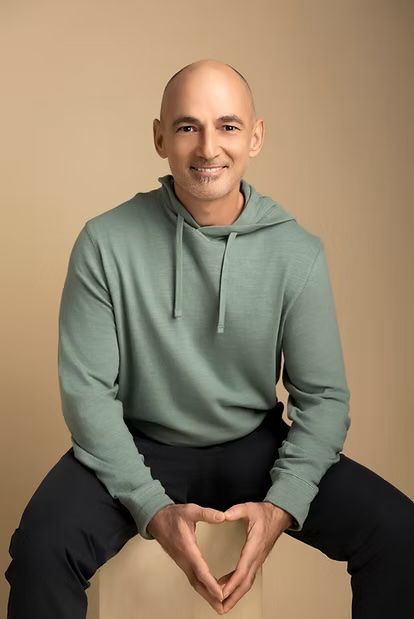
Nir Peled was on a video call in his home office when the stroke hit. He faked a bad internet connection so he wouldn't have to speak, and by the end of the meeting he couldn't move his hand to reach the mouse. He was 49. He had already survived a bombing, an allergic reaction that ended his career as an officer in an elite Israeli Defense Forces unit, a tsunami, a robbery in the Amazon, aggressive cancer, and a motorcycle accident. Six times he fought his way back to who he was before. The stroke was the first time that playbook failed. In this episode, the Fortune 500 technology executive and author of Beyond 100%: Rebuilding Life After It Breaks tells Jason why the goal everybody handed him, getting back to 100 percent, was the lie keeping him stuck.
Nir describes the measurement that ran his days in the ICU, where moving one finger left him sweating and exhausted, and the 1 percent a day rule he built from it. He talks about the cry he calls surrender, his first since his late teens, and why accepting the stroke turned out to be what let him recover. Then he takes Jason to a Manhattan coffee shop near the one-year mark, where walking the city at 85 percent convinced him he had hit his ceiling, until he realized the next day that the benchmark itself was the problem. The person he was measuring against was gone. They talk about what that means for anyone rebuilding after a diagnosis, a divorce, a bankruptcy, or a failed business, the line his grandmother, a Holocaust survivor, gave him about eyes adjusting in the dark, and how a yoga class he could only half do became the work he does now: teaching recovery to brain injury survivors who walk in wanting exactly what he once wanted.
Connect with Nir: Website: nir-peled.com LinkedIn: linkedin.com/in/nir-peled-ai Instagram: @nir.peled.beyond100 Facebook: facebook.com/Beyond100Percent
Subscribe to What's Real?: therealjasonduncan.com/articles Book Jason to speak: therealjasonduncan.com/speaking Get the book: therealjasonduncan.com/book The Real Jason Duncan Podcast: therealjasonduncanpodcast.com
Full show notes: therealjasonduncan.com/podcast/403
This episode is sponsored by Dubb, the video messaging platform Jason has used nearly every day since 2018. Get 50 percent off your first two months at therealjasonduncan.com/dubb.
Key Takeaways
- The lie: that recovery means getting back to 100%, back to the person you were before.
About the Guest
Nir Peled
Guest
Nir Peled has survived seven catastrophic events: a bombing, anaphylaxis, a tsunami, a violent kidnapping and robbery in the Amazon, cancer, a motorcycle accident, and a stroke. Across those experiences, he developed Beyond 100%, a practitioner-built system designed not to restore what was lost, but to build something stronger in its place. Unable to speak or move after his stroke, Nir now teaches yoga and meditation to brain injury survivors. He is the author of Beyond 100%: Rebuilding Life After It Breaks, a Fortune 500 technology executive, and a former officer in an elite IDF unit. His framework is used by individuals and organizations navigating disruption, crisis, and high-stakes change. He lives in Northern California, where he's still practicing what he teaches. For more information, please visit: https://www.nir-peled.com/.
Never miss an episode.
Subscribe to The Real Jason Duncan Podcast on your favorite platform.
Audio file
403. Nir Peled.MP3
Your life blows up.
There's a diagnosis, a divorce, the business goes under, whatever it is.
And the first thing you do is you try to get back to where you were before.
And everybody does it.
But you know what?
It doesn't work.
You're not gonna get back to that person.
You're not gonna get that person back.
And the people who actually recover are the ones who stop trying to get back to what they were before.
There is always bright side.
Your eyes eventually adjust.
The crisis that happened can turn into an opportunity.
Welcome to The Real Jason Duncan Podcast.
I'm your host and I'll give you two guesses what my name is.
I am of course Jason Duncan and every guest on this show is here for one reason.
They used to believe something
that turned out to be wrong.
And some of them figured it out on their own, and some had to get knocked flat first.
But either way, by the time they sit in this chair across from me, they are the ones who know the difference between what's real and what isn't.
And the lies that do the most damage are the ones that they look like wisdom.
They're the ones that everybody repeats.
They're the ones that you're so sure about that you never think to question them.
And a lie like that,
builds a cage around you.
And here's why you stay in the cage because the cage looks golden.
It looks comfortable.
It looks like the smart play.
It looks like the good life, the strong marriage, the right way to do things, the good business.
And nobody will walk away from something that looks like treasure that's comfortable.
And that's what this show is about.
Every conversation here is about finding that cage, seeing that the gold was not really real and walking out of that cage.
Now, today's guest,
got the worst version of what I just described.
He had a stroke at age 49.
He couldn't talk, he couldn't move.
And the goal that everybody handed him was the same one that you'd get.
Hey, fight your way back to 100%.
Get back to the man that you were.
And that sounds reasonable.
And it looks like hope and it looks like refusing to quit.
And nobody's going to tell a man in rehab bed to stop aiming for who he used to be.
And that cage
is what the goal does to you.
And he measured himself every single day against a man who didn't exist anymore, which means every single day he lost.
And you can't build anything new when you're spending everything you've got trying to put the old thing back together.
And he was in there for months and then he stopped chasing.
And that's when he started getting better, not back to a hundred, past it.
And that's where we're going today on the show.
Nir Peled has survived a bombing, an allergic reaction that ended his military career, a tsunami, a robbery in the Amazon, cancer, a motorcycle accident, and at 49, a stroke that left him unable to speak or to move.
He's a former officer in an elite Israeli Defense Forces unit and a Fortune 500 technology executive.
He wrote the book Beyond 100% Rebuilding Life After It Breaks.
And the man who couldn't speak after his stroke now teaches yoga and meditation to brain injury survivors.
Welcome to the show, Nir.
Thank you.
I'm glad to be here.
Yeah.
Well, you know, before we get going,
As I just told everybody listening, you know, you came on today ready to talk about a lie that you believed, and that lie is that recovery means getting back to who you were before.
And you believe that all the way, and you had six comebacks behind you saying that it was true.
So I want to start right there.
Where does that belief come from for you and for other people, and how did it go
before you started questioning that belief.
I believe this belief was really part of how I grew up as a man in Israel, in the service, in technology, the striving for more.
If something knocks you up, made you fall, get up, dust yourself and keep running.
If force doesn't work, use more force, maybe a different direction.
All of those cliches, that's how I lived, right?
So that's how I built my career and that's how I treated life.
I mean, there is always somewhere better to be and I'm aiming there and I'm driving full force and very focused, try to remove anything that is not taking me to where I'm going to be.
And it works for the most times until it doesn't.
Yeah.
So what happens?
What happens when it doesn't work in your experience?
Oh, I mean, the first time that I noticed that life changed and I can't do anything about it was in the military.
I had an allergic reaction.
I was, you know, climbing the the ranks and I was doing very good.
I really enjoyed what I was doing and I felt, you know, I'm doing the right thing.
It's the never again cliche, the never again motto that we lived by
My grandmother, she's a Holocaust survivor, so that's how we lived.
And we don't have anywhere to go, so you better defend our only place to be.
And when I got the allergic reaction, I was in the field, I was helicopter with tubes in my mouth.
It was a bee sting.
It's so small, this tiny bee.
I used to, you know, I lived in a rural area and so I got stung with bees many times.
Suddenly two doctors coming to me and both of them had accents.
and telling me I can't serve in the field again, which means my military career is over.
And I had nothing to do about it, nothing to say.
Your military, your medical profile is low and low enough that you cannot serve in the field.
So if you want to be in the military, you can be in the back offices.
But I didn't want to do that.
I resisted.
I was so angry.
Hindsight, that was one of the best thing that, I mean, it's hard to say best or worst because I don't know what would have happened, but it took me to where I am right now.
So is it a good thing or a bad thing?
I don't think it's a fail to judge, but that was the first time that, you know, I faced that kind of a dilemma.
Have you been stung since?
No.
No.
Wow.
Had you ever been stung before?
Yeah, I grew up in the rural area, so we were, you know...
And that's one little bee took you out.
Yeah.
Okay, so you wrote that you spent months measuring yourself against a version of you that wasn't there anymore.
And so what I'd like to have is I'd like to know what was the actual measurement?
I mean, walk me into one of those mornings.
What were you checking?
Was there a word you used to be able to say or how far you used to be able to walk or what was on the scorecard and what did you do when it came up short?
I realized that it's not just me measuring.
This is how stroke survivors, we measure our progress.
At first, all right side is paralyzed.
I cannot move any, not even a flick of my finger.
It feels like I put both hands next to each other.
I can move the left one and the right one is I see it, I feel it, but it's not moving.
It's terrible feeling that you have no control of your body.
It's like I felt like a leather, like a
Like I have a blanket that is lead, very heavy and I can't move it.
It feels like very claustrophobic.
And then one day and I was doing this kind of exercise with both hands, trying to move the fingers.
And one day, a few days into the, I was still in the ICU, I see a movement of the skin and I was so happy.
I tried to show it to my wife.
She was right next to me and she barely saw it.
drained the energy out of me.
It was like lifting weights, like I was sweating.
It was so hard to just to barely move my finger.
And I said, okay, this is it's enough for today.
I got us.
I got us.
I was so exhausted.
I needed to sleep.
And I thought to myself, this is 1%.
Good.
All I need is 1% a day.
And I made it a rule for myself not to strive for this kind of improvement because I
I did the math, the 1% a day or even a week compound and later throughout the recovery, I got to 10% where I can move my arm a little bit more.
My leg was still not moving and most of the other parts were getting along in this recovery.
That's how I measure myself and every time it's not just the body that I can measure,
the measurement of the cognitive is in reverse, is how many mistakes I'm making.
So if I forget stuff, if I try to find a word and the feeling is like, you know what you want to say and the word isn't the, you know the word, it's just, how do you say it?
I know what to say apple, but it's a fruit and it's green or red and it's crunchy, but you can't find the word apple.
You know what you want to say.
That's the feeling of not able to speak, to put your words into sentences.
So I measured how many mistakes I'm having.
First, it was very obvious.
I couldn't make any words come clearly.
And then as it goes along, I made
less mistakes.
So it's kind of reversed in the body.
I move, I measure the progress with the cognitive, I measure the lack of mistakes.
So that was my technique.
I try to record and I try to write
a journal starting by recording just practicing the speaking and I didn't want to do a video call with my mom she's in Israel so it's far and I didn't want to scare her because I you know words are in mid-sentence they kind of disappear so I tried to record the message to her and I find myself doing I still have those recording seven messages or five messages just trying to say the script that I already kind of went through my head.
Well, you know, you've got so those are physical things.
And I can't imagine what that's like trying to learn to speak and write and feel and move your fingers.
But beyond that, like the mental side of it, you had this Israeli Defense Forces guy who now can't go do that anymore.
And you were trying to measure your recovery against, I can only imagine, I just want to get back to that guy.
Probably in excellent shape, physically fit, run and do, jump, climb, whatever you want to do.
You could take care of arms.
You were good at those things.
Were you just trying to get back to that?
And at what point did you realize, I'm never going to get back to that, but there's something beyond it that I can get to.
I think it's both body and cognitive.
My brain is my superpower, right?
It's kind of in the technology space, AI and what have you.
It's multitasking and memory and retrieving and having conversation and IQ and EQ.
I was terrified.
That was the most scary part.
I think what made the change, it was two incidents.
I remember very vividly both of them.
First,
I call it surrender.
I was in the hospital before I was able to move anything and I cried.
And that was the first time I'm crying for like, I don't know, since childhood, since my late teens.
And I felt so alive and so it was the best cry ever.
I felt I'm crying for
I'm submitting to the situation.
I accepting the fact that I had a stroke.
I'm mourning my condition.
I am so sorry for myself.
I feel, I don't know if the word depressed is the right term, but I was so sad and the cry just came out and I felt that this is the right thing for me to do right now.
I let go of all the what I need to do and how I look and boys don't cry and toughen up and all this nonsense that I was living by because this is real and I have to accept it and then minutes or hours or days later I realized that was the most important thing because now I let go I accepted my current situation
There is no rewind button.
I cannot wish for it not to have happened.
Now I can look forward and build my strategy on how to recover, how to get myself.
I still aim to the same 100% because I didn't believe the doctor that was saying the scar is in your brain.
Your brain have a scar.
You have scars in your body.
It's not going away.
It's going to find.
It's gonna improve, it's gonna find, make new paths in the neural connections, but you're never going to be, they didn't say that, but they didn't say that I'm never going to be the same, but they never said that I'll recover fully.
And I believe that I'm going to recover fully, but it's going to take time.
I accepted what happened, not at that moment.
It took me a few more weeks to really accept it, but I was the trigger.
And I cried many times after that for the same reason and maybe other reasons.
And today this is, I guess, it's a principle that I live by.
It's in my I build like the my framework has like three pillars, the body, the mind and the spiritual, which I discovered is very essential part.
So in the mind, I made myself a principle to feel everything.
And when I cry and feel sad, it
go through me to release these emotions, those feelings that I usually just push down.
And I don't know where they went, but they never went away.
Yeah.
Well, let's talk about that.
So you're in the ICU.
This is after the stroke.
Was the stroke related to the bee sting or were they separate?
No, more than 20 years apart.
Okay, so the stroke, we're talking about a different thing.
So you used the word there, or maybe you didn't say the word, but the concept of surrender.
You said, I submit to the situation.
And guys who ran an elite military unit don't usually use the word surrender or submit.
And you know what?
Executives don't either.
So when you went, if we go back to that day where you had the best cry, you described as like it kind of unlocked something for you.
That actual day, was there something that happened right before that that made you let go that you realized, okay, once I let this go, boom, all the waterworks, as it were, turned on and that's when things changed.
Was there something that happened?
Yeah, I still death in the face.
I mean, the hours before,
I felt the stroke in a video conference, like sitting here in my home office, and I was drowsy.
I felt like I'm jet lagged, like just not there, not fully there cognitively.
By the end of the meeting, I faked the bad internet connection.
I muted and unmuted, I admit.
And so I don't have to speak.
By the end of the meeting, when I wasn't able to move my hand to move the cursor, and I had to put the left arm on the right one to move the mouth,
I realized this is not just drowsiness.
I tried to get up, I fell, and my daughter found me and they took me to the hospital.
And at those moments until the ICU, like in the next maybe 24 hours, I lost track of time.
I felt my vision narrowing.
Literally, it feels like the curtain is closing on me and I'm trapped in my own thoughts and they're very foggy.
And I'm thinking, okay, this is it.
I tried to diagnose myself.
I did an EMT course just six months before, and I dismissed stroke because I thought I'm smiling.
And I start thinking about this is it.
I'm never going to see my daughter grow up.
I'm never going to see my mother again.
All of those thoughts about **** this is it.
Well, I'm glad it's not painful.
I live good life and
Wow.
And the cry came, yeah, like many hours later, but that was it.
You mentioned in the other scenario, because if I look at it from the technology space or in the business side for my career, and I think what is relevant to this situation is accepting the disruption that happened in your space, not fighting back to where you
not using the old playbook that took you where you are, understanding that something disrupted your business.
It's no longer the playbook that you can use now.
You need to use a different playbook.
And it's hard because we build this whatever business it is.
To me, it's my life.
It's very personal.
Doing the same, using a playbook that we write.
And it's successful, it's good.
And the instinct is to use the same playbook.
And now the first thing to do before you start writing the next one is to accept that you've been disrupted and accept that.
Well, I want to dig into that because I want to talk about
what the stroke took from you.
And I'm not talking about the physical and the mental things, but I've got a specific question.
We're going to get there in a minute.
But before we do, I need to talk to my listeners a little bit about a couple, two things.
So hang tight.
We're going to be right back to near in just a second.
Let's take a quick break to thank our amazing sponsors for making this podcast possible.
Now today's episode is brought to you by my friends over at Dubb.
That's spelled D U B B.
Now, if you've never heard of Dubb, it's a video messaging platform.
And what you do is you record a short video of yourself from your laptop or your phone or your Chrome extension, and you can send
that instead of a plain text e-mail or a text message.
And here's what that gives you.
Your prospects, they're drowning in text messages, they're drowning in emails, they're drowning in DMs, and all those follow-ups look exactly the same.
But a video with your face on it and your voice in it
doesn't look like anything else in their inbox.
So guess what?
They're gonna open it, they're gonna watch it.
And what Dubb does is it tells you exactly who watched it, how long they've watched it, and whether they clicked the button at the end to book a call with you or whatever you're asking them to do.
So quit guessing who's interested and follow up with people who actually are.
I have been using Dubb since nearly, I think it was 2018.
I use it nearly every single day and Ruben and Darius and those guys over at Dubb, they built it.
And they've been a sponsor of this show for a long time, and I'm proud to have them as partners and sponsors of The Real Jason Duncan podcast.
Now go to therealjasonduncan.com/dub.
That's D-U-B-B.
That's my link.
And what it'll do is it'll take you straight to the platform, like I said, that I've been on since 2018.
That's therealjasonduncan.com/dub.
You're going to get 50% off your first two months and you get a free trial.
So go check it out therealjasonduncan.com/dub.
Listening to our sponsors.
Now, back to the show.
Okay, so Nir, I want to go, I want to talk about what the months after the stroke cost you.
And I'm not talking necessarily about the stroke itself, because the stroke took what it took.
But the cognitive ability, the physical ability, and you were able to build some or if not all of that back.
What I mean is the months after, when you were laying in that bed and when you finally got home, I'm sure you went through physical therapy and all the things you have to do.
But when you were chasing the old you, every one of those days was a day you weren't building anything.
And I bet the people around you paid for it too, watching you lose to a guy who wasn't even there anymore.
So with that on the table, what what do you now know about that that you wish someone had told you 20 years ago?
And why do you think nobody did?
I think the what I know now that was a lie.
And I discovered it for the second time with the stroke.
It was almost a year into the recovery where
I use all my methods and framework that I built for myself and strategies for recovery and a body pillar, mind pillar, even spiritual.
And I honestly believe it was working.
I mean, according to the medical team, I broke the record that I said to myself and how did they phrase it?
Your recovery is beyond what we expected and I was so proud of myself, but at some point,
I think it was just before the year mark, we went to New York for a winter vacation.
I took a train with my daughter.
There's a train from Sacramento to New York, four days in a small caboose with a small car with my daughter.
It was bonding time.
We never talked about the stroke.
Long story short, I'm finding myself a normal person walking the streets of Manhattan
I did my morning walks.
I started walking.
I got to like two, three miles a day and it's without a cane, sometimes with the brace, sometimes without.
Nobody makes way, nobody helps me, nobody asks if I need anything.
I am literally kind of mingling in the crowd.
And I measured myself against 85%.
I was roughly at that time.
And I remember this
darkness that came on me and I was in this Mediterranean coffee shop.
Oh my gosh, I hit my ceiling.
That's for the doctor.
I'm never going to be.
How do I aim?
How do I get back to my 100%?
Should I aim to 120?
Should I?
And fear.
I was very afraid of this is it.
This is it for me.
This is the new new.
This is the cap.
This is the ceiling.
And
I stayed another day, I went the next day to the same coffee shop and thought about what's happening.
And then I realized that the 100% is not the right benchmark.
I am never going to be the 100% if it's measured by who I was the day before the stroke.
That person is gone.
So at that point, I started to think about all the things that I am right now that I wasn't before.
that the stroke gave me access to part of myself that I didn't have without it.
And there's so many things.
Well, I still, I can't balance so much and I can't run and I find myself speaking slower and not able to multitask.
But these are not necessarily bad things.
And
I am more present.
I am more aware of my emotions.
I am a different person.
And that doesn't mean good or bad.
It's different.
So from that point on, my motto was not to aim to my 100%.
I realized this is a lie that I've been living by.
Yet again, it's the same go back to be better and go back to who you were and start from there.
That benchmark is wrong.
Yeah, I think that's.
Yeah.
Well, I want to talk that.
I think people believe this and you could go through physical ailments like a stroke.
You could go through relationship ailments like a divorce.
You can go through financial ailments like a bankruptcy.
You go through business ailments like a failed business.
I mean, there are all these things I would imagine every person who goes through those
is attempting to build back to 100% of what they used to be.
So the business has got to be back to what it was.
If I went bankrupt, I got to get back to where I was financially.
If I had a stroke, in your case, I want to get back to the physical and mental place I was before.
But what I'm hearing you say, Nir, is that getting back to 100% looked like the bravest thing you can aim for, but it was the one thing that made building back your life impossible because you called, as you just said,
100% was a benchmark that you had to give up 'cause you're thinking, is 85% it?
So here's what I'd like you to do.
Think about this, and I don't know if anybody's ever asked you this question.
I want you to put the man who collapsed at the end of that Zoom meeting in your home, that guy, the guy that couldn't move his arm, put him in a chair across from you, and he's looking at you now, and he could see everything that you've lost, and he would look at you and say you failed because you never got him back.
Tell him why he's wrong.
Well, what did you build that that guy never could have built back?
Funny that you say that because I had this exercise.
I did it to myself.
I didn't share with anyone.
The reason I was wise enough to do the wise thing that you advised me is because it wasn't my first rodeo.
I don't know if you mentioned that I had also cancer that spread really aggressively in my body and I went through very aggressive chemotherapy that knocked all the energy out of my being.
Yeah, you had six things we didn't talk about all of them.
There's the tsunami, armed robbery in the Amazon.
motorcycle accident, cancer, and you had all this stuff happening to you.
And the stroke was the one thing that I think changed how you came back from it.
I'm guessing based on what I'm seeing.
So yeah, let's look into that.
So when I had the cancer, I was the notion of just if you hand me a gun, I'll shoot myself in the head.
That's how bad the situation was.
I felt if the minimum amount of energy just for breathing
and nothing more and there was a song playing in the background it's a romantic song but the lyric the one sentence that is kept repeating in my head was tomorrow tomorrow there's always going to be a tomorrow and I hold that sentence and repeat it to myself and tomorrow came and then I was better and better and better
fast forward 10 20 years in the stroke to the stroke I'm sitting in that bed lying in that bed and putting myself having this conversation with myself that tomorrow will come you've been here it's not gonna be well at that point I didn't know what's gonna be but tomorrow will come you're gonna I don't know what's gonna happen but you're gonna get better
We don't know what bed it is.
Maybe it's a good thing.
Maybe it's pinning you to a bed is the best thing that happened to you because it's physically telling you to stay, to just deal with your ****.
Can I say ****?
Yeah.
Deal with your **** and not run away from it.
So you have no choice.
Okay.
Monks go to the Himalaya and you're here in the AC of the hospital, meals are provided for you.
They have the best care in the world.
All you can do is just be trapped in your own body.
Take that as a blessing, as an opportunity.
So I had this conversation with myself and if I go back then to that person, I would tell him,
Yes, it will make you discover things in yourself.
It will make you find a way.
I don't know where I'm heading.
I don't know exactly where I'm heading, that I know that I'm moving forward, not backward.
I know it now.
And I thought about it at that time, but I had no idea.
And the thing that got me to where I am right now, which
like after New York, where I was kind of understanding that the benchmark is wrong, I start doing things that I went to the yoga class.
I tried to go back to my gym to do the heat class I was doing.
It was a total disaster.
I couldn't jump, I couldn't.
All those things that I used to do, I was failing.
And there was a yoga class right after and I stayed.
And I used to do yoga in my twenties, just to be honest, to see to meet girls.
now I just stayed there because you know and it was the instructor words and I didn't do the all the poses because I can't do on the right side and only on the left but it was it challenged me cognitively it and physically and I found myself in this what we call like in the zone when you're not thinking and just breathing and she always the instructor always brought us back to the breathing and and I found myself
really alive at the end of the the class when we were sitting on the mat and doing this you know appreciation I don't know what she said but it made me cry and I found myself tearing and I felt so alive so okay so I'm not doing the heat but this is maybe this is it it's very healing it's encompass all the things that I'm working it's
challenging on the physical, on the cognitive.
She's give us instructions, but there's the spiritual element of feeling connected and feeling in the zone and one with the whatever in the flow.
So to me, maybe this is it.
This is something I should do more.
So I took the yoga teacher training.
Yeah, and that's what you're doing now and you're working with brain injury patients.
I would imagine a lot of those people who are coming into that, they're doing what you were wanting to do.
I just want to get back to 100%.
I want to get back to where I was.
Let me ask you this question.
What do you believe it costs to stay inside that lie that you can just get back to the 100% of what you used to be?
What's the cost of staying in that lie for, say, another five years?
Then what's waiting on the other side for somebody who gives that lie away, gives it up?
I mean, cliches are cliches because they're true.
And I think any cliche that I'm going to say is going to sound cliche, but it's true.
And there is change.
Everybody at some point in their life will have a life changing event, something that
make their life before and after.
It could be what you were calling it in this show, like a divorce, a layoff, bankrupt, could be physical, could be illness, it could be someone that you love, or it can be a phone call.
It could be anything.
The cost of trying to resist and get things to where they were before, not accepting, I call it surrender.
Yeah.
It can be, you know, you call it whatever you want is the cost of fighting a lost battle.
Yeah.
And the letting go, the benefit of acceptance and letting go and be worried, be afraid of the future because it's an unknown.
It's the most scary thing to go in a dark room when you don't know where you are.
But just know if you know that let's imagine that you're in a dark room
Very scary.
But if you know that there is a light switch somewhere, now you have a hope.
And now you're going to find that light switch.
So you're not that worried.
You know it's out there.
My grandma used to say, I hope I quote her right, that even in the darkest moment, your eyes eventually adjust and you start seeing stars or something.
So I think the notion of it's hard, accept the change, you don't know what's going to happen tomorrow,
but know that it's going to be better just with this notion and make it better.
Don't just lie and understand that.
Try to think that things will happen for you.
Some things will happen to you.
Be proactive.
Crying is proactive.
Sleeping is proactive.
It's resting, right?
The body heals in sleeping.
So whatever you do, do.
Celebrate the small wins, 1% was my goal for every day, still is.
Yeah, getting out of this lie is hard, probably the hardest thing to do.
You call it the golden cage.
Yes, it may be golden shackles, but it's the
hindsight, you're going to be so happy that you did it.
And then you'll ask yourself, why couldn't I do it sooner?
But again, these are cliches and they're true and there's so many examples of where it happened.
Well, before we close up today, I want to give you one minute and I'm not going to interrupt you.
And I want you to tell the world as directly and passionately as you can what the lie is
and why they've been believing it and what the truth actually is.
Go ahead.
Recovery is not about going back to your 100%.
It's about breaking through to who you couldn't have access before.
That was my lie was I wanted to go back to 100%.
I started by not accepting what happened, and once I started accepting it,
I call it surrender.
I accept what happened.
I had a stroke.
This is my new situation.
Then I start looking forward.
And looking forward, meaning building my new self with the parts that I found, that I discovered through the process, not knowing exactly where I'm heading, made me reach to beyond 100%.
All right, you can find Nir Peled at nir-peled.com.
That's nir-peled.com.
He's also on LinkedIn and Instagram and Facebook.
You could just look up Beyond 100 on any of those platforms.
You're going to find him.
Is there a specific thing you want to tell people about today, but maybe your book Beyond 100% Rebuilding Life After It Breaks?
What would you like to leave people with today?
There is always
bright side, your eyes eventually adjust.
The crisis that happened can turn into an opportunity.
I love it.
You know, I don't think I've ever heard anybody say what you quoted that your grandmother said about no matter how dark it is, your eyes will eventually adjust.
Man, there's a lot of wisdom in that because there can be some dark times that we
that we that we go through.
But I'm grateful that you've survived and conquered and rebuilt into a different version of who you are.
You know, we don't know each other well, but like we've met today and have this conversation and I think you're a blessing to the world.
And I appreciate everything that you're doing and congratulations on on what you've achieved.
And I would encourage everybody to go check out his book Beyond 100%.
And I think I'm going to have to get a copy of that book and read it too because I've not read it yet, but I'm intrigued at this point in the year.
I got to read it.
But thank you so much for being here today.
Thank you.
Well, that's a wrap on today's episode.
If you saw a bar on your cage that you haven't noticed before, I wanted to take a second to send this episode to somebody who needs to see theirs.
As always, I am your host, the real Jason Duncan and Jesus is King.
We'll see you next time.
To this episode.
Remember, we release new episodes every single Monday, so make sure you tune in.
You can find all the show notes, everything from today's episode and more at the real Jason Duncan.com.
If you want to follow Jason, just search the real Jason Duncan on your favorite social media platform or your favorite AI platform.
You'll find him there.
We'll see you next time on the real Jason Duncan podcast.