Why Does Building a Home Have to Be Hell?
Prefer audio only?
About this Episode
Everybody who's ever built or renovated a house tells the same story. The blown timeline, the blown budget, the contractor who stopped answering the phone. And everybody in the business says the same sentence about it: that's just how it is. It isn't. Construction is complicated. Chaos is a choice somebody made.
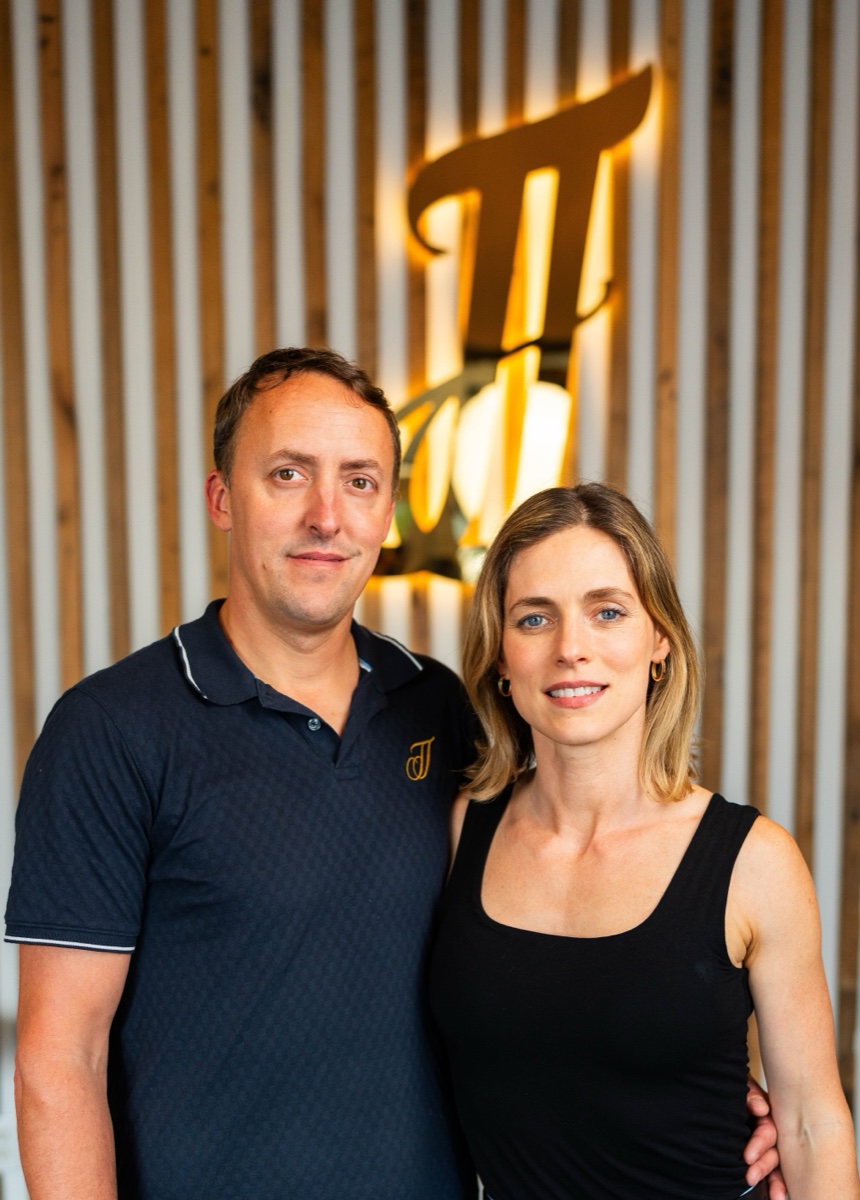
Jasmine and Jed Chambers started JASPER, a luxury design-build company in Nashville, in 2020. Jed has worked in construction since he was 19 and has spent more than two decades on high-end residential, historic restoration, and commercial jobs. Jasmine was finishing her business degree at Lipscomb University that year with four kids in four different schools, and she designed the systems and client experience JASPER runs on.
In this episode, they tell Jason why "that's just how it is" is a lie and what actually causes the chaos that sentence gets used to excuse.
Jed takes Jason back to a ladder on a 23,000 square foot home in Connecticut, where he told his mentor a piece of siding was pretty close and got asked whether it was pretty close or perfect. Jasmine talks about pulling out plaster and lath next to her dad on historic renovations, and the rule he taught her that 80 percent of the work is planning. They get into the trust bucket and the homeowner who thought nothing was happening on her job while the wiring and plumbing went in.
Jasmine tells the story behind the question that started JASPER: years of raising four kids inside their own renovations while friends who hired contractors kept telling them the same complaints. On one of their own projects, they tore out the kitchen the day after Thanksgiving and had stone countertops in by Christmas. She also explains why some clients living in beautiful custom homes are still miserable.
After the break, Jason asks them to talk straight to the builder down the road whose clients are miserable and who blames luck or price point. Jasmine's answer is radical ownership, including the projects where clients were disappointed and JASPER showed up and made it right. Jed adds what he says most residential builders are missing: a process with standard operating procedures the entire team understands.
Jed uses his minute to call the next generation into the trades. Jasmine gets the last word: you get what you expect, and no house will make you happy until you've built home inside yourself first.
Connect with Jasmine and Jed: Website: jasperbuilds.com JASPER on Instagram: @jasper.builds Jasmine on Instagram: @jas.a.chambers Jed on LinkedIn: linkedin.com/in/jedidiah-chambers-916aab13 Facebook and LinkedIn: JASPER Builds and Jasmine Chambers Email: [email protected] and [email protected]
Subscribe to What's Real?: therealjasonduncan.com/articles Book Jason to speak: therealjasonduncan.com/speaking Get the book: therealjasonduncan.com/book The Real Jason Duncan Podcast: therealjasonduncanpodcast.com
Full show notes: therealjasonduncan.com/podcast/405
This episode is sponsored by Dubb, the video messaging platform Jason has used nearly every day since 2018. Get 50 percent off your first two months at therealjasonduncan.com/dubb.
Key Takeaways
- Industry Lie: “That’s just how it is.” It's a lie that keeps a lot of industries broken. In construction, there’s this widely accepted belief that chaos is just part of the process. That poor communication, frustration, delays, confusion, and disappointment are just what people should expect if they’re going to build or renovate. And for a while, we absorbed that. Not because we believed it was right, but because when an entire industry normalizes something, it starts to feel like truth. But what we have learned is that complexity and chaos are not the same thing. Construction is complex. It always will be. There are hundreds of variables, dozens of players in every project, real challenges, real people, real decisions, and real stakes. But more often than not, chaos comes from a lack of leadership, lack of communication, lack of process, and lack of ownership, NOT the complexity. At JASPER, we intend to be living proof that it can be done differently. That you can build with excellence, communicate with integrity, care deeply about people, and not only build exceptional homes, but make the experience of building exceptional too. The truth is, “That’s just how it is” is an invitation to either accept what’s broken or become the kind of person who builds something better.
About the Guest
Jasmine & Jed Chambers
Guest
Jasmine and Jed Chambers are the founders of JASPER, a Nashville-based luxury design-build construction company recognized for exceptional craftsmanship, transparent communication, and an elevated client experience. Married for more than twenty years and parents of four children, the Chambers built JASPER from a shared conviction that home is about far more than walls and a roof. They understand firsthand what it means to rebuild. Years before launching the company, their family walked through a season that required them to leave everything familiar behind and begin again. That experience forever changed the way they view home – not simply as a structure, but as the place where families find safety, belonging, healing, and the freedom to dream. In 2020, they founded JASPER with a simple but powerful question: Why does building or renovating a home have to be so difficult? Having experienced renovations and construction projects themselves, they knew there had to be a better way. Their vision was to create a company where exceptional craftsmanship is matched by exceptional communication, thoughtful planning, and genuine care for every client throughout the entire journey. Together, they bring complementary strengths to the business. Jed has spent more than two decades leading luxury residential, historic restoration, and commercial construction projects, earning a reputation for uncompromising craftsmanship, meticulous attention to detail, and excellence in the field. Jasmine combines her background in Accounting and Finance from Lipscomb University with years of leadership experience to design the systems, culture, and client experience that have become defining characteristics of JASPER. Today, JASPER has completed millions of dollars in luxury residential and commercial projects throughout Middle Tennessee while continuing to grow a team committed to excellence, integrity, and people-first leadership. Their philosophy is simple: the process of building should be every bit as remarkable as the finished space. Beyond construction, Jasmine and Jed are passionate advocates for intentional leadership, entrepreneurship, strong families, and building businesses that create lasting impact. Their story reminds others that some of life's greatest opportunities begin with the courage to rebuild and the willingness to believe that dreams are worth pursuing. At the heart of everything they do is the belief that they are not simply building houses – they are creating the backdrop for families' lives, memories, and legacies. That responsibility is one they consider both an honor and a privilege.
Never miss an episode.
Subscribe to The Real Jason Duncan Podcast on your favorite platform.
Everybody who's ever built or renovated a house tells the same story. They talk about the blown timeline or the blown budget or the contractor who stopped answering the phone. And everybody in the business says the same sentence about it. They'll say, that's just how it is. But it isn't. Construction is complicated, but chaos is a choice that somebody made.
If you're searching for something different, then you need to expect something different. And the lie that we're talking about today is that's just how it is. But if you want it to be different, then it's up to you to make it different. Everything starts from a decision. So it's a mindset, it's a choice, the choice that we make in our own lives first.
The lie is that that's just the way it is. I believe that there's so many builders out there that are skilled and talented, but they just don't have the tools
to be able to deliver the excellence that they really desire.
Welcome to The Real Jason Duncan Podcast. I am your host, Jason Duncan. And every guest on this show is here for one reason. They used to believe something that turned out to be wrong. And some of my guests figured it out on their own. Some had to get knocked flat first. But either way, by the time they sit in this chair across that microphone from me, they know the difference between what's real and what isn't.
And I found that the lies that do the most damage are the ones that look like wisdom, the ones that everybody repeats, the ones that you're so sure about, you never think to question them. But a lie like that can build a cage around you. And here's why you stay in it, because the cage, it looks like gold, it looks like the smart play, it looks like the good life, the strong marriage or whatever. It looks like the right way to do things. But nobody walks away from something like that. They're not going to walk away from something that looks true and looks right. And that's what this show is about. Every conversation here
It's about finding that cage, seeing that the gold was never real, and then walking out. Today, I have two guests on the show, and these two guests spent years inside an industry that runs on one sentence. That's just how it is. Missed deadlines, silent contractors, families writing the biggest checks of their lives and getting misery in return. Everybody in the business repeats that same sentence. And there's some gold in that, but saying it
You know, saying it's not true because saying makes you sound like a veteran, like you've done this before. It sounds like hard won realism. And then if you question it, it makes you sound naive, like you haven't been on enough job sites yet. But here's the cage about it. The minute you accept that chaos is just part of the deal, you're going to stop making good decisions. Nobody's going to own the schedule. Nobody owns the communication. Broken becomes normal. And an entire industry caps itself at, quote, good enough for this business.
So my guest today absorbed that lie the way that everyone in the trade does. They built a company for one reason, to prove that wrong. And that is what we're going to be talking about today. So who do I have here? So Jasmine and Jed Chambers are the founders of Jasper. It's a luxury design build company here in Nashville, Tennessee, right in my hometown area. And Jed started in construction at 19 years old.
on a 23,000 square foot custom home in the mountains of Connecticut. And he spent more than two decades running luxury residential historical restoration projects and commercial projects before building his own firm. And then Jasmine studied accounting and finance at my alma mater, Lipscomb University here in Nashville, and designed the systems and the client experience that Jasper runs on. And they've been married more than 20 years. They have four kids, and in 2020, they started the company to answer one question.
Why does building a home have to be this hard? So let's talk about it. Welcome to the show, Jasmine and Jed.
Thank you, Jason. That was amazing. We're so honored to be here today.
Yeah, thank you.
Well, I'm glad you guys are here. We met, I don't know, several months ago at a mixer here in Nashville, and I was impressed with your story. And now here we are talking on the show before we get into this.
I told everybody listening that you two came on the show ready to talk about a lie that the whole industry repeats, which is, well, that's just how it is. And that the chaos and the delays and the bad communication, they're just the price of building or renovating a home. So Jed, you spent more than 20 years on job sites hearing that before Jasper existed. So I want to start with you. Where did you first hear this phrase, that's just how it is, and how long ago
Or how long did you go along with that before you before you thought? I don't think that is true. I don't think that's I don't think that's right.
Well, that's a really interesting question because honestly, I had I got the privilege of being set off right out of the gate with that that being debunked. I was on a on a ladder at that 23,000 square foot home that you mentioned. And and I said, oh, I was.
putting up siding and said, oh, this is, it's pretty close when the cut man asked me if it fit. And my boss, the man that was my mentor in teaching me the trade, he said, is it pretty close or is it perfect? He said, I don't want to ever hear pretty close on my job site. And so that really set the bar for me on what excellence looks like. And so as I went through the industry and was involved in countless
projects and with all different teams, I did hear, oh, that's just how it is over and over and over again. And it just never sat with me and I was never comfortable with it. It was frustrating to hear that because I knew there was a better way. And what was interesting is that really wasn't until I spent some time in commercial with an amazing company here in Nashville, Solomon Builders.
that I realized that there is actually a there's a way through process and through planning and schedule and all the things that that tend to be more relevant in the commercial side of the business to make the experience on the residential side something that's much more predictable and enjoyable.
So, Jasmine, you didn't grow up on job sites. So when did those words first land on you and what did you think about them?
Well, I didn't grow up on job sites the way Jed did. However, I've been around construction my entire life. My dad was always doing side projects. We renovated more homes than I can remember. I helped him on historic renovations. I remember tearing out plaster and lath and strapping up for sheetrock, and I would always be the other one on the other side of the chalk line.
I took a lot of pride in my dad telling me like, I would rather have you than one of the guys because you actually listened. And he had the same standard really. Like he taught me early that 80% of the work is planning well. And I bring that into everything I do, especially here at Jasper. We have a process that we follow with every project and literally
80% of it is the planning so that once we get to boots on the ground, there's not a day that goes by idle because that's one of the promises we make to our clients is that we won't waste any time.
Well, you know, when we were prepping for the show, part of what you wrote down, you know, the questions that I ask guests before we come on, is it one of you whoever answered the questions, you wrote something honest in what you sent, you said that
You absorbed the lie, not because you believed it was right, but because the whole industry normalizes something. And when they normalize something like that, it starts to feel like the truth. So Jed, you shared this, the sighting story, which I think is a great story, but have you seen that? Like, where have you seen it in industry where actually came crashing down on the person it was supposed to help, like the customer who's paying for it, where good enough, or that's just how it is, or the communication sucks to
Can you can either of you and I'll let either of you choose tell a story where that that idea and that lie actually came at a cost to the person who was supposed to be paying for better than that?
Man, it's it's hard to think of one because there's just there's just so many. It is really I would say in any
project that I've been a part of. And honestly, I'm just going to be straight with you. Like we are a growing company and we've also made the same mistake as we've learned and as we're coaching our team and as we're developing the processes. And I really think that it goes back to
a clear path and clarity, starting with clarity at the very beginning and then maintaining that, which if anybody's been in, I think the challenge that is presented in any project is that there's so many decisions to make in the planning of the project. And then some of those decisions have to change to accommodate either real world conditions or availability of product or whatever. And so maintaining a through line throughout that process is
a huge challenge. But what is life without a challenge? And so I think that when it comes crashing down is when people decide that it's not possible. Like there is a point where whether it's a professional, whether it's a subcontractor, whoever, they decide, oh, well, that's just not possible. And so then they kind of check out and they stop trying. And that's something that's not okay with us and we're not going to give up on. And I think the result is that
that the people that are paying for that experience don't get the experience they expected. It's almost like that when you buy that red car and you're driving home and all of a sudden there's a thousand red cars on the road and you're like, Where did these cars all come from? That's what happens with people as soon as that first mistake happens. We call it the trust bucket.
a hole gets put in the trust bucket and it starts to leak out. And then everything, you know, then you start to overanalyze everything. And then it's really challenging for a team to serve under that, to serve someone under that because it's like that first, their eyes have been opened to the flaws and then it's just downhill from there. So I think it's maintaining that level of clarity, communication through the challenges, presenting solutions through those.
and really staying ahead of that with the person that we're serving, the family that we're serving.
And I'll add to that, it's you get what you expect. So if you expect that excellence is too much or too hard, then yeah, it's going to be and you're going to get good enough because that's what you're settling for.
Go ahead. Go ahead. I want to follow.
I said that's on the side of us as the service provider and the side of the client. So we
it's really important that our expectations align and that we are all aligned toward the same outcome and we keep that at the center and forefront of what we do.
Well, I think the expectation comment that you just made, Jasmine, is really, really important because I 100% believe what you just said. You get what you expect. That's true in almost every aspect of life. You get what you expect out of people, you get what you expect out of service, you get, you know, if you go in expecting things,
You're generally going to get what you expect. It's the same reason the reticular activating system that Jed, you were describing where you notice the red cars after you buy a red car, that's our reticular activating system working. So our reticular activating system realizes, okay, I've noticed something and therefore I expect it and I expect to see these things. Well, I think the whole industry that you guys are in has set everybody's reticular activating system against.
okay, this is going to suck. It's going to cost 30% more than I thought. I'm not going to like these people. I mean, heck, I don't want to get too much into my story, but I had a renovation project we did where we built an outdoor kitchen and living area one time at a home. The contractor is in jail today, and he should be. He not only screwed me, he screwed a lot of other people, but I just know that was maybe a little bit out of the ordinary, but I kind of expected things were going to go sideways. So why
does the whole industry expect it to go sideways? Why is it like that? You guys tell me, I'll let either one of you talk. Maybe Jed, you go first and then Jasmine, if you want to tag on to it, go ahead.
Well, you touched on a real sore spot because I do think that, you know, with the advent of HGTV and everything else, there's this expectation, there's two expectations. One is an unrealistic one that it's not gonna be hard, right? You're taking a 1941 house and you're transforming it into a luxury home. Oh, it should just run smooth, right? There's no structural issues, no water intrusion issues, no nothing, it should just run smooth.
There's going to be no issues. So that's a misnomer which sets people up for-- Disappointment. For disappointment. And so then as soon as those kind of things start to pop up of like, hey, we need to address this. We've uncovered this. And then it's like, well, see, there it goes. I told you so, kind of thing. And so I think that, and this is something that really, that I'm very, very passionate about, that with
I think it goes back to the personnel in the industry not understanding the why behind what they do and really being bought into producing an amazing product. And so, it should be, I mean, it's the place where people spend most of their lives, whether it's in their place of business or whether it's their home.
And it's one of their biggest investments. It should be celebrated. It should be right up there with being a doctor or being a lawyer. Like it should be a celebrated, and it's also artistic. Like it requires so many talents and skills and it should be celebrated and really believed in by the individuals doing it. However, unfortunately, most of the people that have wound up in the industry are the people that quote unquote couldn't do anything else.
And so we've really set out to dispel that. And I'm actually wanting to build an environment where people can learn about the why behind because once you understand that, everything else makes sense and you're able to get ahead of issues and and really change the narrative around. And half of the battle and I feel this goes to your question as well. Half of the battle is that the client, the family that we're serving
has never built a house or renovated a home and they do have no idea. I remember a lady telling me, I don't think anything's going on over the last couple of weeks. However, all of the wiring and all of the plumbing was happening. She just didn't see it because she just saw studs sitting there and no drywall going up. And so she didn't understand. So educating
and understanding the process and understanding what goes into it, that has to happen throughout the process or else there will be a misalignment and a misunderstanding. So I think that's a huge piece of it.
Well, I think it's interesting that you just, you talked about this different expectations. You've got the unrealistic expectation that we're gonna be done in 24 hours because that's what happens in HGTV, extreme home makeover, all the crap that we've been seeing for two decades on television.
But then the other expectation is that, okay, I do expect it to happen fast and be perfect, but I'm also in the background going, Yeah, these never work out great. There's something gonna be wrong. Well, I'm gonna go back to your story, and I wanna ask this to Jasmine. In 2020, the two of you guys were sitting down, and you asked the question out loud, Why does building a home have to be so difficult? And questions like that don't show up out of nowhere. So I'd like you, if you can, take me to the conversation where that came up,
Had something just happened? What made you decide that the answer was going to be a company instead of just complaining about it?
Oh, gosh. Okay, so in 2020, I was still finishing up school at Lipscomb University. I had gone back to school when my youngest of four was in preschool and put myself through business college during the time when my four kids were in four different
Schools. So at our home we had five different schools we were managing plus Jed's work plus our own renovations because it's something that we've done together for a while is fix and buy and fix and flip homes while we lived in them. So we know the pain. We know the pain of raising a family in a construction zone, doing it ourselves most of the time because we have the expertise and we're on a tight budget.
However, in our conversations with others who have hired contractors, we heard the same story over and over and over again. It's like they don't respond. This drags on and on. We're way over budget. There's no transparency. You just hear the stories over and over. And we're like, well, we've done it for ourselves. We know what those pain points are. And we also know how to expedite a project. There was one project that we did. We tore out the kitchen the day after Thanksgiving, and we had it completely reinstalled by Christmas.
with stone countertops and everything. And that was just one of our own projects that we did on the site. So we know the process, we know how to make it work. And this isn't cheap work either. This is high quality work. So we're like, why don't we combine our skill sets, which mine is like kind of that strategy, understanding people and systems and the financial side of things and then his skill set in the industry.
and understanding, like Judd was talking about earlier, the why behind why building homes. There's so much more to it than just the framing, the foundation, the framing, the finishes. Home is the most sacred place on earth to us, and we really believe that. And we've spent a lifetime really learning to find home within ourselves, and I think that's really one of the things
And I say fine, but it's really building, right? We have to build home within ourselves to be ever, ever. Let me say that again. We have to build home.
within ourselves in order to ever find fulfillment or happiness in a home that we can build in this world. And I've seen that over and over again with clients that we serve. We build impressive homes, luxury, custom. They could be classified as mansions and they're beautiful and comfortable. And some of these people are miserable still because they're living for the expectation of happiness that's going to come from somewhere outside of them.
Yeah.
So really, for me, that's the heart behind it. We have worked really hard. It has been hard for us, our journey. But if it's been hard for us, how can we make it easier for the next person?
Well, I love the heart that that reveals about what the two of you are trying to build. And I would say to anybody listening, if you're in the Nashville area and you're thinking about doing a project renovation or otherwise or building,
Just meeting Jed and Jasmine in person, what they're saying is real. It's just coming from a real space. So I would ask you to consider Jasper. Now, I want to ask the two of you about the cost of this lie because there is a cost associated. Could be financial, could be otherwise. But I want to talk about that in a minute. But before we do, I've got something I need to talk to my listeners about. So we're going to be right back to Jed and Jasmine in just a second.
Let's take a quick break to thank our amazing sponsors for making this podcast possible.
Everybody, I am booking keynotes for 2027.
And if you know somebody who puts a conference on or runs an industry group, I want you to send them some information about your friend here, The Real Jason Duncan.
If you want to send them to a place, go over to therealjasonduncan.com/speaking.
That's TheRealJasonDuncan.com/speaking, S-P-E-A-K-I-N-G.
The link will be in the show notes, but that tells all about what I do, some of the things I talk about, and some of the conferences that I've done in the past, a couple of TED Talks.
So if you know somebody that's putting on a conference and needs a keynote speaker, I'd appreciate the heads up.
Now, our sponsor for today is Dubb.
I wanna tell you a little bit about Dubb because I've been using them since 2018, nearly every single day, they're a video messaging platform.
And so think about this, instead of sending just another text message or a text e-mail that gets skimmed and then deleted, what if you could record a quick personal video from your desktop or your phone or in a Chrome extension and send it to your client or to a lead or to your team right there in the e-mail, right in LinkedIn or right in a text message.
And if you're in a relationship business, which most of us are, today's conversation should tell you that most businesses are in relationship business and we need to have better communication.
Because the game is won or lost on communication, and a personal video is gonna get opened, it's gonna get watched, it's gonna make people feel like you actually see them.
And what Dubb does, it puts clickable calls to action right inside the video so that the viewer can book a call or take a next step or whatever they need to do, but they do it right on the spot.
And then the analytics that Dubb lets you see show you exactly who watched it, how long they watched it.
And like I said earlier, I've used Dubb for almost every single day since 2018.
It's how I follow up, it's how I stay in front of people, and it works.
So you can get 50% off your first two months and you get a free trial by using my link at therealjasonduncan.com/dubb.
That's spelled D-U-B-B.
And they'll know that, you know, I sent you over there.
It's therealjasonduncan.com/dubb.
Thanks for listening to our sponsors.
Now, back to the show.
All right, Jed and Jasmine, let's talk a little bit more about this.
I want to talk about the cost of the lie.
Because it's not just the builder's problem.
I mean, Jed, you gave it 20 years of job sites before you got to build the rebuttal.
It's just like, okay, I'm gonna be in charge of the fact that this is not true.
And then every year the industry keeps repeating it.
Families pay for the privilege of being miserable in their own homes and skilled builders cap themselves at good enough for their business.
So YouTube paid the tuition on this for both sides.
You've seen the builders, you've been the family in the middle of a renovation.
So let me ask you and I'll start Jasmine with you and then Jed, you can answer too if you want.
What what do you know now that you wish someone had told you 20 years ago?
And why do you think nobody did?
I got to think about that one for a second.
What I know now that I wish someone had told me 20 years ago, I think I'm going to go right back to what you just said about communication.
Communication is the key to everything.
And
building relationships.
And this is a very much this is very much a relationship business that we're in.
If if it's not founded on trust, it's going to break down.
And it's not just trust between like the builder and the client.
There's so many relationships that have to be maintained and built along the way for us.
especially it's with our trade partners because they're really extensions of our team.
They do most of the work and we need to be able to stand behind their work and they need to be able to trust us to lead them.
And so that's one of the things that we focused a lot on in building our businesses, really cultivating strong relationships with our trade partners.
But going back to what I wish I would have known is
communication is everything and connection, not just communication, like getting the message out, but real communication where you have the feedback loop and you really and you connect and you and you build that trust by not only giving but receiving.
And that's so important, I think, in life in general, but especially when you're building a business with such high stakes.
What about you, Jed?
How would you answer that?
What do you now know about this
the cost of this lie and what's going on in the industry that you wish somebody had told you 20 years ago?
And then why do you think nobody told you?
Well, I think the cost of it is that it actually takes accountability.
And I don't know that us as humans, I'll just put us all together, we don't really like to be the one to blame.
And there is a lot of blame that gets thrown around
when things go wrong, right?
And so as the person trying to execute, because I also believe that human beings have good intentions for the most part.
And actually, there's science behind the fact that we all make the best decision possible with the given circumstances in front of us.
That's just what we do as humans.
having the tools and having the communication, even the communication skills to be able to navigate the challenges, I really do, and that goes back to what Jasmine said, I really do believe that's the key.
It's the key and that's why I'm so passionate about the Building Arts Academy and creating a way to empower the next generation of builders to really understand what they're doing.
'Cause a lot of times they're doing what they're doing and they really don't understand why.
They have no idea.
And so when a conflict happens or a challenge appears, they go into this fight or flight mentality and everything starts to break down.
And I've seen that with our own team.
I've seen it where they're cruising right along through demo and then some structural issues come up and they freeze and they don't know what to do.
So really building that confidence to work through those challenges and navigate it
with good communication as kind of the grease to to move through.
And I believe that's the the lie is that there's the lie is that that's not possible.
The lie is that it's just going to be that way.
And and I really do believe that there's a solution for it.
Well, let's name the cage one more time because you just you just said it.
So the lie we're talking about is that's just how it is.
And what that does is it excuses the builder, it numbs the client, it holds the whole industry at a broken point.
And you two didn't argue, you didn't say, well, I'm going to write a blog post about this.
You actually said, hey, I'm going to build a company as the argument against this.
So here's a question.
So somewhere in Middle Tennessee tonight, there's a builder with Jed's exact skill set, same trade, same supply chain, same complicated projects, but his clients are miserable.
But your clients aren't.
And that guy would tell you the difference is luck or maybe price point.
So I'm going to give you guys the opportunity to talk straight to that guy.
What is the actual difference between his company and yours?
Jasmine, you want to attack that.
Radical ownership.
What's that mean to you?
To me, that means showing up and owning
owning the whole process, owning every piece of it, no matter what.
Like it's so easy to blame the designer or blame the architect or blame the trade that made the mistake.
But as the builder, you're responsible for the project and you're answering not only to the client, but you have
You're supporting all these other small businesses.
You're supporting their families.
It's up to you.
And that's a lot of responsibility.
That's a huge weight.
And we take that seriously.
And it's, it's, I mean, heavy as the head that wears the crown, right?
Like it's sometimes I completely honestly, like don't know what we were thinking, trying to do what we're doing because it's not easy and it's, there's no clean way to say it.
Like we have had clients that are disappointed because
we didn't deliver the way we had said we wanted to.
But in every situation and I can say this totally confidently, we have shown up and we have made it right.
We have given them the outcome that we all wanted.
Sometimes it hasn't the process hasn't been what we had wanted, but we will deliver on that experience that they
can move in to a home that they love that's built with care and intention and that will last them for generations.
Yeah, that's great.
Well, you know, and I would I would go ahead.
I'm going to add to that because she mentioned process pretty quickly, but honestly, and because I've been in the residential side of the industry for 23 years and that is what's missing from
the builder that we're speaking to, that's frustrated, that's not getting the results, that's just, yeah, there's got to be a process and it's got to be understood by everyone involved, the entire team.
And so that's something we've worked tremendously hard on and are still working on and improving every time that a situation comes up, every time we discover a gap.
we've got to put in a process that the people involved understand that they know how to move through that again in a cleaner way, whether it's the planning process going leading up to the agreement, whether it's post agreement leading up to the project, all of those, every section of the
of it has its own set of, we call them SOPs, standard operating procedures that everyone has to know.
And that is what is missing by and large in the residential industry.
It's a lot of very skilled technical people that which technicians are great at what they do, but sometimes they're poor at running business and leading.
And so we've invested a tremendous amount in ourselves through coaching and mentorship to even
understand what that stuff is and how it works and how you build it and how you lead with it.
So I would say that's a major differentiator.
And the reason process is so important is because it gives you something to be accountable to.
Yeah, well, that's true.
And SOPs are very, very important.
And I think that
Without those, a great skilled craftsman still is going to be a terrible project because it's not just the craft, it's not the ability to do the thing.
It's the ability to have the thing all work together.
So let me ask you this question.
So what do you believe is the cost of staying inside that lie for another five years?
So we've got all these people who believe this lie that, hey, that's just the way it is.
What's the cost of staying in that life for another five years, Jasmine?
The cost of staying in the lie that this is just how it is, is that that's just how it's always going to be, right?
Like, we want to build a better future.
We want to leave something better behind for our children.
And if you are stuck in the lie that this is just how it is, then you're going to be right.
It's always going to be that way.
To me, that's the cost.
Well, before we close, I want to give you one minute and you can either either of you go or you can one of you, both of you can go whatever you want.
But before we close, I want to give you the opportunity to I'll give you one full minute.
I'm not going to interrupt you.
And I want you to tell the world as directly and as passionately as you can what the lie is, why they've been believing it, and what the truth actually is.
Go.
All right, well, I'm going to take it.
And Jasmine, you can interrupt me, but the lie is that that's just the way it is, right?
That's the cage that we've been stuck in, both from the homeowner that's trying to improve their standard of living and the builder that's trying to deliver that.
And I believe that there's so many builders out there that are skilled and talented, but they just don't have the tools and the processes to be able to deliver
the excellence that they really desire.
And so then they get stuck inside this thing of the client mistrusting them and them not being able to deliver.
But they're
They're talented people.
They're the cage.
And that's the cage.
They they're just they're stuck and and then they become frustrated.
And unfortunately, so many of them burn out and they give up and or they age out and no one else wants to join the industry.
But I really call on the next generation to see that there is great potential and great satisfaction in building something, building many things great that can bless humanity, bless families,
and that there is a really strong why behind that.
And so that's what I'm passionate about.
All right, so let's tell people how to find you.
So your website is jasperbuilds.com.
You're on Instagram @jasper.builds, and then you're also on Facebook and LinkedIn.
You can find them at Jasmine Chambers, Jed Chambers.
So final question for you both.
You know, if somebody's listening right now,
And they're still living inside that lie, still believing it.
Jasmine, what's the one thing you want them to hear before we end the episode today?
You get what you expect.
So if you're searching for something different, then you need to expect something different.
And the lie that we're talking about today is that's just how it is.
But if you want it to be different, then it's up to you to make it different.
Everything starts from a decision.
So it's a mindset, it's a choice.
It's a choice that we make in our own lives first.
I think really one of the things that's behind that lie is that we're trying to cope with the fact that we haven't really found the success or the happiness or the fulfillment that
we want.
And so we're just like, well, that's just how it is, right?
That's just how it is because we haven't decided it's gonna be different because we've just allowed it to be how it is.
And so that goes into building a business, that goes into building a home, but more than anything, it goes into building a self.
Because like I said earlier, you will never be happy building the most beautiful home in this world, even if everything goes right.
If you haven't found that and built that home within yourself first,
So if you want to get out of the cage of this is just how it is, really look inside first, see what you're building within yourself.
That's awesome.
Well, congratulations to both of you on your success.
Six years of building the company, six years of building people's homes and dreams, renovations, doing it the right way and not accepting anything less than perfect.
Thank you guys for being on the show today.
Thank you, Jason.
All right, that's a wrap on today's episode.
If you saw a bar on your cage that you hadn't noticed before, send this episode to someone who needs to see theirs.
As always, I am your host, the real Jason Duncan, and Jesus is King.
We'll see you next week.
Hey, thanks for listening to this episode.
Remember,
We release new episodes every single Monday, so make sure you tune in.
You can find all the show notes, everything from today's episode and more at TheRealJasonDuncan.com.
If you want to follow Jason, just search The Real Jason Duncan on your favorite social media platform or your favorite AI platform.
You'll find him there.
We'll see you next time on The Real Jason Duncan podcast.