The Doctor Said I Was Fine
Prefer audio only?
About this Episode
You feel off. Tired all the time, running on fumes. So you get checked out, and the doctor says you're fine. And you believe it, because who argues with a doctor? But fine doesn't mean healthy. Fine means you're not sick enough yet for the system to do anything about it.
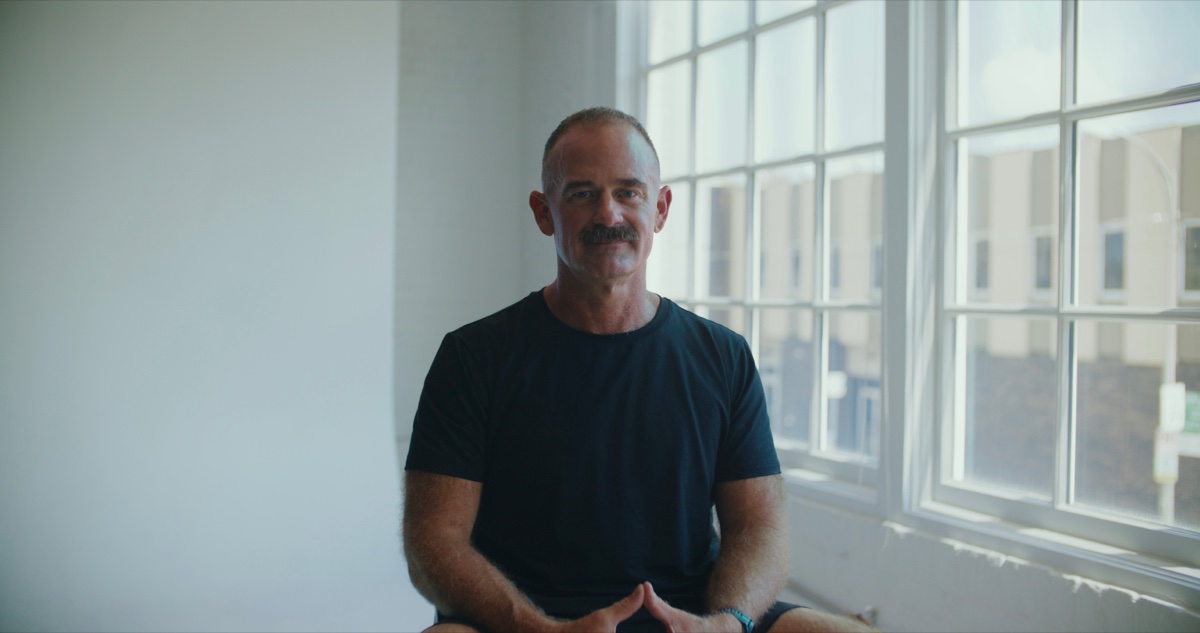
John Goldman heard that word for years while his own labs said otherwise. Elevated liver enzymes, high cholesterol, climbing weight, and the answer was always the same: you're fine, we'll keep an eye on it. At 45, waking up exhausted every morning and wondering if that was all that was left, he pulled his own baseline instead. Advanced bloodwork, DNA testing, a DEXA scan, a VO2 max test. The results: pre-diabetic, fatty liver disease, visceral fat wrapped around his organs, sleep apnea, and 50 pounds of excess fat his doctor never mentioned. Six months later he had reversed nearly all of it. Then he built Rebel Health Alliance, a healthcare company designed to do for its members what the system never did for him. Today, at 50, he runs every morning and is training to qualify for the Boston Marathon as his company's public case study.
In this conversation, Jason and John get into the lie of fine and why it builds a cage around you, what John calls casual obesity, why primary care doctors keep handing out the lie (from the gaps in their training to an insurance system that won't pay for prevention), the difference between health insurance and actual healthcare, direct primary care and medical cost sharing as alternatives, what accepting "fine" costs a man over five years, and why it is never too late to take ownership of your health.
Connect with John: Website: rebelhealthalliance.io X: x.com/JohnGoldman Instagram: instagram.com/johngoldman__ LinkedIn: linkedin.com/in/john-m-goldman Email: [email protected]
Episode page: therealjasonduncan.com/podcast/407
Subscribe to What's Real?: therealjasonduncan.com/articles Book Jason to speak: therealjasonduncan.com/speaking Get the book: therealjasonduncan.com/book Podcast: therealjasonduncanpodcast.com
This episode is sponsored by Dubb, the video sales and marketing platform Jason has used nearly every day since 2018. Get a free trial plus 50% off your first two months at therealjasonduncan.com/dubb
Key Takeaways
- Being told I was "fine" by doctors when I knew something was off. That frustration pushed me to build a healthcare model that actually digs into root causes instead of just checking boxes. You don't have to wait for the system to tell you something is wrong. Get your baseline – your DNA, your blood, your body composition – and take ownership from there. That one step changes everything.
About the Guest
John Goldman
Guest
When doctors told John Goldman he was fine, he felt anything but. He was tired, overworked, and uninspired by a healthcare system that waits for people to get sick before doing anything about it. So he decided to rebel. As the Founder & CEO of Rebel Health Alliance, John built a new kind of healthcare company – one designed to make you stronger, sharper, and more resilient right now. And to prove what’s possible, he’s turning himself into the ultimate case study: transforming from average to elite, aiming to qualify for the Boston Marathon in 18 months or less. Audiences are invited to follow along as John shares his progress – the data, the missteps, the breakthroughs – and shows how the same precision tools and coaching he’s using are available to anyone ready to reclaim their health and performance. This isn’t theory. It’s Rebel Health in real time.
Never miss an episode.
Subscribe to The Real Jason Duncan Podcast on your favorite platform.
You feel off, tired all the time, running on fumes.
So what do you do?
You go get checked out and the doctor says you're fine.
And you believe it because who argues with the doctor?
But fine doesn't mean healthy.
Fine means you're not sick enough yet for the system to do anything about it.
It's never too late.
The best time was 20 years ago.
Next best time was yesterday.
And the next best time is today.
It is never too late.
You can make significant progress in a matter of less than one year.
You can completely turn around your outlook on life.
You can completely turn around your physical condition.
You can completely change the trajectory of your life and especially those end of life years today.
If you start today, really no matter how old you are at all, it's never too late.
Please start now.
Welcome to the Real Jason Duncan podcast.
I'm your host, of course, Jason Duncan.
And every guest on this show is here for one reason.
They used to believe something that turned out to be wrong.
And some figured it out on their own and some had to fall flat on their butt first.
But either way, by the time they sit in this chair across from me, they know the difference between what's real and what isn't.
And I've come to find out that the lies that do the most damage are the ones that
They look like wisdom.
They're the ones that everybody repeats, the ones that you're so sure about, you wouldn't even think to question them.
But a lie like that, what it does, it builds a cage around you.
And here's why you stay in it.
Because the cage looks like gold.
It looks like the smart play.
It looks like the good life, the strong marriage.
the right way to do things, whatever.
And nobody walks away from something that looks like that, that looks good, that looks like treasure.
And that's what this show is about.
Every conversation here is about finding that cage, seeing the gold for what it is.
It's not real.
And then walking out of it.
Now, my guest today lived inside that word for years.
Fine.
You know, he'd sit in the exam room, he'd tell them that he was exhausted, they'd watch the labs come back normal, and he'd go home with one thing the system had to offer him, which was permission to stop asking.
And that's the gold in this slide that we're gonna talk about today, a clean bill of health.
It looks like good news, but it reads like you're winning, like everything's fine.
And the whole time it's a cage because the man holding it is getting worse and nobody's looking.
So the truth he found is that you don't wait for the system to tell you something's wrong.
You go get your own baseline, your blood, your DNA, your body composition, and you take that as ownership and you take it from there.
And that one step is where this whole conversation is headed today.
So my guest is John Goldman.
He's the founder and CEO of Rebel Health Alliance.
It's a healthcare company that he started in 2023 after the system told him he was fine one too many times.
And it runs backwards from the model that you know and are familiar with.
Instead of waiting to get sick, it starts with your actual data and builds you stronger from there.
And he's not selling anything that he won't test on himself.
Right now, he's the case study publicly, data and missteps and all everything, trying to go from an average runner to a Boston Marathon qualifier to prove that the model works.
So John Goldman, welcome to the show.
Hey, happy to be here.
That's a heck of an intro, man.
I'm feeling it.
I'm like, yes.
All right, you're fine.
You're fine.
So fine.
All right.
Well, John, before we get rolling, as you heard me tell everybody listening, you came on the show ready to talk about a lie that you believed, which is the doctor said you were fine.
You took his word for it, even when your own body was telling you something different, and you went on to build an entire healthcare company out of that frustration.
So I want to start right there.
How many times did you hear that word and how long did you keep believing it over what you could feel?
That's a great question.
And what's interesting is that
It's probably more times than I can remember because I only started to really notice it once I was really feeling bad.
And then once we discovered what was actually wrong with me, I could think back on all the times in which the physician and some of my labs were not normal.
Like some of my labs were elevated and like my cholesterol was high, my liver enzymes were high.
And my weight was obviously high, right?
But nobody said anything about it.
And they just kept saying, you're fine.
You're fine.
We'll keep an eye on it.
We're fine.
And it turned out that the lie of fine, which is what we call it internally as well, is one of the most destructive things that there is in healthcare because you are okay.
Maybe you are fine, but it's creeping up and it's creeping up and then you're not actually fine and it's not a crisis yet, but
The seeds of your crisis that you end up having were sown years and years ago, and you can see it and you can detect it.
And so you're so right that this lie of fine builds a cage around you.
It limits your perception on what's possible, what's necessary, what should we actually be doing?
And then the cage and the blindfold, all that only comes down and off when something terribly wrong happens.
And you are just left with like, how did, how did this sneak up on me?
Uh, after, you know, I thought I was fine and it turns out I'm a metabolic disaster.
I'm insulin resistant.
My cholesterol is through the roof.
My sugars and insulin are elevated.
I have fatty liver disease.
I've got visceral fat content wrapped around all of my inner organs.
I probably can't run a mile.
I definitely don't lift and this like cute little beer belly, my wife says that I have is actually 50 pounds.
of excess fat that is making me sick and elevating my blood pressure and all these other things and I just want to slide in one other lie that people tell themselves and it is it is a lot around like I'm like this little bell it's fine belly's fine it's not belly is not fine the excess fat is not fine I call it a casual obesity
Guys in their 40s and 50s and 30s, even walking around with just, they think they're maybe like 10 or 15 pounds overweight, but really they're like 40 or 50 pounds overweight.
And I see it everywhere.
Casual obesity, it's a lie.
You tell yourself, I'm fine.
Your doctors tell you you're fine.
Doctors really have a lot of trouble looking at you and being like, buddy, you need to lose 40 or 50 pounds.
It's like a tough thing that they don't do.
The lie of fine was with me for many years, and I can vividly remember the doctor looking at my elevated liver enzymes and being like, oh, it's fine.
We'll just keep an eye on that.
But it turned out when I finally did take the action to learn about exactly my healthcare situation and get the test done that I should have been getting done all along, that I did have fatty liver disease and I did have rampant fat in my internal organs causing inflammation, causing me to be insulin resistant, causing me to be pre-diabetic, putting me on the path that ends literally with death.
But like a short step from that is like getting your left foot chopped off.
Like that's what happens when you go from pre diabetic to diabetic to untreated.
Your body literally starts to die and then they have to chop off limbs because they're dead and all of that could be prevented.
Type one diabetes you're born with type two, you earn, you earn it over time.
A combination of lifestyle factors and other things that is enabled
by the lie of fine.
And right now there are 100 million, 100 million people in America that are pre-diabetic that don't even know it.
Either they're not getting the right testing done or their doctors reviewing the labs and not telling them the absolute truth here, but left untreated, those 100 million people are going to become diabetic in the next five, 10, 15 years.
And we're gonna just be facing like an insane crisis of metabolic disaster.
Well, I think it's interesting.
The second lie that you kind of rolled in there a little bit about the extra weight is fine because that's a belief that I have that I need debunked.
I've carried a little extra weight my whole life.
I'm generally in good shape.
I work out, et cetera, but I have a little extra.
Here's what I'd like to ask.
We're going to do this, insert this in the show.
If you're willing to come back and do a whole show on that, I think it's a really interesting conversation.
But we can, I'm not asking you to commit right now, but we could talk about that post-show, but let's get into the exam room the last time you heard the doctor tell you you're fine.
But you've told him, hey man, I'm exhausted and maybe the labs came back normal.
It was terrible, man.
I woke up every morning feeling like crap.
And I remember asking myself, I was like 45 at this time.
I'm 50 now.
I was asking myself, I'm like, is this what it's going to be like forever?
Is this how I'm just going to wake up and feel forever?
And
realistically declining from here all the time.
And that's when I realized at 45, like I couldn't be finished.
I couldn't be cooked.
I couldn't already be on the down slope and already just like writing off like being a middle-aged guy with like verve and vitality and like power, you know, like I wasn't ready to like, luckily I had like a little bit of ego left, right?
Like I wasn't ready to like let that go.
And so I luckily was tapped into a network of people.
I think back then they kind of referred themselves as like biohackers.
Now they'll call them like optimizers.
But I asked my friend, I said, man, there are guys out there who are 45, who are my age, who I read about on social media all the time, who are like, I feel amazing.
I feel better than I did yesterday.
I feel better than I did 10 years ago and I'm going to feel better tomorrow.
I was like, those guys are full of it, right?
They're just lying to you.
And he's like, nope.
There are really guys, 45 women, 45, who do feel better today than they did yesterday and are on the upswing still, rather than facing a slow, steady decline into a sea of chronic disease and a miserable early death that could be avoided.
I was like, well, if that's the case, dude, then we need to help me, would you help me please?
And so that was when my journey began of we did DNA testing.
We did a blood work panel, which blew my mind at the time because I had only ever gotten the standard blood work done from your primary care doctor, which is like a handful of things, basic metabolic panel and stuff.
We did amazing blood work.
We did what's called a DEXA scan, which is a full body composition analysis.
You lay down on this bed and it runs this machine over you for about 10 or 15 minutes and really figures out how much your bone density is, how much muscle mass do you have, how much fat mass do you have, how much water are you carrying?
And we did a VO2 max test, which tests your cardiorespiratory fitness, see how fit you are because your cardiorespiratory fitness
is the best indicator we have in terms of longevity and reducing all cause mortality.
The higher you get that VO2 max number your lower your chance for death of all causes falls disease whatever and we did all these tests and man in the liver ultrasound
And it all came back and everything was off the charts, right?
The cholesterol was off the charts.
The insulin was messed up.
My sensitivity to sugars were screwed up.
The fatty liver was there.
And all along the signs had even made it into the basic blood work that my doctor was doing with elevated liver enzymes and high cholesterol.
They never tested the sugars the right way.
They never tested your A1C.
I was pre-diabetic.
I had fatty liver disease.
I had four or five pounds of visceral fat wrapped around my organs inside my abdomen.
My cholesterol was high.
I was a mess.
I was on my way to being that guy with the foot chopped off and I couldn't sleep and I was choking on all the fat in my head while I'm sleeping, right?
Like apnea, sleep apnea.
And it was once we finally did the diagnostics that could not be denied.
where it's right there in black and white and the numbers are the numbers and we have it from all angles and it's all confirmed visually in the blood, in the scans, in the ultrasounds, in the x-ray, in everything.
Where I finally was like, first off, that doctor from Amazon One Medical or whatever was just lying to me all the time.
or he was lazy or incompetent or what I've really learned over the years now is that they're handcuffed in a lot of the things that they can do and that going through the traditional primary care system was never going to set off the alarm bells in such a way that I was going to be able to prevent
chronic disease from settling in.
And it was certainly never going to generate health in me and get me healthier.
And it definitely wasn't going to work to getting me dialed in, like just feeling fit and like at the top of my game every single day.
And so once we had all this data, that's when we put together the team, the strength coach, the conditioning coach, the genetic counselor, the doctor, the dietitian, and we built a plan.
And in six months I had
reversed everything.
All the blood markers were in the green, fatty liver disease gone, visceral fat content back, abs were back and popping, sleeping better, got my apnea treated, blood pressure was coming down, and I've eventually now gotten off of blood pressure medication.
It changed my life in six months.
But what it did, which is interesting, is that it got me to a point where I was healthy.
But then once I was healthy and full of energy,
Then I was like, all right, what am I gonna do with this new life that I've got now?
And so then it was like, okay, now I'm gonna start running.
Now I'm gonna start doing this.
Now I'm gonna really just see how far I can go on this fitness journey and what can I accomplish at 50 years old now that I've saved my life, returned to baseline, gotten healthier, and now have energy and the ability to actually be a high performer.
And so at the end of the day, we end up calling Rebel Health high performance healthcare.
Because our goal is to turn you into a high performer and to aggressively prevent chronic disease and to never give you the lie of fine and never be like, we'll just keep an eye on that.
Aggressive in prevention and aggressive in making you healthy.
And then I'm living it every single day now.
So we've got you've got the lie of fine that you heard for decades, you know, from PCP, you know, primary care physicians.
What you said, you alluded to this a little bit, they're handcuffed a little bit, but why do they continue to perpetrate the lie if it's such a big issue that you found out in those results and then it only took you six months to reverse?
That's a great question.
And it's not a universal answer for every doctor, but I will say it is this combination of factors.
One,
The American Medical Association and med school and whatnot, they are like 50 years in the past, right?
They don't understand available diagnostics.
They don't understand advanced blood markers.
They don't talk about nutrition.
They spend less time in med school learning about nutrition than they do about how to bill insurance codes like legit.
You can look that up.
It's crazy, crazy concept.
And so they don't have the knowledge.
Then they're working in a facility or a practice where they've got thousands of patients and they've become just like a node in a network judged on their throughput rather than on the quality of the product and the service that they're delivering.
So their job is to see as many patients as possible.
And in that short time period, there's only so much depth you can do in your analysis.
And there's only so much sort of prognosis, not prognosis.
There's only so much prescription you can give people and time to have with them in order to help them achieve the goals that you're going to try to set for them.
And then you've got insurance.
Insurance doesn't want to pay for advanced blood markers, doesn't pay for DEXA scans, doesn't pay for VO2 maxes, doesn't pay for the liver ultrasound, doesn't pay for coronary calcium scoring.
doesn't pay for anything preventative or future looking in nature, and then is totally against prescribing hormone therapy or advanced protocols or peptides or anything longevity based.
And so you combine all these things together, no time, lack of education, probably some ignorance, got to see a thousand patients at a time, handcuffed by insurance, didn't get the education in the first place, and now you've got a system
Where the only thing that they really can do extremely well is if you do get cancer or if you do get run over by a truck or if you do have some cataclysmic circumstance, people still fly all over the world to come to America to get the most advanced health care on the planet.
It's just the metabolic part of it, the day-to-day stuff of it that we just cannot treat and do not treat.
And if you look around, the evidence for it is everywhere.
And then you got to also add in the fact that like, if you tell a guy, hey, you're 40 pounds overweight, you should exercise more and eat less, he's going to be like, yep.
And then what's the adherence?
What is the compliance?
It's pretty low.
It's pretty low.
And we as a culture suffer from a chronic disease of what others have called sedentarianism, meaning we just don't move enough.
And so our lives are just centered around sitting in the car and sitting in the office and sitting at home and really not getting your exercise or your steps or just daily movement, much less high intensity interval training or long distance cardio or resistance training.
We just don't move enough.
So you add all these things together, everybody's lying to themselves.
Yeah, it's okay that I'm kind of fat.
Yeah, you're actually fine.
You don't need to worry about those elevated blood markers.
And yeah, it's okay that I'm treating 3000 patients, none of them very well.
And then boom, what is it?
60, 70% of Americans are overweight or obese, 100 million pre-diabetic, chronic disease exploding everywhere.
And that's how you end up in this situation that we are in on a personal matter and on a national matter as well.
All right, I'm going to do a break to talk to my listeners for a second, but I'm going to tell you what I'm going to ask you when I'm going to come back.
I want to ask you your opinion about the system.
If you put the blame at the medical system or the insurance system and you can hold on to that, I'm going to come back to that in just a minute.
Let's take a quick break to thank our amazing sponsors for making this podcast possible.
Hey, everybody, I want to before we get back to John, I want to give you one quick thing.
Every Wednesday, every Wednesday, I send out a free newsletter called What's Real.
And inside that newsletter, I write about one lie where I dismantle the lie and then a truth is delivered on the back end of that.
And I share with you the research behind it, not just my opinion, although my opinion's in there, I also do the research.
If you want to subscribe to that to get that for free, you can subscribe at the realjasonduncan.com/articles.
That's the realjasonduncan.com/articles.
Now I want to tell you about our sponsor for today's episode.
Dub.
Dub is a video sales and marketing platform, and it lets you record a personal video from your desktop, your phone, or even the Chrome extension, and you can send it to anybody with a clickable call to action built right in so that the person watching it can book a call or they can take the next step in whatever you want them to do the second the video ends.
So if you're trying to get somebody's attention in the inbox that's full of text messages or emails, a personal video is how you can stand out.
Dubb will show you exactly who watched it, how long they watched, and when to follow up.
I have personally been using Dubb since 2018.
Very proud to have them as a sponsor of my show.
And they've been a sponsor for a long time since I asked them.
because I've been using them as a tool forever.
I use it nearly every day.
If you want to try it out, you can get a free trial plus 50% off your first two months by using my link at therealjasonduncan.com/dub.
That's spelled D-U-B-B.
That's therealjasonduncan.com/dub.
Thanks for listening to our sponsors.
Now, back to the show.
John, so you're in the health space and there's a lot of arguments around who's at fault here.
Is it the medical community?
Is it the providers or is it the insurance companies?
What do you say on that?
It's everything, all the above and then some.
So if you go back to the 1930s, there was this thing called the Fleckner Report.
And what it did was is it separated the treatment of sickness
and the generation of health into two separate categories.
And it put the doctors and the healthcare industry in the treating people for sickness category.
And it left the generate health and people to the public health officials for population health.
And so right there, you already had a separation of responsibilities that took it from the personal to the aggregate.
And so now the aggregate is where they're trying to engineer health.
So that's like the first just structural problem.
So doctors, the whole thing is designed around treating sickness rather than generating health.
Now, then there's a distinction to be made between healthcare and health insurance.
So most employers and people, when they get health insurance, what they're buying, they think they're buying health care, but what they're actually buying is a payment mechanism that will cover them in times of crisis.
And you pay in, hopefully you never need to use it, honestly.
And then if you get run over by a truck, then the health insurance company is going to pay for it.
Health insurance has nothing to do with health care.
And so that distinction isn't clear to everyone currently, but is also a contributing factor to what's going on.
Employers think, oh, I got everyone care first, PPO, their health should be good.
Well, no, because then the individuals are just left to find a primary care doctor within the network.
And then who knows how good that primary care doctor is, and they're subjected to all the same things that we talked about earlier.
So
Then the fault also applies to personal accountability, man.
Like the casual obesity that I've talked about and the onset of all these lifestyle diseases like obesity, diabetes, heart disease, cardiovascular disease, arteriosclerosis, these things, these are generally speaking lifestyle diseases that you do to yourself, you make it in you by your lifestyle choices.
And so you can't separate whose fault it is necessarily.
There's a structural problem, there's a payment problem, there's an incentive problem, there's an overworked high capacity problem, and then there's a personal accountability that's lacking in people.
Because I firmly believe that as the leader, as a parent, as an adult, whether you're a man or a woman, you're leading people, you're leading your family, you're showing yourself as an example in your community.
If you're not putting yourself in your best physical form so that you can perform the duties and responsibilities and the obligations that you have, then you're not actually being of service to the people in the way that I think is appropriate.
And so there's so many places to point the finger.
And there's not going to be sweeping legislation that changes everything.
There's not going to be a reform to the health insurance industry that's going to make personal accountability become popular again.
So there's a couple of high leverage places that we can make a change.
One is you as an individual need to decide that you want to make a change.
You have to be
highly motivated.
You have to be agentic, we call it.
You have to have agency, executive function, and you have to understand that you have a responsibility and a duty to the people that you love and who depend on you.
Even if you don't have kids, your community depends on you, your employer depends on you, et cetera.
And then we also have to figure out how are we going to start buying healthcare instead of buying health insurance.
And so there are alternatives out there.
So in our case,
you know, a very crude description of what we do is direct primary care.
And that's direct to the patient, doctor patient relationship, no insurer in the middle, no payment system deciding what treatment gets done or what tests get done or what the diagnosis is or what the prescriptions are.
And so we want to see a world in which the patients are directly engaging with the doctors and the providers without the health insurance payment system being the primary decider.
And then there's alternatives.
And we've partnered with a couple of companies, but primarily one called Sedera, which is a community health sharing community.
There's 100,000 people in this community where we all contribute a small amount of money every month.
And if you do get run over by a truck, the community chips in and pays for it.
And it's an amazing thing because there's no denial of your, there's no prior authorizations and you don't have to go to a particular network and you're not restricted.
You just go to the doctor that you want to go to.
You tell them that you're a cash pay patient, which generally always gets you a cheaper price anyway.
And then over a certain amount,
could be $500, could be $5,000, depending on what you choose.
The community chips in and pays for everything.
And so I would like to see a future in which people are contracting directly with their physicians, like Rebo Health, high performance primary care, and then getting that's for like your day-to-day, your expected things, your prevention, your general health maintenance.
and then using an alternative financial protection backstop like a community health share or a crowd share like like crowd health for example is another alternative and there's a bunch of them Zion and and and many faith-based uh organizations but Sedera is non non-faith-based and shockingly you can get
our high performance health care plus financial backstop from Sedera for like a fraction of whatever you're paying every month for health insurance that you don't use that's not actually health care.
And man, is this going to take a lot of time to like seep into people's brains because we're all kind of like Stockholm syndrome with the health insurance companies.
We've been captive by them and like in their jail and their prison for so long that we can't even think about there being alternatives.
But there are and they exist.
And we have hundreds of members all across the country getting their health care direct from us and then using somebody like Sedera as a backstop for the large and unexpected.
You get better healthcare, you get lower risk, you get lower payments, it's cheaper, and you get better protection at the end of the day and you get to pick your own doctor.
So that's the solution to this system that has all of these messed up problems.
Well, I've never heard of Sedera before, but I want to tell you the truth.
You said it.
I Googled it really quickly and I've got a meeting scheduled with them.
in two weeks.
And I used to use Samaritan Ministries, sharing ministries.
We did that for over maybe 10 or 15 years.
And then we went away from them.
And so I don't know about Sedera, so I'm going to take a look at that.
But I want to go back to Jason.
Jason.
I'm an authorized Sedera affiliate.
We sell Sedera to people all the time.
Schedule a meeting with me.
I'll talk you through all of it.
Well, we'll have to do that.
You said something, you're 50, I'm 51, so we're about the same age.
You said something that maybe you remember.
When I turned 50, I went on YouTube.
I think for everybody who's not yet 50, this is advice.
For people who are already 50, you'll know that what I'm talking about is true.
You start being a little more contemplative and reflective on your life because mortality becomes something that you start thinking about at 50 years old because most people don't live to 100, so I'm already past the halfway point.
So I went on YouTube and I started looking for advice.
What do people in their 80s say to people in their 50s about life?
And one of the things that I saw, John, I think you'll appreciate this, is this older man's 80 year old guy said, one thing you'll notice when you turn 50 is as you start paying attention, you'll see the grand divide between people who take care of themselves and people who do not.
And when he said that, I was like, huh.
So I started paying attention.
True story.
I was at the pharmacy picking up something.
I don't even remember what it was.
I was picking up something new.
And every pharmacy, they want to know your name and your date of birth.
That's how they know who you are, which is terribly not secure.
So I'm standing maybe 10 feet away from the guy next to me and he's at the counter and they ask him his name and his date of birth and his date of birth.
what is younger than me.
And I looked at this dude and I went, holy crap, somebody bring me a mirror.
Do I look like this?
Do I look like this guy?
So when you're 50, if you're not there yet, listener, this is a time you're really going to start thinking about how you take care of yourself.
Now, what I want to do, John, next is I want to do the math on this situation, this lie that we've been talking about.
However many years sat between the first time you felt off
and then the day you finally got your numbers.
Those are prime years.
I mean, you were building or working, you're showing up for people on maybe, let's say 60% of the man you could have been, and you don't get those years back.
So what do you know now that you wish someone had told you 20 years ago?
And why do you think nobody told you?
The very first thing that comes to mind is that your business, your professional performance, your performance as a father, your performance as a husband, as a son, as a community member, as a leader in your community, it's only going to either be limited by your health or enabled by your health, right?
So you're only gonna be as good as you can be at everything dependent on how healthy and how fit you are.
Your fitness and your health unlocks the good life, man.
And this example that you gave just now is such a stark one.
It's so absolutely true.
I run like seven or eight miles every morning.
Okay.
And as I'm out and about, I see the guys, the fat guys with the phone on the phone, walking the dog, thinking that they're getting their exercise for the day.
And there's a part of me that wants to help them.
There's the devil in me that's like, look at this guy, I'm so much better.
I'm so much better than this guy.
But ultimately what I really want is I want for them what I feel.
And what I do now at 50 years old is I run a national healthcare company.
I manage 25 people.
We're doing great business, we're building amazing software, we're building amazing systems.
I coach my daughter's flag football team.
Like I'm out there in the community, I'm running, I'm swimming, I'm biking.
Like I am just creating things all over, leading and participating everywhere.
And if I didn't have the energy to do that, I wouldn't be doing any of these things that I'm doing now, or it would be diminished or there'd be like, I'd be like carrying around like a heavy backpack and every, like literally in some cases,
and you're carrying around an extra 40 or 50 pounds.
I mean, it just makes you tired, just slows you down.
And the saddest, I think, version of this example is unfortunately one from my personal life.
Mom, I hope you're not listening, but like my parents don't listen to me, right?
Like no matter how much I tell them or how much I try and my mom's even a physician.
But she's gotten to a point in her old age at 74, 75, where because she hasn't done the things that I wish she would do and that I'm doing now, that our membership does, we're like...
avoiding vacations with her or redirecting things around because the kids want to go cliff jumping in Portugal and hiking at Bryce Canyon and swimming at the beach and whatever, active adventure stuff.
And that's where we all spend the most quality time together.
And it's sad because everybody's missing out on that quality time because you can't keep up.
So my goal, my guiding light
in all this is that I want to be a ****** grandpa.
That's what I want to be.
I want to be a ****** grandpa.
I want to be the grandpa where everyone else is like, holy smokes, how does he do it at 75?
How is he cliff jumping in Portugal or hiking or surfing or riding horses or doing whatever?
I want to be able to spend that kind of time with my grandkids.
and set the stage and be an example but the last thing I want in the world is to be Uncle Joe sitting in his chair waiting to die and I think like all of us have like Uncle Joe like that who even in the 60s is just cooked and is in the chair with the drink maybe the cigarette and just like
mean that's older times right but uh but you know just not being not being the ****** grandpa and it's possible man we have members in their 70s winning pole vaulting championships pole vaulting at 70 okay winning the Masters crew regatta in their 60s doing marathons ultra marathons triathlons I had a guy nearly in tears on a renewal call the other day telling us that
Two years ago, he wasn't sure he wanted to keep living.
And today he's climbing trees with his grandkids and everyone is like, how is that possible?
That's what I want for him.
That's awesome.
All right, here's the lie one more time.
It's a piece of paper that you get from your doctor that says normal.
It looks like good news, reads like permission to stop paying attention.
And it kept you exactly where you were.
Now, here's the question.
So you got two guys, same age, same build, both walk out.
of a physical with the same word, fine.
One of them frames it and goes back to work.
Like, okay, I'm fine.
See, the doctor said I'm fine.
The other one goes and pulls his own baseline for that week.
And then five years from now, what's the difference between those two men?
And what does the first one still believe that's costing him something that he can't get back?
Yeah, I mean, the guy that accepts the lie of fine loses quality time with his kids, quality time building and creating in the universe, quality time in the community, adventure, excitement, the wind in your hair, the sense of accomplishment, the pride that you can get looking in the mirror.
Also, not to mention like probably 15 or 20 years on the end of his life where he's actually still active, mobile and doing stuff.
You can avoid a drift into a, I call it the, if you go with the flow, you will be sucked out to sea of chronic disease and die a slow, miserable death.
Or you can take charge of your health.
Build that strength and power now and end up a ****** grandpa that everybody is wondering, like, how the hell does he do that?
Isn't that amazing?
And just the positive energy that shares with everybody around you.
Before we close today, John, I want to give you one minute, and I'm not going to interrupt you, and I want you to tell the world as directly and passionately as you can what the lie is, why they've been believing it, and what the truth actually is.
Go.
When you go see your typical primary care doctor and they run some basic blood work on you and look at you and talk to you for five minutes and tell you that everything is fine, statistically speaking, that is a lie.
It is a lie.
It's called the lie of fine and you are not fine.
The seeds for chronic disease were sown years ago.
you are on your way potentially to chronic diseases of all kinds, early miserable death, loss of time with your family, loss of time with your loved ones, loss of time creating and guiding your community and being a positive force in this world.
If you have any sense of duty about you and your responsibilities as a human, as a man, as a woman, as a mother, as a father,
then you have to take charge of your health.
You have to stop listening to the lie of fine.
You have to be aggressive in preventing chronic disease.
You have to be focused on generating health, and you have to strive to be dialed in every single day because the good health unlocks the good life.
And the lie of fine is a cage that keeps you from achieving either.
Tell people how to find you, John.
That was a good one.
That was a good rant, gotta say.
You can find me please at I'm on Twitter is my home base at John Goldman there.
I'm on Instagram at John Goldman under score under score.
You can e-mail me John at Rebel Health Alliance.io or find us on the web at Rebel Health Alliance.io and click book a call and you'll get on my calendar and we can have a one-on-one conversation about your health and how we're going to turn you into a ****** grandpa one day.
I think we all should be aiming for ****** grandpa status.
Final question, John.
If somebody listening right now is still inside that lie, they're still believing it, what's the one thing you want them to hear before this episode ends?
It's never too late.
It's never too late.
The best time was 20 years ago.
Next best time was yesterday, and the next best time is today.
It is never too late.
You can make significant progress in a matter of less than one year.
You can completely turn around your outlook on life.
You can completely turn around your physical condition.
You can completely change the trajectory of your life and especially those end of life years today.
If you start today, really, no matter how old you are at all, it's never too late.
Please start now.
John, congratulations on your success and what you're building.
And it's going to be exciting to see what you do with this and where the next 20 years of your life is going to take you now that you've gotten the fine off your back.
Thanks for being here, man.
My pleasure, Jason.
Thanks so much.
That is a wrap on today's episode.
If today you saw a bar on your cage that you had noticed before, take a second and send this episode to someone who needs to see theirs.
As always, I am your host, the real Jason Duncan and Jesus is King.
We'll see you next time.
Hey, thanks for listening to this episode.
Remember.
We release new episodes every single Monday, so make sure you tune in.
You can find all the show notes, everything from today's episode and more at the real Jason Duncan.com.
If you want to follow Jason, just search the real Jason Duncan on your favorite social media platform or your favorite AI platform.
You'll find him there.
We'll see you next time on the real Jason Duncan podcast.