I want to ask you a question, and I want you to actually sit with it for a second instead of skipping past it.
What did you get done yesterday?
Not what you did. What you got done. Those are two different questions, and most of us can rattle off a long answer to the first one and go quiet on the second. You were busy. Your calendar was full. You ran from thing to thing to thing and collapsed at the end of it. But if I asked you what actually moved forward, what's measurably better today because of all that effort, you might have to think about it.
That gap is the lie. Busy and productive are not the same thing. We've been told they are, and it's costing us more than we know.
The Badge You Need to Give Up
Somewhere along the way, "busy" became a virtue.
Ask anybody how they're doing. "Oh man, so busy." We say it the way you'd report a good grade. It's the acceptable answer, the respectable answer, the one that signals you matter. Nobody brags about having margin in their week. Nobody says "honestly, pretty calm, got a lot of thinking done." That sounds like slacking. That sounds like you're not serious.
So we fill the calendar. We pack the day. We answer the email at 11 p.m. because answering it feels like progress, and we wear the exhaustion like a badge of pride.
Here's what I had to learn the hard way. The badge is fake. Busy is not an accomplishment. Busy is just a description of your schedule, and a full schedule tells you nothing about whether any of it mattered.
The Treadmill Test
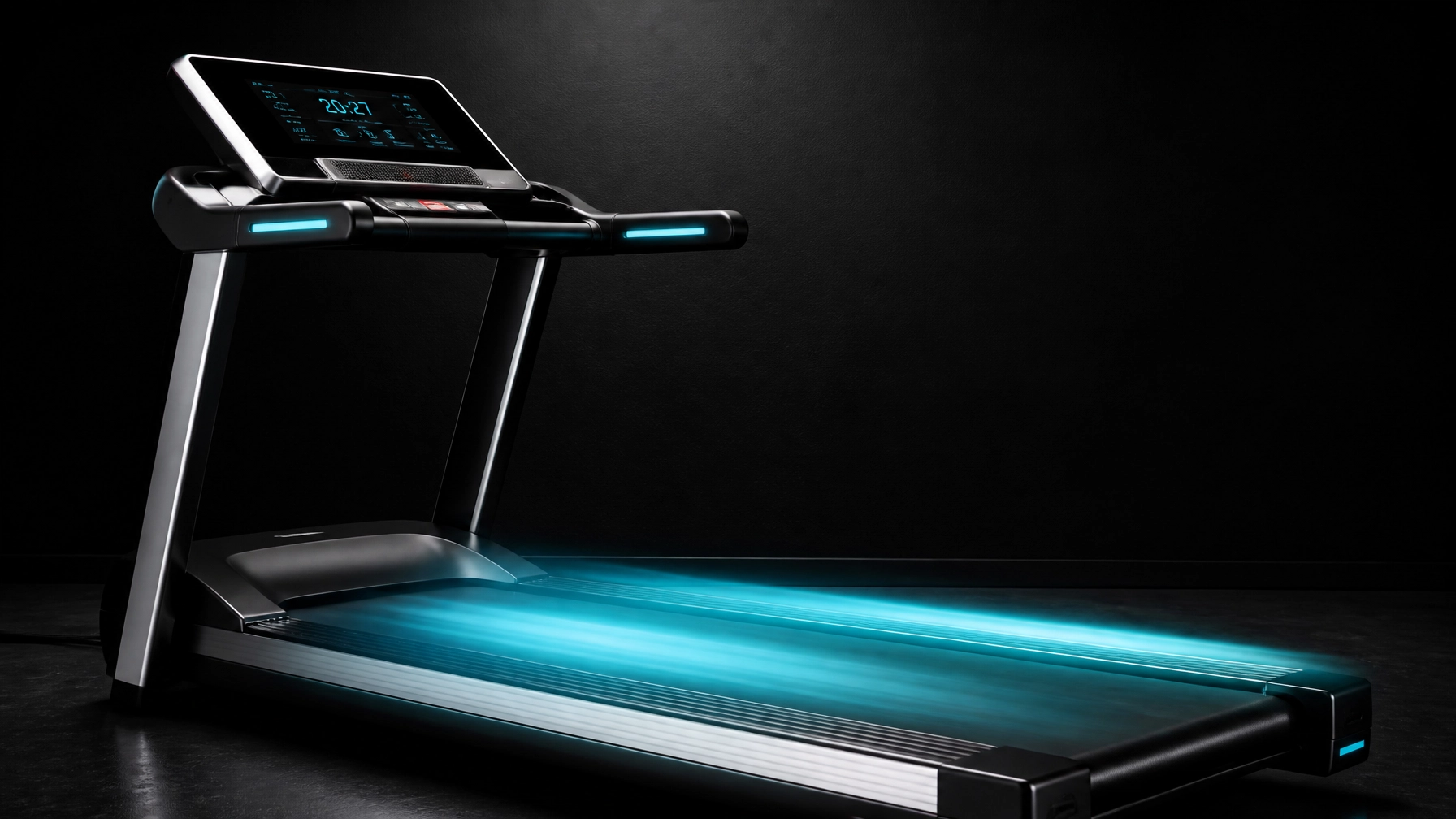
Picture a treadmill. You can climb on and run flat out for an hour. Sweat pouring, heart pounding, legs burning. By every physical measure, you worked hard. And when you step off, you are standing in the exact spot where you started.
That's busy.
Now picture the same effort spent running down a road toward somewhere you actually want to go. Same sweat. Same burning legs. But this time, when you stop, you're miles closer to something.
That's productive.
The cruel part is that they feel identical from the inside. Your body can't tell the difference between motion and progress. Both burn the calories. Both leave you tired. Both let you tell yourself you put in the work. The only difference is whether you actually went anywhere, and you can run on a treadmill for years before you look up and realize the scenery never changed.
I know because I did it. I ran a multimillion-dollar company at a dead sprint for years and mistook the sprinting for building. I was the busiest guy I knew. I was also, in a lot of ways, standing still.
The Man Who Looked Like He Did Nothing
There's a story I keep coming back to about a successful businessman and the guy who wanted to learn from him.
The younger man asked to be mentored. Not just a coffee here and there. He wanted to come into the office every single day and watch how the successful man worked, study his routine, absorb how he did it. The mentor agreed, and the two of them got along great. They'd sit and talk. They'd visit. The days went by easy.
After a while, the younger man quit. He told the businessman he was leaving because, as far as he could tell, they never got anything done. He'd come in expecting to watch a machine. Instead he watched a guy who, in his eyes, mostly sat around. No frantic energy. No towering to-do list getting crushed. Just conversation, thinking, the occasional phone call. It looked like nothing.
So he walked.
Here's what he missed. He was measuring the wrong thing. The younger man came from a world of checklists, where a good day meant ten boxes checked and a great day meant fifteen. To him, that was work. That was the proof. The successful man didn't operate that way. He'd built his life around a small number of large, deliberate actions, the kind that take a few hours of real thought a day and pay off over a month or a quarter. One of those moves, when it landed, was worth more than the younger man's entire year of frantic box-checking.
The mentee didn't quit because the mentor wasn't producing. He quit because he couldn't recognize what real production looked like when it wasn't dressed up as busyness. He walked away from the best teacher he'd ever have because stillness offended everything he believed about hard work.
That's the cage. The gold is how good busy feels, how righteous, how productive. The bars are that the busyness has quietly replaced the thinking, and you can't tell anymore that you've stopped going anywhere.
Why Stillness Scares Us
If sitting still is so valuable, why does almost nobody do it?
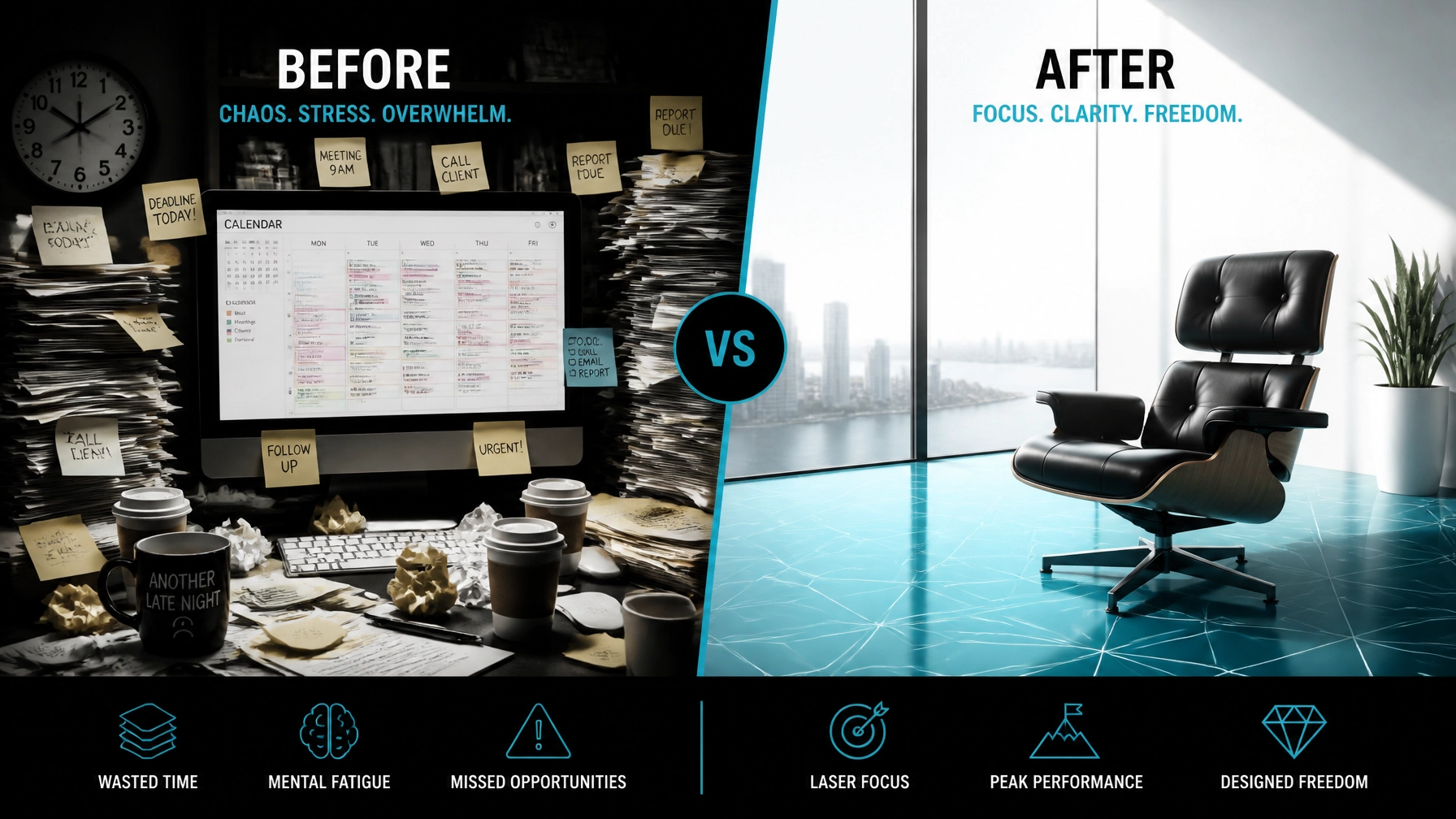
Because stillness feels like falling behind. The second you stop moving, the anxiety creeps in. Shouldn't I be doing something? Everybody else is grinding. If I'm not in motion, am I even working? We've tied so much of who we are to how much we do that an empty hour feels like an accusation.
So we never give ourselves one. We never sit with a hard problem long enough to actually solve it, because sitting feels like quitting. We mistake activity for value, and then we wonder why we haven't had a genuinely new idea in two years.
Napoleon Hill, who spent decades studying successful people, set aside deliberate time just to think. Not to execute. Not to respond. To think. Most people go their entire careers without a single uninterrupted strategic thought, and then they're confused about why they keep solving the same problems over and over.
And science keeps confirming this fact: Your brain doesn't actually shut off when you stop working. Researchers studying what's called the default mode network have found that when you step away from focused tasks and let your mind rest, the brain stays busy in a different way. It consolidates what you've learned, connects ideas that wouldn't connect under pressure, and quietly works on problems in the background. That flash of clarity you get in the shower, on a walk, half-asleep? That's not an accident. That's the work you couldn't do while you were busy.
You cannot think your way out of a problem while staying busy 100% of the time. The answer shows up when you slow down enough to let it.
Sometimes Doing Nothing Is the Job
Sometimes the most productive thing you can do is nothing.
Not nothing as in scrolling your phone on the couch. Nothing as in protected, intentional space where you stop producing long enough to figure out whether you're producing the right things. Rest is not the reward you get after the work. For the most important work, rest is the work. It's where the strategy comes from, where the bad ideas get caught before they cost you, where the big moves take shape.
(If you want a perfect example of an organization that confuses activity with results, look no further than our own government. Never has so much motion produced so little movement. Thousands of busy people, mountains of effort, and somehow the same problems year after year. If busy equaled productive, Washington would have solved everything by now. Anyway. Moving on.)
The point applies to all of us. The exhausted parent running carpool and answering work emails at red lights. The employee who hasn't taken a real lunch in months and calls it dedication. The founder who brags about eighty-hour weeks like it's a strategy instead of a symptom. We're all on the treadmill. We all think the sweat is the point.
It isn't. The destination is the point. And you can't see the destination when your face is six inches from a screen and your calendar owns your soul.
What This Looks Like When You Actually Do It
So what do you do with this?
Start small and start this week. Block one hour. Put it on the calendar like it's a meeting with your most important client, because it is. During that hour, you don't execute anything. You don't answer anything. You don't check anything. You think. You ask the questions you never have time for. What am I actually trying to build? What am I doing out of habit that isn't working? What's the one move that would matter more than the next fifty little ones?
Protect that hour like it's sacred, because everything in your life will conspire to steal it. The treadmill always wants you back on.
Once that hour stops scaring you, scale it up. In The Exiter Club™, we encourage every member to build toward what we call a Freedom Friday. It's one full day a week, completely off from the business. No fires, no inbox, no "quick" calls that turn into three hours. You spend it on whatever actually serves your life, whether that's rest and time with the people you love, or strategic thinking, planning, and building the assets that move you forward.
I know how that sounds. Take 20% of your work week off and somehow get more done? But that's exactly what happens. I've been taking Freedom Fridays since January of 2025, and I'll tell you the truth: it's usually the most productive day of my week. Not in spite of stepping away from the grind, but because of it. The day I stop running the business is the day I can finally see it clearly enough to make it better.
For our members, that day off is the first real step toward owner independence. If the business can survive one Friday without you, you've proven it can survive without you. After that, you're just expanding the proof.
For me, the best thinking rarely happens at a desk. It happens when I'm disconnected from the noise. Maybe it’s when I’m on my morning walk or bicycle ride. Sometimes it’s when I’m mowing the grass. A lot of times, it’s when I’m riding my motorcycle. In a few days I'm heading out on a weekend ride through the Smoky Mountains with a buddy, and I already know some of my clearest thinking for the back half of this year will happen on that bike. No notifications. No checklist. Just road and time and a quiet enough mind to finally hear the ideas that have been waiting for me to slow down. That's not me escaping the work. That is some of the most valuable work I'll do all month.
You don't need a motorcycle. You need an hour and the courage to sit in it.
Words of Wisdom
"Desire without knowledge is not good, and whoever makes haste with his feet misses his way." – Proverb 19:2
Read that again, because it diagnosed this whole problem thousands of years before treadmills existed. The person who makes haste, who rushes, who confuses speed with direction, misses the way. Not because they didn't try hard. They tried plenty hard. They missed the way because they never slowed down enough to see it. Awareness is the key to recovery, and the first thing to be aware of is the difference between moving fast and moving forward.
You Don't Get a Medal for Sweat
Here's where I'll leave you.
Nobody is going to hand you an award for being the busiest person in the room. There's no trophy for the fullest calendar or the latest email or the fewest hours of sleep. Those things feel like proof, but they prove nothing. They're just sweat on a treadmill.
The people who build lives that matter learn to tell the difference between motion and progress. They do less, and the less they do is the right less. They get quiet on purpose. They think before they sprint.
Busy is easy. Anybody can be busy. Productive takes the harder thing, which is the discipline to stop, look up, and make sure the road you're running actually leads somewhere you want to go.
So block the hour. Sit in the quiet. Let yourself do nothing on purpose, and watch what shows up when you finally stop running long enough to listen.
If this one hit a nerve, you'll want to read Later Never Comes, because the busy trap and the someday trap are cousins. And if you've been telling yourself the grind is the price of success, read why grind is a season, not a lifestyle. The lies travel in packs.
– The Real Jason Duncan